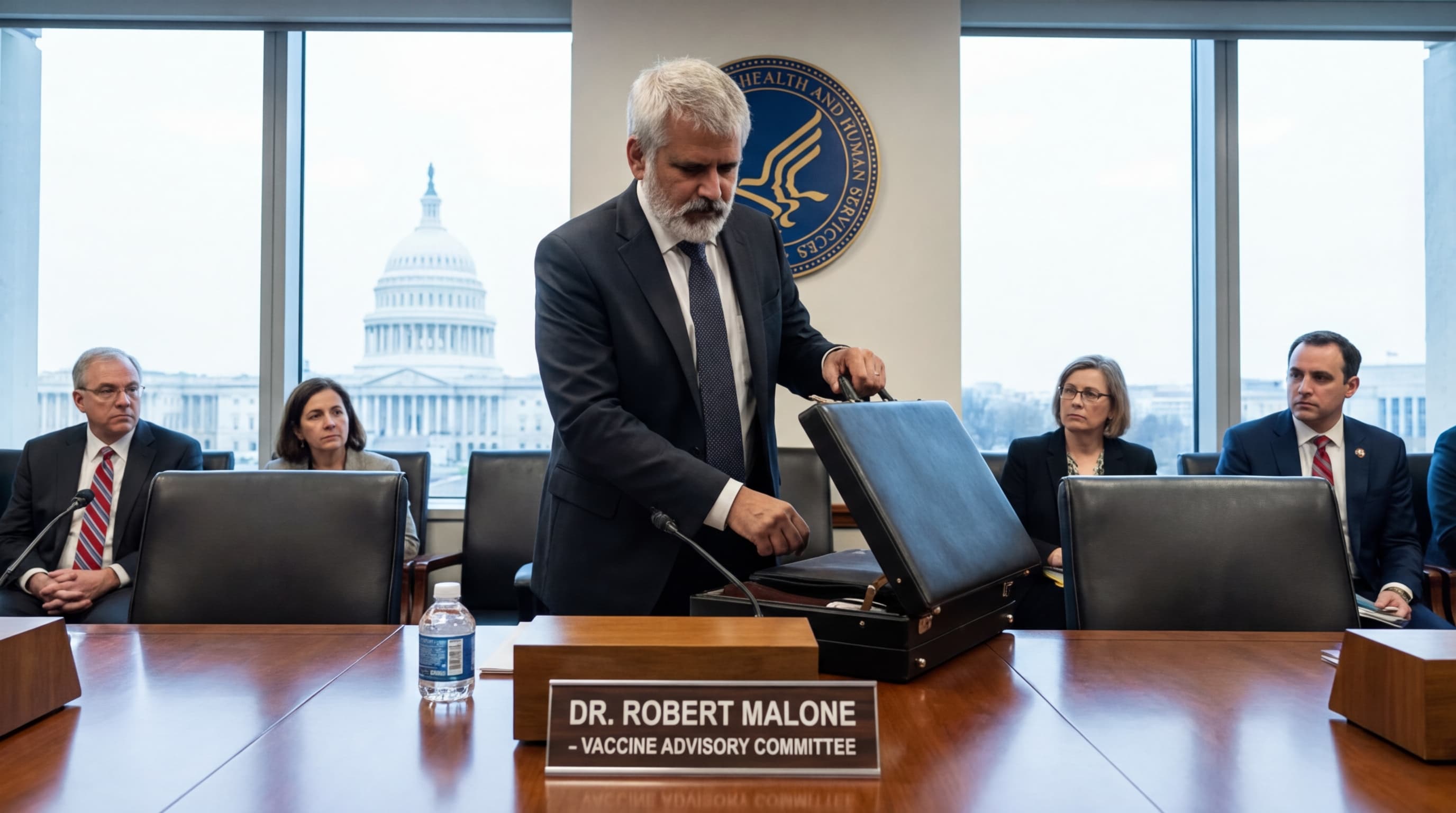
Robert Malone Steps Down from Vaccine Committee Amid Controversy

Robert Malone’s resignation from the vaccine committee has drawn attention to the internal dynamics between health committee members and government spokespersons. Malone cited his unwillingness to engage in drama as a key reason for stepping down, following public comments and disputes involving the Department of Health and Human Services.
Robert Malone, a prominent figure in vaccine development discussions, has officially stepped down from his role on the vaccine committee. The decision comes in the wake of public controversies and what Malone described as being “trashed” by Andrew Nixon, the spokesperson for the Department of Health and Human Services (HHS).
The resignation statement from Malone articulated a clear frustration with the ongoing drama surrounding the media and government relations. He indicated that his departure was motivated by an aversion to involvement in such disputes, saying, "I do not like drama."
This incident throws a spotlight on the complex communications and interpersonal dynamics often present within health policy advisory committees. Such committees play an essential role in shaping vaccine policy and guidance, making the stability and cohesion of their members crucial for consistent public health messaging.
Malone's comments suggest an environment where internal disagreements and external media portrayal can influence committee operations. The implications raise questions about how health officials and government departments manage conflicts amid the continuous public scrutiny they face.
Vaccine committees are typically staffed by leading experts who provide guidance on vaccine safety, efficacy, and public distribution strategies. The withdrawal of a committee member over disagreements could potentially affect the committee’s decision-making process and public confidence in their recommendations.
Moreover, the tense exchange between Malone and the HHS highlights the challenges faced by public health officials in navigating media narratives while maintaining scientific integrity and public trust.
The situation underscores the importance of clear, respectful communication channels within health advisory bodies and between these entities and government agencies. Ensuring such elements are in place is fundamental to fostering a productive environment where public health decisions are made on scientific consensus rather than external conflicts.
Looking forward, managing these dynamics remains a key challenge for public health administration, especially in an era where swift information dissemination and social media can amplify disagreements and controversies.
The exact consequences of Malone’s resignation on vaccine committee function and upcoming vaccine policy decisions are yet to be fully realized. Nonetheless, this case exemplifies the delicate balance required in health policy leadership roles and the potential impact of personal dynamics on critical public health efforts.
For detailed insights and continuous updates on this developing story, reference is made to the original coverage provided by BioSpace.
Source: BioSpace - After Speaking out of Turn, Malone Steps Down From Vaccine Committee
Join the BioIntel newsletter
Get curated biotech intelligence across AI, industry, innovation, investment, medtech, and policy delivered to your inbox.