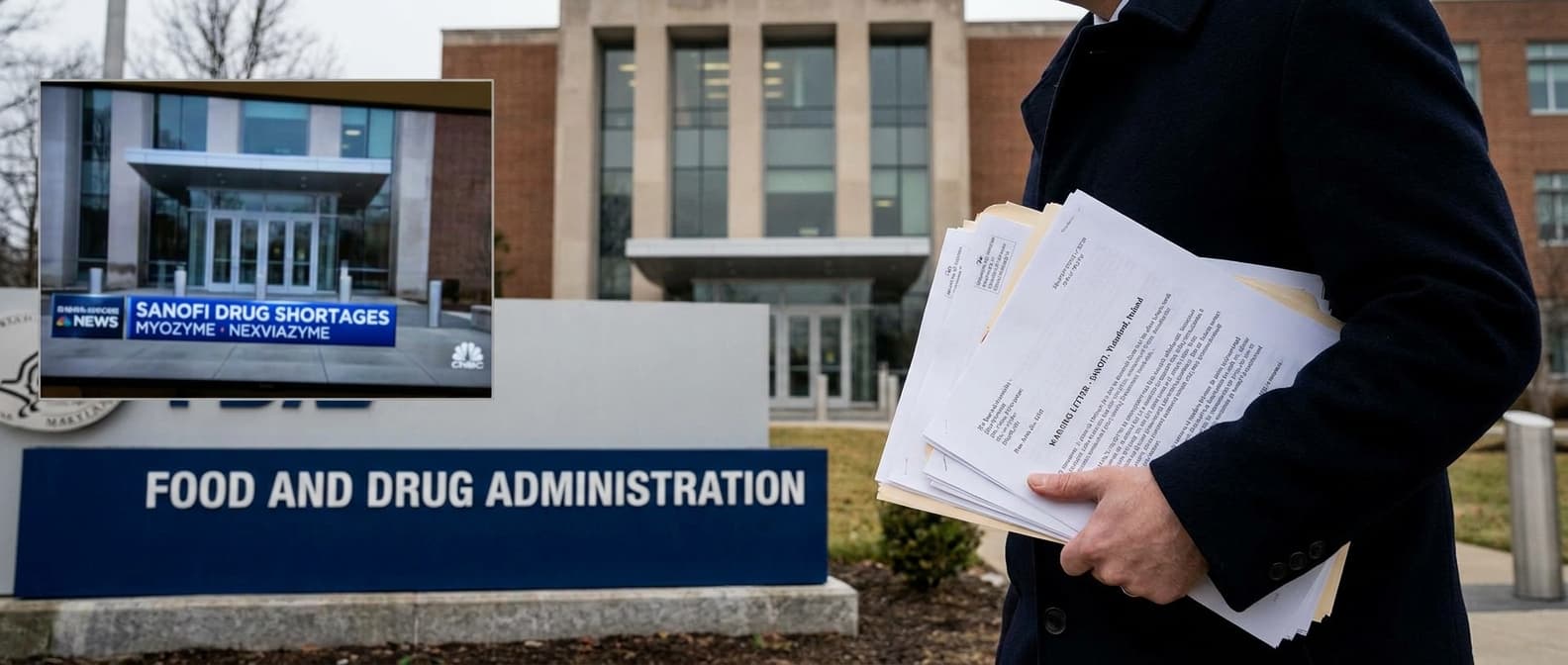
Sanofi Shortages Myozyme And Nexviazyme After FDA Warning At Waterford Plant

The immediate issue is a bottleneck in the final manufacturing phase and quality control issues at Sanofi’s Waterford plant, according to the report. For a rare-disease market, disruption at the batch-release step can quickly become an access problem because the same site clears medicine for distribution and patient use.
Sanofi is experiencing shortages of two medicines used to treat Pompe disease, with supplies of Myozyme and Nexviazyme described as dwindling in alerts sent to patient groups and physicians in both the U.S. and Europe.
The timing matters because the problem emerged shortly after the Food and Drug Administration warned the company over manufacturing issues at the Irish facility where the drugs are made. According to the report, Sanofi attributed the supply strain to a bottleneck in the final manufacturing phase as well as quality control issues at its Waterford plant.
Why The Manufacturing Step Matters
The Waterford site is responsible for batch release, the final quality assurance and regulatory process in which a manufactured amount of medicine is formally certified, approved, and cleared for distribution and use by patients. That step is supposed to verify that a batch meets safety and potency requirements.
The signal for industry and policy observers is that a warning tied to manufacturing can translate into patient access pressure even when the issue sits at the end of the production chain rather than at initial drugmaking. In Pompe disease, where these products are used as treatment options, a bottleneck at batch release can become a market constraint as soon as inventory starts to thin.
Join the BioIntel newsletter
Get curated biotech intelligence across AI, industry, innovation, investment, medtech, and policy delivered to your inbox.