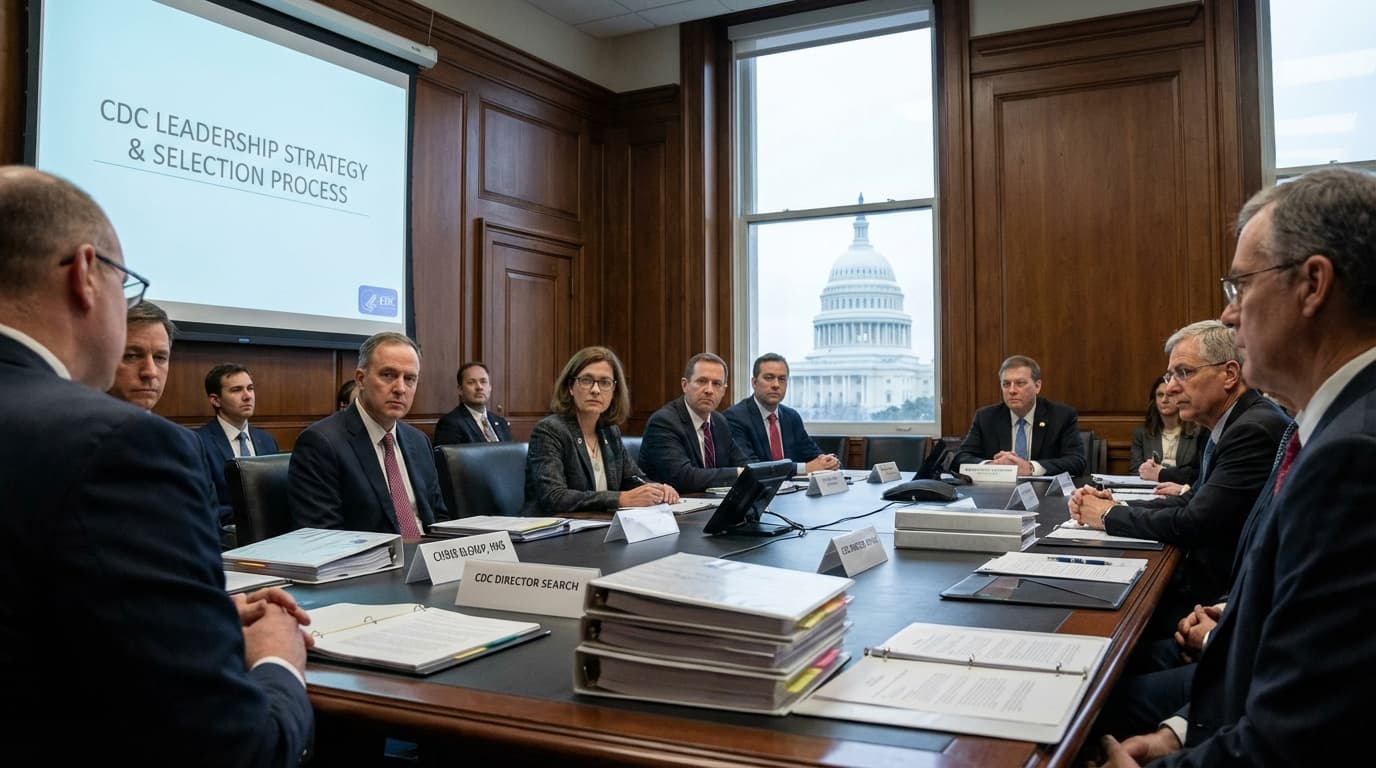
Inside the High-Stakes Search for a New CDC Director: Leadership and Public Health Challenges

The search for a new director of the Centers for Disease Control and Prevention (CDC) is a multifaceted process marked by high expectations, political sensitivity, and urgent public health needs. At the helm of this search is Chris Klomp, a top Department of Health and Human Services official, who has shared insights into the deliberations and challenges faced amidst evolving health threats and governance demands.
Leadership at the Centers for Disease Control and Prevention (CDC) has long been regarded as a critical driver of the United States’ health security and disease prevention efforts. As the CDC navigates a rapidly changing health landscape marked by emergent threats, including infectious diseases, chronic conditions, and global health challenges, the appointment of a new director assumes paramount significance.
Recently, Chris Klomp, a senior official with the U.S. Department of Health and Human Services (HHS), has been at the forefront of the high-stakes search for the next CDC director. His candid discussions shed light on the delicate balance required in choosing a leader capable of steering the agency through complex political, scientific, and societal crosscurrents.
The Stakes: More Than Just a Leadership Change
Selecting a CDC director is not merely an administrative decision; it symbolizes broader policy orientations and priorities. The director shapes the agency’s strategic direction, influences public trust in health advisories, and drives critical responses to ongoing and future public health crises.
In recent years, the CDC's role has been under intense scrutiny, as the agency faced challenges adapting to emerging diseases, misinformation, and evolving expectations for transparency and speed. Hence, the incoming director must embody scientific rigor, communicative clarity, and an ability to engage diverse stakeholders across government, healthcare, and the public.
Political Sensitivities and Agency Independence
Amid heightened politicization of health topics, the director’s role also embodies a complex interface between science and policy. Maintaining the CDC’s independence while aligning with administration priorities requires nuanced leadership.
Chris Klomp's involvement signals a thoughtful approach to balancing these demands, acknowledging the need for a director who can navigate political pressures without compromising the agency’s scientific integrity.
Criteria and Challenges in the Selection Process
The selection journey involves evaluating candidates' expertise in epidemiology, public health management, and crisis leadership, alongside their vision for innovation and inclusion in healthcare.
The search also weighs candidates' capacity to foster interagency collaboration, engage with international health bodies, and champion health equity, reflecting contemporary imperatives.
Looking Ahead: Implications for Public Health
The appointment of a well-qualified CDC director will significantly impact the nation’s preparedness for future health emergencies and the ongoing battle against chronic and infectious diseases.
Strong leadership can revitalize the agency’s internal operations, enhance public confidence, and promote evidence-based policies fostering healthier communities.
Conclusion
The detailed and sensitive search for the CDC’s new leader epitomizes the agency’s critical role within the national health framework. It underscores the importance of visionary leadership capable of uniting science, policy, and public engagement to address the evolving challenges of modern public health.
As this process unfolds, stakeholders across the healthcare domain keenly await insights into how this pivotal appointment will shape the CDC’s future mission and the broader landscape of American healthcare.
Join the BioIntel newsletter
Get curated biotech intelligence across AI, industry, innovation, investment, medtech, and policy delivered to your inbox.