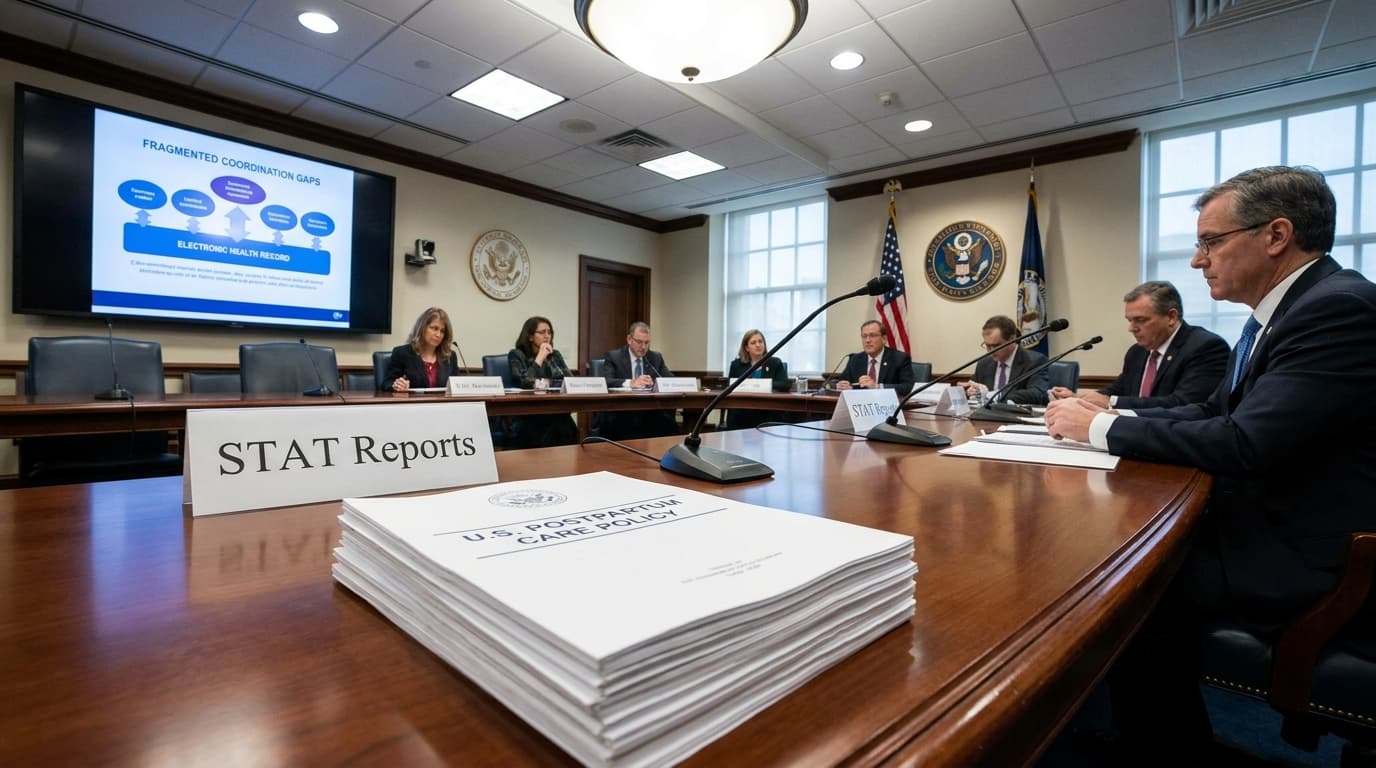
STAT Reports Lindsay Clancy Case Highlights Fragmented U.S. Care And Postpartum Coordination Gaps

According to STAT, Clancy sought help from multiple providers in the four months before killing her three children and attempting to kill herself, but those clinicians did not communicate with one another. The report frames the case as an example of a broader structural problem in privately insured U.S. care.
The Lindsay Clancy murder trial is exposing a structural weakness in U.S. care delivery, according to a STAT report: patients with serious mental health deterioration can move among multiple providers, receive conflicting advice, and still have no one responsible for integrating treatment decisions.
STAT reported that in the four months before Clancy killed her three children and attempted to kill herself, she repeatedly sought help for her worsening mental condition. The care she received was scattered across multiple providers who did not talk to one another.
The System Failure Described
Experts following the case told STAT that this kind of fragmentation is normal for Americans with private insurance. Providers are siloed within their own employers and have little incentive to communicate across organizations, the report said.
STAT also said there is no universal electronic health record through which clinicians can see the totality of a patient’s care and medications. In a case involving mental health decline and treatment across multiple settings, that creates a coordination problem that is operational, not merely clinical.
The Policy Signal
The core takeaway from the report is not limited to one criminal trial. It is that continuity of care remains weak even when a patient is actively seeking treatment, because the system often lacks both shared records and a clearly designated clinician in charge of the whole course of care.
Experts cited by STAT said that if someone had been in the driver’s seat overseeing all of Clancy’s care, events may have unfolded differently. That points to a policy challenge around care coordination, accountability, and information sharing in privately insured care rather than a narrow question about any one provider’s judgment.
For health policy, the case highlights how fragmented infrastructure can turn a sequence of individual encounters into a collective blind spot.
Join the BioIntel newsletter
Get curated biotech intelligence across AI, industry, innovation, investment, medtech, and policy delivered to your inbox.