Tactical Athletes Get New Cardiovascular Guidance, Expanding Care Standards Across 4 Million Workers

The new recommendations cover how clinicians should evaluate tactical athletes with cardiovascular disease or at risk of developing it in light of their professional demands. The guidance extends sports cardiology principles into service roles where sudden exertion, environmental extremes and stress can change the consequences of even common risk factors.
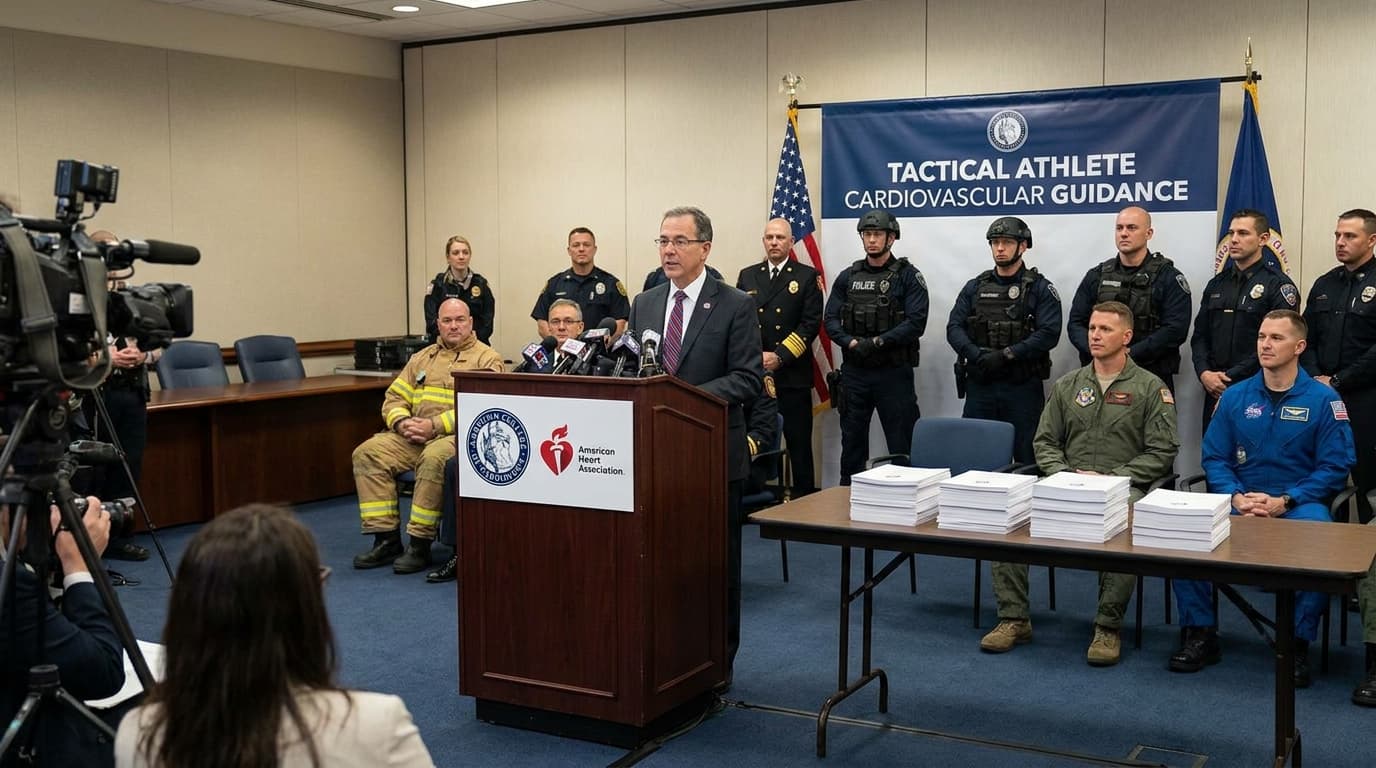
The American College of Cardiology and the American Heart Association have released new cardiovascular guidance for clinicians caring for tactical athletes, a category that includes EMTs, firefighters, police officers, Marine pilots, Navy SEALs, Army engineers and astronauts. The authors estimate that about 4 million Americans fill these roles.
Published in JACC and Circulation, the recommendations address how to evaluate tactical athletes with cardiovascular disease or at risk for developing one in the context of their duties. The policy signal is straightforward: this group is now being treated as distinct enough to merit its own cardiovascular framework rather than being folded into either the general population or competitive sports guidance.
Why this group is different
The source describes tactical athletes as a category first recognized in the early 2000s. What separates them from competitive athletes is not only physical performance but the setting in which performance is required: service, often with no warning and with consequences for coworkers and the public if a person becomes incapacitated.
Benjamin Levine, vice chair of the group that wrote the guidance, told STAT that one of the unique aspects of tactical demands is that people often do not get to warm up or prepare. Instead, they may go from rest to intense activity immediately in an emergency. He said the risk of death is not insignificant in those moments, whether from entering a burning building or operating under threat.
That shift in context changes the meaning of cardiovascular risk. Levine noted that incapacitation can affect not only the individual but also colleagues and the people they are trying to rescue. The guidance therefore treats fitness, disease screening and return-to-duty questions as operational issues as well as medical ones.
The risk profile
According to the source, cardiovascular disease is the top duty-related cause of death in this population. The guidance says rates of sudden cardiac arrest or death are low, but risk rises during recruit training.
STAT highlights both distinctive occupational exposures and ordinary cardiometabolic risks. Tactical athletes may carry heavy equipment and work in extreme heat, cold, deep water or high altitude while under substantial emotional stress. At the same time, they also face common risk factors including high blood pressure, high cholesterol, obesity, type 2 diabetes and smoking.
Their longer careers make them more like masters athletes, defined in the source as age 40 and older, whose cardiovascular risk rises with age like that of nonathletic peers. That framing matters because it suggests the field is not only about rare edge cases but also about managing standard prevention issues in a population whose jobs magnify their consequences.
The article includes several examples. For firefighters, the danger begins when the alarm first goes off and continues through fire suppression. Lili Barouch of Johns Hopkins Medicine said the timing of firefighters’ cardiac events shows how quickly stress levels rise, even before they reach a burning building. For astronauts, researchers hypothesize that radiation exposure during spaceflight speeds atherosclerosis, the narrowing of arteries implicated in heart attacks and strokes.
Among active-duty service members, the source says 18% had at least one cardiovascular risk factor among these five: high cholesterol, high blood pressure, hypertension, diabetes, prediabetes or obesity. It also says 24% were active smokers. Firefighters with a previous diagnosis of cardiovascular disease, hypertension or smoking were more likely to have a fatal cardiovascular event, according to the guidance.
What the guidance changes
The practical shift is that clinicians now have a dedicated framework for judging cardiovascular risk against job demands that are intermittent, extreme and mission-critical. Levine, who has worked on competitive sports guidance and updates since the 1990s, told STAT he saw a gap for elite athletes operating in service roles rather than competition and pushed for the issue to be addressed.
Sports cardiologists quoted by STAT welcomed the framework. Tim Churchill of Mass General Brigham Heart and Vascular Institute said the conditions under which tactical athletes perform are widely varied and can be extreme on many dimensions, creating significant stresses on the cardiovascular system and other organ systems.
For healthcare policy and occupational medicine, the larger implication is that cardiovascular clearance for these workers is moving toward a more formalized specialty standard. That does not necessarily mean the jobs themselves create cardiovascular disease in every case, but it does mean the threshold for acceptable risk is shaped by environments where sudden exertion, stress and environmental exposure can turn manageable disease into an immediate duty hazard.
Join the BioIntel newsletter
Get curated biotech intelligence across AI, industry, innovation, investment, medtech, and policy delivered to your inbox.