STAT+: Tau in the Spotlight at Alzheimer’s Conference

The scientific community continues to make strides in understanding and treating Alzheimer’s disease. At AAIC 2026, tau protein research and blood-brain barrier breakthroughs are at the forefront, potentially reframing future therapeutic pathways. This in-depth analysis contextualizes the significance of these scientific advancements.
For years, biomedical research in Alzheimer’s disease has been dominated by a focus on amyloid-beta, the protein whose accumulations form the plaques seen in the brains of patients suffering from this devastating neurodegenerative disorder. However, a significant shift has been underway, and nowhere was this more apparent than at the latest Alzheimer’s Association International Conference (AAIC) 2026, as reported by STAT. In sharp relief, researchers at this year’s conference placed tau, another key protein tangled in the Alzheimer’s puzzle, at the center of cutting-edge exploration—and, crucially, the challenge of delivering medicines across the blood-brain barrier (BBB) emerged as a recurring frontier in therapeutic development.
The Quiet Ascendancy of Tau
For decades, the amyloid hypothesis shaped not just research funding, but the very pathways of industry investment and drug development. Still, clinical setbacks for amyloid-targeting therapies have led to sobering recalibrations in the scientific community. Tau, a protein that forms neurofibrillary tangles in the brains of Alzheimer’s patients, is now at the crest of research interest—an acknowledgement that tackling Alzheimer’s demands a multidimensional attack, one that accounts for the intricate interplay of proteins, neuronal health, immune responses, and genetic risk factors.
From Pathology to Promise
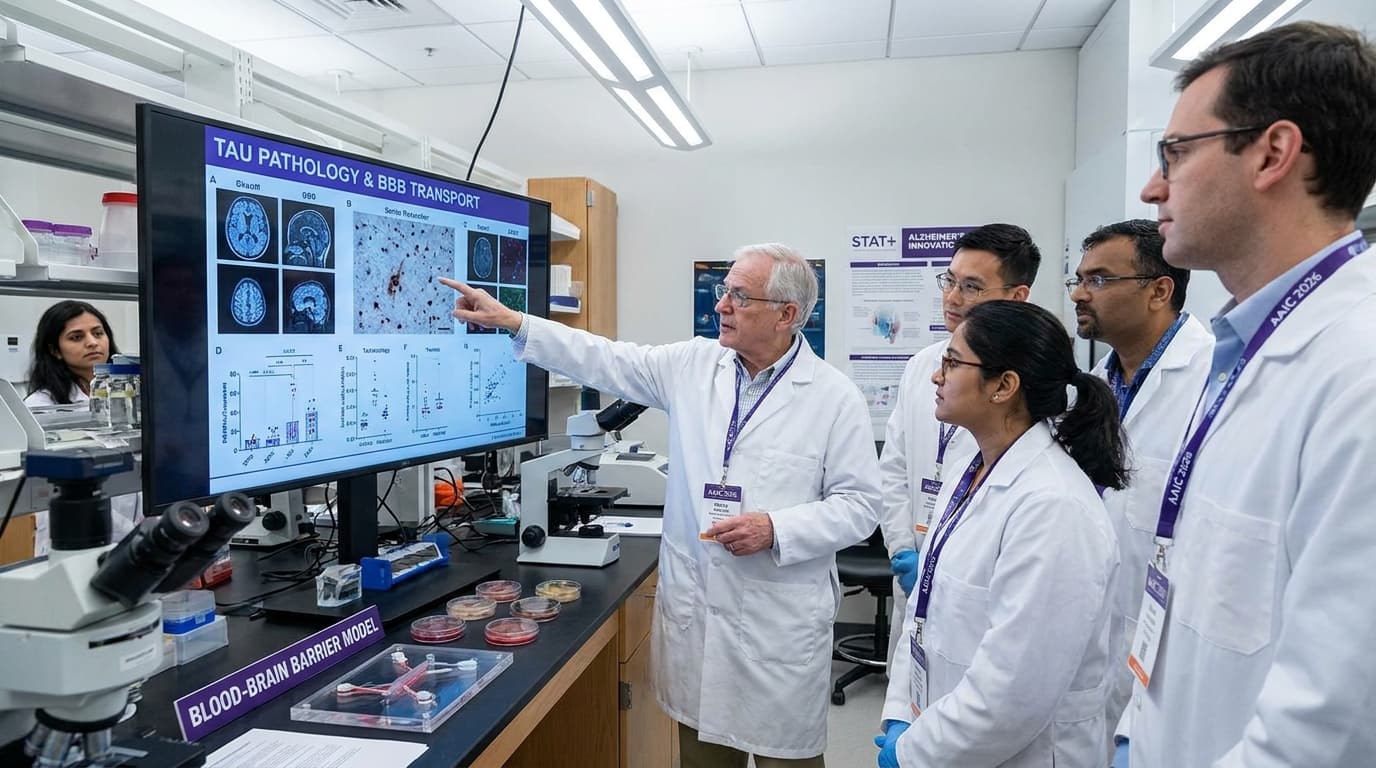
Multiple presentations at AAIC 2026 delved into recent advances in tau biology. Researchers highlighted innovations in imaging the spread of tau pathology, which correlates strongly with cognitive decline. Sophisticated positron emission tomography (PET) tracers and fluid biomarkers are now painting a much richer, earlier, and individualized picture of disease progression. This, advocates suggest, could finally allow therapies to be tested in the right patients at the right time—crucial for an illness that silently evolves over decades before symptoms emerge.
Moreover, clinical trial updates indicate that anti-tau antibodies and small molecules are gaining traction. While late-stage readouts remain pending, the optimism among experts is tangible, fueled by preclinical success and early human data. These therapies, if successful, could complement or even surpass the effects of anti-amyloid approaches.
The Blood-Brain Barrier: A Tall Hurdle, New Tools
Even as drug developers design next-generation molecules against tau, the physical challenge of the blood-brain barrier (BBB) looms. The BBB is a formidable shield, safeguarding the brain from toxins and pathogens but also impeding most biologics and small molecules. AAIC’s showcase highlighted novel delivery technologies—from receptor-mediated transport mechanisms to encapsulation, nanocarriers, and even focused ultrasound—that could one day allow therapeutic payloads to reach their molecular targets in the brain safely and efficiently.
For biotech and pharma companies, breakthroughs in BBB transport carry implications far beyond Alzheimer’s. Many central nervous system (CNS) disorders could benefit from these advances, potentially opening the door for previously undeliverable therapies and rewriting the pharmacological rules of engagement with brain diseases.
Why This Moment Matters for Alzheimer’s Research
Alzheimer’s is one of the largest unmet needs in medicine, affecting tens of millions globally with still no outright cure or truly effective disease-modifying therapy. With the field now broadening its investigative lens beyond amyloid, the AAIC’s tau-centric focus signals maturity and growing complexity in the field’s scientific approach. The intersection of molecular biology, advanced imaging, immunotherapies, and BBB technologies is increasingly fertile ground.
Realistic Optimism, Cautious Acceleration
Expert panels at AAIC cautioned that although tau is a promising target, biology’s complexity demands humility. Drug development timelines for CNS diseases are notoriously long, and clinical endpoints—such as cognitive function or daily living—are difficult to quantify rigorously. Nonetheless, the conference’s palpable optimism is grounded in a robust preclinical foundation, rapid iteration of therapeutic modalities, and an increasingly collaborative research infrastructure.
What’s Next? The Evolving Alzheimer’s R&D Pipeline
In the wake of this tau-focused moment, pharmaceutical pipelines are likely to keep diversifying. Major biopharma players and smaller innovation-driven companies are racing not only to halt pathologic tau spread, but also to develop combination therapies that address amyloid, tau, neuroinflammation, and beyond. Regulatory agencies are already signaling openness to new biomarker-driven trial designs and earlier disease intervention, which could tip the innovation balance.
Implications for Patients and Healthcare Systems
As the science evolves, so too do the hopes of patients and their families. Progress on BBB-crossing delivery platforms may one day mean more effective treatments delivered earlier in disease—potentially reducing the personal, familial, and societal burdens of Alzheimer’s. However, access, affordability, and real-world impact will continue to be subjects of debate and analysis.
Conclusion: A New Chapter in Alzheimer’s Drug Development
The 2026 AAIC marks a clear inflection point for Alzheimer’s research. The move to put tau pathology and BBB breakthroughs in the spotlight underscores the evolving sophistication of the scientific and pharmaceutical communities. While the fight against Alzheimer’s is far from over, the conference’s message is one of targeted optimism: that by delving deeper into tau and breaking through the brain’s natural defenses, new therapies may finally turn the tide against one of medicine’s most challenging diseases.
Join the BioIntel newsletter
Get curated biotech intelligence across AI, industry, innovation, investment, medtech, and policy delivered to your inbox.