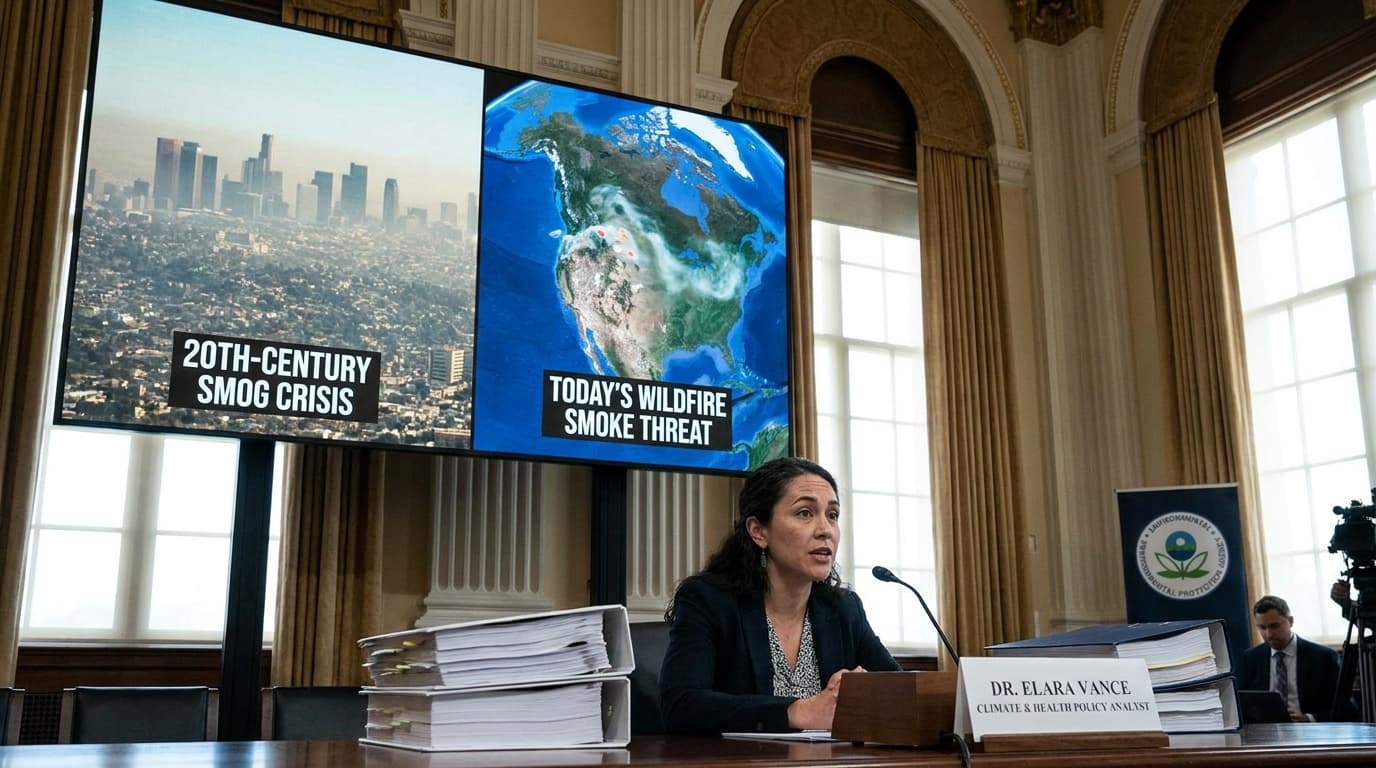
What the 20th-Century War on Smog Teaches Us About Today’s Wildfire Smoke Crisis

The increasing occurrence of hazardous wildfire smoke events in the U.S. and Canada has forced policy makers, scientists, and health officials to revisit the regulatory playbook. By reflecting on the history of smog regulation in the twentieth century, this post examines the potential pathways and pitfalls for addressing present-day challenges in air quality management.
Introduction
In recent years, North America has witnessed a dramatic increase in the frequency and intensity of wildfire smoke events. Driven by climate change, land management challenges, and prolonged drought, these smoke incidents have spanned thousands of miles and affected urban and rural populations alike. The alarming levels of particulate matter, visibility reduction, and health warnings have triggered a sense of déjà vu among experts, who recall the infamous urban smog episodes of the twentieth century.
To understand how current policy debates on wildfire smoke and air quality might unfold, it is instructive to revisit the evolution of air pollution policy during the decades-long fight against smog. This post draws on an opinion analysis published in STAT News, which emphasizes that policies forged during the global response to industrial and vehicular smog hold significant lessons for managing wildfire smoke today.
A Brief History of Smog Policy
In the mid-twentieth century, many U.S. cities—including Los Angeles, Pittsburgh, and New York—grappled with severe smog driven by industrialization and the rapid expansion of automobile transportation. The thick hazes triggered public health emergencies, causing spikes in respiratory illnesses, cardiovascular complications, and premature deaths. These events, widely publicized in media, led to mounting public pressure for government intervention.
Over time, regulatory milestones such as the Clean Air Act of 1970, the formation of the Environmental Protection Agency (EPA), and the establishment of National Ambient Air Quality Standards represented crucial steps in reducing air pollution. Local and state governments, responding to both scientific evidence and grassroots activism, implemented measures to control industrial emissions, encourage cleaner technologies, and restrict certain activities during high pollution periods.
Despite early skepticism and resistance from stakeholders in industry and transportation, the multi-pronged regulatory response to smog is widely credited with restoring breathable air and improving life expectancy in many urban environments. This policy trajectory reflected a national shift in the understanding of environmental risk—from a tolerable side effect of progress to a solvable public health issue.
Parallels Between Smog and Wildfire Smoke Management
The recent surge in wildfire smoke pollution presents public health challenges similar in scale and complexity to last century’s smog crisis. Both forms of pollution rely on fine particulate matter (PM2.5) as the primary health risk, with known links to respiratory attacks, cardiac events, and reproductive harms. In both cases, scientific uncertainty about thresholds of danger, the long-term effects of intermittent exposure, and variability in regional impact have complicated policy responses.
What can the decades-long war on smog teach us about managing today’s wildfire smoke crisis?
- Scientific Engagement: Just as robust epidemiological research helped build the case for regulating urban smog, continued research on the health effects of wildfire smoke—from acute spikes to chronic exposures—remains essential. This involves longitudinal studies, air quality monitoring, and transparent risk communication.
- Policy Layering: Smog regulation was successful because it involved multiple overlapping interventions: federal statutes, local laws, technology incentives, and crisis management protocols. Addressing wildfire smoke also demands a layered, cross-jurisdictional approach, accounting for variability in land management, emergency planning, and resource deployment.
- Risk Communication: The response to smog highlighted the necessity of credible, timely, and actionable risk communication. During major wildfire smoke events, effective communication with at-risk groups—including children, the elderly, and immunocompromised people—becomes a matter of life and death.
- Investment in Prevention: Smog-era solutions included innovations in automotive technology, emissions control, and urban design. With wildfires, analogous innovations might involve improved forest management, rapid detection and response, and climate-adaptive infrastructure.
- Resilience and Adaptation: Even after the most stringent air quality standards took effect, some level of smog exposure persisted—especially during high-traffic or inversion events. Policymakers are reminded that total elimination of exposure may be unattainable, but significant reductions and protective adaptations (e.g., air filtration, shelter guidelines, school closure protocols) can still yield major public health benefits.
Current Challenges and Uncertainties
Despite these instructive parallels, several new challenges complicate the effort to address wildfire smoke through policy.
- Cross-Border Dynamics: Unlike urban smog rooted in local industrial activities, wildfire smoke often drifts across state and national boundaries. Recent events have demonstrated how Canadian wildfires affect large U.S. regions, sometimes for weeks. This necessitates coordinated international frameworks and data sharing.
- Climate Change Acceleration: Whereas industrial smog was tackled during a period of relatively stable climate, the frequency of severe wildfires is already rising in tandem with higher global temperatures, drought, pest outbreaks, and ecosystem imbalances. As a result, mitigation and adaptation efforts must account for future instability rather than a return to historical norms.
- Resource Inequities: Vulnerable and marginalized communities often bear disproportionate health burdens from smoke, yet may lack access to filtration, transportation, or health care resources. This pattern, familiar from historical air pollution studies, is magnified by the rural location of many wildfire events and the populations at risk.
- Political Resistance: The response to smog was not without controversy—businesses and interest groups frequently opposed regulation as costly and unwarranted. Similar dynamics are arising today, with landowners, regional governments, and industries sometimes dissenting on forest management, prescribed burns, or land use reforms that might reduce wildfire risk but disrupt economic interests.
Opportunities for Leadership and Innovation
While the challenge of wildfire smoke may be formidable, opportunities for leadership and innovation abound. Government agencies, academic institutions, and the private sector can collaborate on new forms of monitoring (including satellite-based rapid detection), novel engineering approaches to fire suppression, and community-based resilience planning.
The smog experience suggests the importance of moving beyond short-term crisis management toward sustained, systematic responses. This might involve:
- Integrating wildfire smoke exposure into health surveillance systems
- Funding research into long-term developmental and chronic effects of smoke
- Reassessing land management priorities, including indigenous burning practices
- Creating flexible, scalable emergency protocols that can be adapted across jurisdictions
Conclusion
As policymakers, scientists, and the general public contend with the new reality of wildfire smoke as a regular health threat, the legacy of smog policy offers both a cautionary tale and a hopeful roadmap. Real-world progress will demand coordination across sectors and borders, a willingness to adapt old frameworks to new threats, and a continuous investment in both prevention and risk communication, guided by the accumulating evidence from science and lived experience.
Understanding the lessons of the 20th-century war on smog is not merely an exercise in history—it is a practical necessity for designing effective responses to the most urgent air quality crisis of our era.
Source: STAT News
Join the BioIntel newsletter
Get curated biotech intelligence across AI, industry, innovation, investment, medtech, and policy delivered to your inbox.