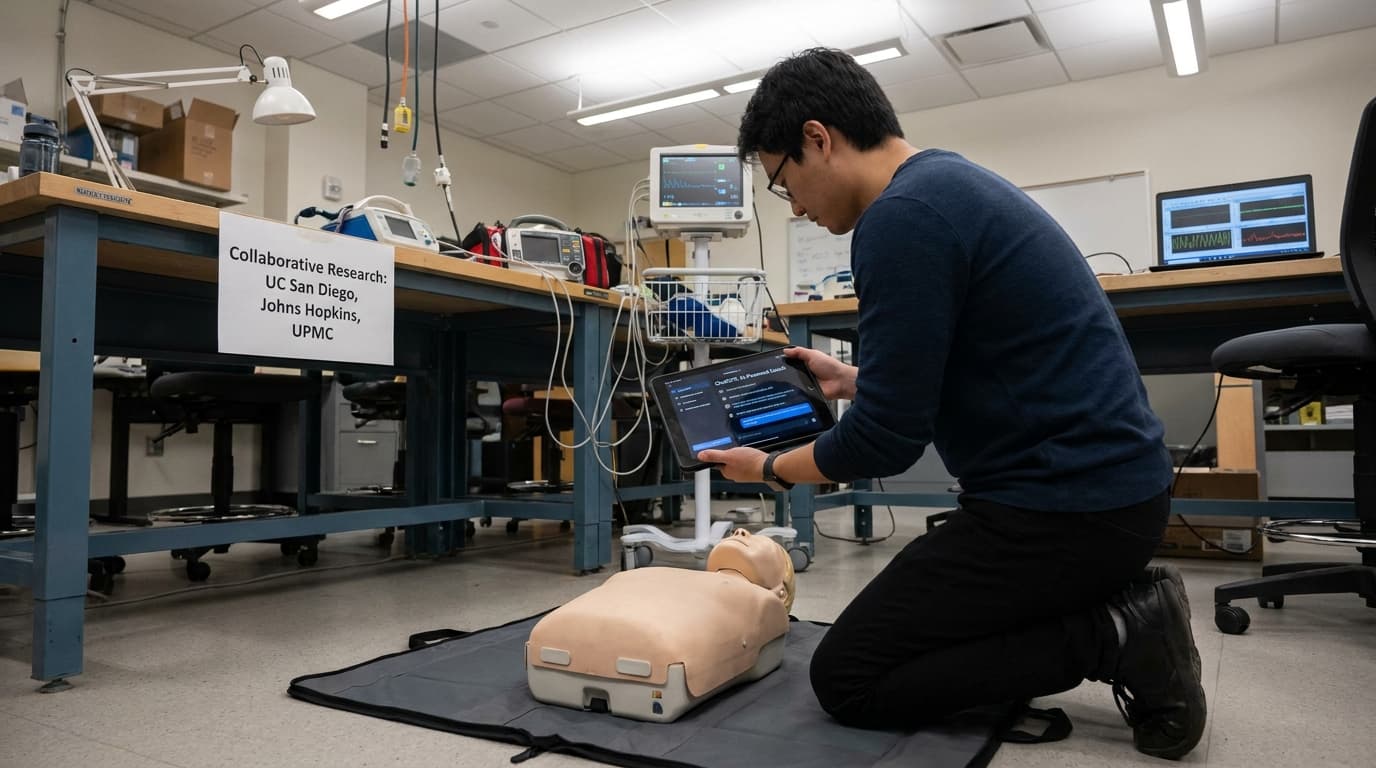
AI-Powered CPR Coaching: ChatCPR’s Potential to Transform Emergency Response

Emergency situations demand rapid and precise interventions, and cardiac arrest cases are no exception. The newly developed ChatCPR leverages artificial intelligence to coach bystanders through CPR more effectively than human 911 dispatchers. This advancement could save lives by increasing the quality and speed of emergency response.
Cardiac arrest remains a leading cause of death globally, and immediate cardiopulmonary resuscitation (CPR) is critical for survival. However, many bystanders hesitate or perform CPR inadequately due to lack of training or confidence. Recognizing this challenge, researchers from the University of California San Diego, Johns Hopkins University, and UPMC collaborated to develop ChatCPR—an AI-powered CPR coaching tool designed to provide clear, accurate, and timely guidance during cardiac emergencies.
Unlike traditional 911 dispatchers, ChatCPR utilizes advanced large language models (LLMs) to interpret bystander inputs and deliver tailored, step-by-step instructions for performing CPR. In head-to-head testing, ChatCPR demonstrated superior performance over human dispatchers in guiding untrained bystanders through the procedure, improving compression quality and adherence to recommended protocols.
This technological breakthrough signifies a potential paradigm shift in emergency medical response. By augmenting or even substituting dispatcher roles during high-stress crisis moments, ChatCPR can reduce errors and hesitation, thereby increasing the chances of survival for cardiac arrest victims.
The open-source release of ChatCPR invites a broad spectrum of stakeholders, including technology companies and emergency response organizations, to deploy and integrate this tool into their systems. Widespread adoption could lead to a standardized, AI-enhanced approach to CPR training and real-time coaching, filling critical gaps in the current emergency care continuum.
Moreover, AI-powered tools like ChatCPR exemplify how artificial intelligence can address real-world health challenges by leveraging timely, context-aware interactions. They demonstrate the utility of LLMs beyond conventional applications, extending into life-saving medical interventions.
However, ethical and practical considerations remain paramount. Ensuring ChatCPR’s guidance is culturally and linguistically accessible, avoiding over-reliance on AI without human oversight, and maintaining data privacy standards are all crucial in its ongoing development and deployment.
Looking forward, the integration of AI tools such as ChatCPR into emergency medical services holds promise for enhancing outcomes, reducing mortality, and democratizing access to critical life-saving knowledge. Continued research, testing, and collaboration across healthcare and technology sectors will be essential to realize this potential fully.
Source: MedCity News
Join the BioIntel newsletter
Get curated biotech intelligence across AI, industry, innovation, investment, medtech, and policy delivered to your inbox.