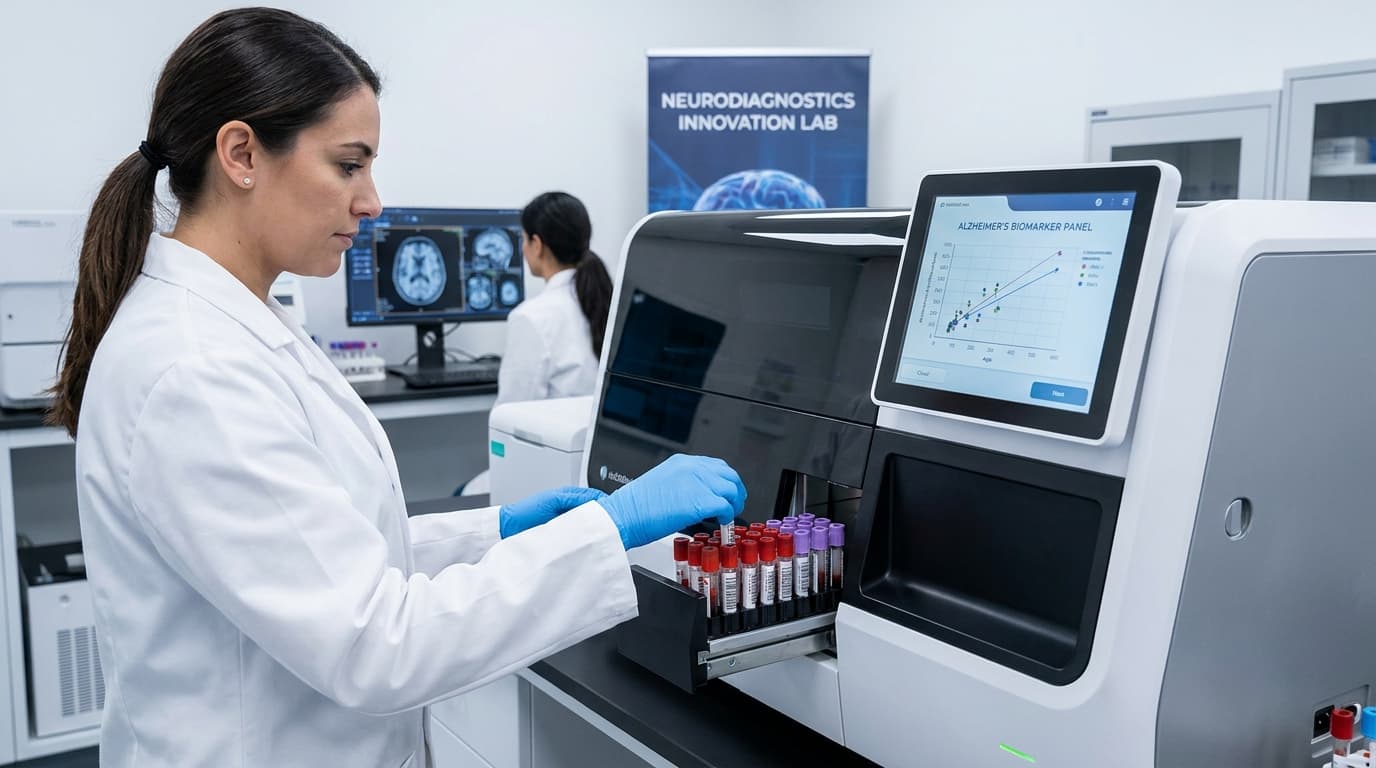
Advancements in Alzheimer’s Diagnostics Could Revolutionize Accessibility and Clinical Insights

Alzheimer’s diagnostics is on the cusp of transformation with innovative techniques providing broader access and richer clinical data. Improvements in testing methods may offer earlier detection and foster more informed treatment strategies as researchers chart new territory in dementia diagnostics.
Introduction: A New Era in Alzheimer’s Testing
Alzheimer’s disease, one of the most critical public health challenges globally, has historically faced notable hurdles in diagnosis, especially early and accurate identification. Yet, recent research presented at a major dementia conference signals turning tides. As reported in STAT+, researchers are unveiling new tools and innovations designed explicitly to improve the accessibility, accuracy, and informativeness of Alzheimer’s disease diagnostics. This deep dive explores the significance, current technological shifts, evolving research directions, and the implications these advancements could have for physicians, patients, families, and healthcare systems worldwide.
The Traditional Landscape of Alzheimer’s Diagnosis
Traditionally, the diagnosis of Alzheimer’s disease required a combination of:
- Medical history assessments
- Comprehensive neuropsychological testing
- Exclusion of other potential causes of cognitive decline
- Expensive and often inaccessible advanced imaging techniques, such as PET scans or specialized MRIs
- In some cases, cerebrospinal fluid analysis—an invasive and not easily scalable procedure
These barriers have led to disparities in timely diagnosis, difficulties in distinguishing among types of dementia, and delays in intervention. By the time Alzheimer’s is diagnosed, substantial and often irreversible neural degeneration has usually occurred, reducing the effectiveness of available treatments and placing tremendous emotional and financial burdens on patients and their caregivers.
Breaking Down Barriers: New Frontiers in Alzheimer's Testing
Recent advances are bringing transformative changes to this landscape. The latest research, as highlighted by STAT+, suggests increased accessibility and greater clinical nuance in diagnostic methods. These new developments are driven by several technological and clinical trends:
1. Blood-Based Biomarkers
Among the most promising breakthroughs are blood tests that can detect key biomarkers associated with Alzheimer’s disease, such as amyloid-beta and phosphorylated tau. These noninvasive tests are far more accessible and scalable than earlier techniques, potentially allowing for routine screening and early intervention in primary care settings.
2. Digital and Cognitive Assessment Tools
Leveraging modern data science, researchers are refining digital cognitive assessments that can be administered remotely or in-office. These tools analyze subtle changes in memory, language, or motor function—often years before a traditional clinical diagnosis—offering the prospect of earlier and more accurate detection.
3. Artificial Intelligence and Machine Learning
Machine learning platforms can sift through large data sets, integrating genetic, clinical, imaging, and biomarker data to enhance risk prediction and diagnostic precision. AI-driven analysis may uncover patterns missed by human clinicians, supporting personalized risk profiling and dynamic care management.
4. Easier Access for Underrepresented Populations
Affordable, less invasive testing modalities close gaps in diagnostic access across socioeconomic divides, geographic barriers, and historically underserved communities, addressing one of the field’s most persistent inequities.
The Nuance of Modern Diagnostics: Beyond a Binary Diagnosis
In the era of “precision medicine,” Alzheimer’s diagnostics is shifting from binary (“yes/no”) conclusions to nuanced, spectrum-based insights. Modern tests can:
- Stratify risk levels rather than simply confirming presence of disease
- Shed light on distinct forms of cognitive impairment, helping distinguish between Alzheimer’s, vascular dementia, Lewy body dementia, and other neurodegenerative syndromes
- Monitor disease progression with greater sensitivity, allowing timely changes in therapy
- Provide actionable data earlier in the disease process, empowering patients to plan and clinicians to prepare proactive treatment strategies
Clinical Impact: Implications for Care and Intervention
Improving the accessibility and nuance of Alzheimer’s testing will affect nearly every aspect of dementia care:
- Earlier diagnosis means patients may access available therapies, participate in clinical trials, and implement lifestyle changes when it could still alter disease trajectory.
- Better targeting and stratification enable physicians to select and sequence treatments more efficiently, tailored to each patient’s biological and clinical profile.
- Reduced diagnostic uncertainty eases the psychological burden on families, clarifying expectations and enabling well-informed discussions regarding care planning and support resources.
Future Challenges and Opportunities
While the trajectory of research is promising, practical challenges should not be underestimated:
- Clinical validation and regulatory approval are crucial before new tests become the standard of care.
- Infrastructural investment may be needed to bring laboratory and digital tools to all corners of the medical system.
- Scientific debate continues over the interpretation and most effective use of early biomarkers, especially in younger or asymptomatic individuals.
- Ethical questions remain regarding disclosure of risk, especially in the absence of curative treatments.
Nonetheless, the optimism reflected by experts and researchers at recent dementia conferences suggests an inflection point for the field.
Global and Public Health Implications
Alzheimer’s disease is on track to become more prevalent as the population ages. Early, accessible diagnostics are not only a clinical boon but may also dramatically shift health economics and resource allocation:
- Earlier intervention could reduce long-term care costs and institutionalization rates.
- Identifying at-risk individuals sooner may allow targeted prevention campaigns.
- Widespread testing could offer invaluable data for ongoing research, epidemiological tracking, and longitudinal outcome studies.
Ongoing Research Directions
As the recent presentations reveal, ongoing areas of investigation include:
- Developing multiplex biomarker panels for increased accuracy
- Integrating mobile and at-home diagnostic platforms
- Exploring the intersection between genetics (such as APOE status), environmental factors, and biomarker signatures
- Trials evaluating the impact of routine screening on dementia trajectories in diverse populations
Conclusion: Towards a New Standard in Alzheimer’s Diagnosis
These advances in Alzheimer’s testing signify a meaningful shift towards a future where timely, accurate, and actionable diagnosis is available to everyone—not just those able to access specialty clinics or afford expensive imaging. As these innovations continue to be validated and implemented, they are poised to redefine the standard of care in dementia medicine, inspire new research, and, most importantly, provide hope for millions facing cognitive decline.
For detailed findings and commentary from the latest research presented at the Alzheimer’s Association International Conference, see the original reporting from STAT+ linked below.
Source: STAT+: Improvements in Alzheimer’s testing could make diagnostics more accessible, informative
Join the BioIntel newsletter
Get curated biotech intelligence across AI, industry, innovation, investment, medtech, and policy delivered to your inbox.