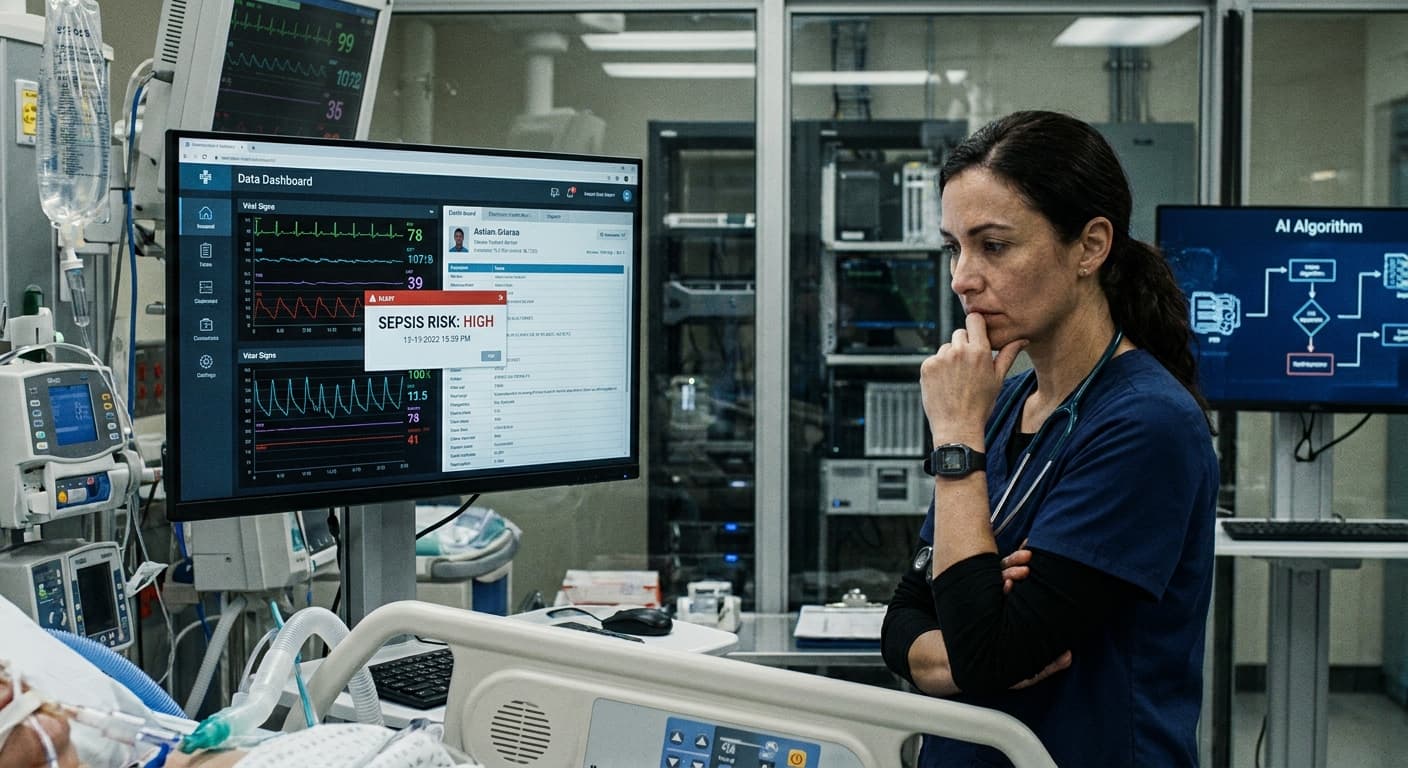
AI Prognosis: Why Sepsis Algorithms Still Struggle with Real-World Medical Data

Automated algorithms for sepsis detection are increasingly deployed in clinical settings to support rapid intervention, but their reliability can be compromised by the quirks, biases, and time-dependent inconsistencies inherent in medical data. Evaluating why sepsis algorithms sometimes fail and what can be improved is crucial as AI continues to transform patient care and diagnostics.
Introduction
Sepsis is a leading cause of mortality in hospitals worldwide, demanding rapid identification and intervention to improve patient outcomes. The promise of artificial intelligence (AI) in supporting sepsis detection has been widely heralded, with hopes that advanced algorithms can augment clinicians in recognizing the early warning signs of this perilous condition. However, the translation of AI-based sepsis detection from the laboratory bench to the patient bedside continues to be fraught with complications. In this comprehensive exploration, we discuss why AI sepsis algorithms, in practice, sometimes fall short and what this means for the future of healthcare AI.
The State of Sepsis Algorithms
Automated tools for sepsis detection are now commonplace in large hospital systems. These algorithms analyze thousands of data points from electronic medical records (EMRF), including vital signs, labs, and patient histories, to identify red flags for sepsis risk. Healthcare organizations have increasingly leaned on such tools to help clinicians triage, diagnose, and intervene before patients deteriorate.
But despite widespread deployment, a persistent challenge has emerged: algorithms that look excellent on paper may falter in the unpredictable and messy world of real clinical practice. This inability to live up to expectations is not unique to sepsis, but remains especially consequential given the time-critical nature of the condition.
Medical Data: Messy and Quirky by Nature
Medical data is not generated for neat algorithmic analysis—it reflects the complexity and variability of human health, provider workflows, and institutional idiosyncrasy. Data may be incomplete, inconsistently coded, and recorded at irregular intervals. Laboratory values might be delayed for practical reasons, and vital sign recordings could be affected by staffing, shift changes, or even the availability of equipment.
Many sepsis algorithms are highly dependent on the precise timing and sequence of measurements, which in real hospitals are often far from uniform. For example, a temperature might be recorded hours after a blood pressure, or a critical lab reported just after a patient’s clinical condition has dramatically changed.
These quirks create fundamental limitations for algorithms designed with neat, idealized data in mind. In some cases, algorithms may even require data that providers could not have known at the moment they were expected to make a clinical decision—bringing to mind the phrase from STAT+: “your sepsis algorithm shouldn’t require a time machine.”
Prognostic Prediction vs. Real-Time Use
A notable challenge with existing AI tools is the distinction between predictive performance in retrospective datasets and prospective, real-world use. Many algorithms are evaluated on historical data, where all information is available, and the timing of observations is conveniently aligned. This can generate the illusion of superior accuracy—algorithms look brilliant when they are allowed to see data that, in practice, wouldn’t be accessible when a real clinical decision is needed.
In real-time, however, clinicians and decision-support tools must work with incomplete information. The mismatch between retrospective validation and real-world workflow is a primary reason why some AI sepsis tools overpromise and underdeliver.
Data Drift and Shifting Clinical Practice
Hospitals are dynamic environments, with care protocols, staffing, technology, and patient demographics continually evolving. An algorithm calibrated a year ago might not perform as well today, particularly if significant changes have occurred in diagnostic thresholds, treatment regimens, or even patient populations due to factors like pandemics or institutional policy changes.
Data drift—the gradual shift in the distribution or meaning of key data elements—can degrade algorithmic accuracy over time, another hurdle for sustained clinical value. In the case of sepsis prediction, hospital workflow changes designed to improve care may unintentionally trip up models trained on old data.
Algorithmic Bias and Equity Concerns
AI in healthcare is not immune to the biases that pervade medical data. If algorithms are trained on data that reflect existing disparities—in frequency of measurement, access to care, or documentation—they may inadvertently perpetuate or even amplify inequities. For sepsis, groups less likely to have timely vitals or laboratory draws could receive fewer or less accurate alerts, further deepening disparities in outcomes.
Aligning algorithm development with rigorous equity assessments is crucial for ensuring that AI tools benefit all patient populations, not just those whose data is most frequently and consistently recorded.
The Path Forward: Improving Sepsis AI
Moving forward, developers and healthcare institutions will need to embrace several core strategies to address the limitations of current sepsis detection tools:
-
Prospective Validation: Algorithms must be tested not only in historical datasets but also in real-time, live environments that reflect the full complexity of healthcare delivery. This real-world validation is essential to reveal workflow mismatches and performance gaps.
-
Robust Data Infrastructure: Improving the consistency, quality, and real-time availability of medical data is paramount. Investment in health IT infrastructure that supports timely data capture and standardized documentation will expand the pool of data that can be reliably analyzed.
-
Human-in-the-Loop Systems: Rather than replacing clinicians, the best AI tools for sepsis and other conditions should act as copilots, prompting providers to investigate potential problems while accounting for context and clinical judgment.
-
Continuous Learning: Sepsis algorithms must be retrained and recalibrated as healthcare systems change, patient populations shift, and new evidence emerges. Embracing dynamic, adaptive models will help prevent data drift and maintain performance.
-
Transparency and Explainability: To foster trust among clinicians and patients alike, AI algorithms need to be transparent about their limitations, with clear reporting on what data inputs were available (and when), as well as understandable explanations for alerts generated.
-
Bias Mitigation: AI developers should rigorously assess and address algorithmic biases, ensuring that a diverse range of patients benefits equitably from predictive tools.
Additional AI Prognosis: Broader Trends and Implications
The case of sepsis algorithms is emblematic of broader challenges facing healthcare AI. As tools for diagnostics, documentation, and patient engagement proliferate, much work remains to ensure that their benefits extend robustly beyond the testing phase into the messy world of day-to-day medicine.
Beyond the technical challenges, acceptance by clinicians—a notoriously skeptical audience when it comes to new technology tools—will depend on demonstrated improvements in patient outcomes, workflow integration, and transparency. Competing demands on clinicians’ attention can lead to alert fatigue, so even the best-designed alerts must be sparing, timely and relevant.
The Future of AI in Sepsis Detection
The long-term potential of AI in sepsis and critical care remains vast. As data infrastructure matures and as multi-modal (combining text, imaging, labs) AI models grow in sophistication, predictive accuracy will steadily improve. The lessons learned from early missteps will ultimately guide the development of more robust, adaptive, and fair tools.
In time, new clinical trials and implementation studies will help clarify precisely when and how AI support can most effectively—and safely—be integrated into practice. In the meantime, a clear-eyed assessment of both the strengths and the limits of current technology is essential for avoiding hype and ensuring steady progress toward safer, more effective care for sepsis patients and beyond.
Conclusion
AI-based sepsis detection tools illustrate both the excitement and complexity accompanying healthcare transformation. By acknowledging the quirks and limitations of real-world medical data, as well as gaps between algorithmic performance in theory and practice, the health technology community can drive smarter, fairer, and more impactful innovation. Sepsis remains a test case for the best and the worst of AI—a bellwether for what the future holds as medicine navigates the frontier of data-driven care.
Source: STAT News
Join the BioIntel newsletter
Get curated biotech intelligence across AI, industry, innovation, investment, medtech, and policy delivered to your inbox.