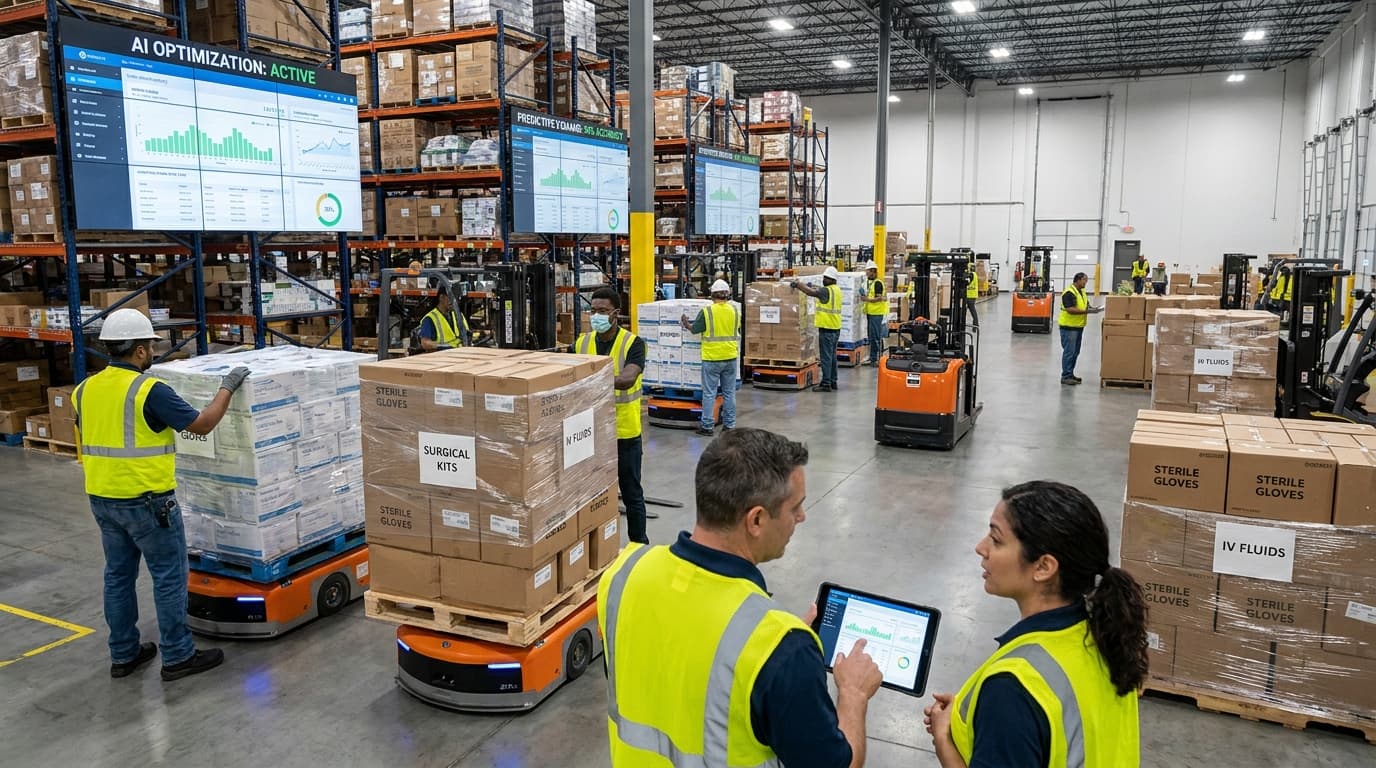
The AI Use Case Healthcare Is Overlooking: Supply Chain Transformation

While AI grabs headlines for clinical decision support, diagnostics, and patient-facing tools, healthcare’s massive and complex supply chain is an area ripe for data-driven improvement. Experts emphasize that automation, predictive analytics, and intelligent logistics could deliver major efficiency savings if AI is properly deployed—yet this potential remains barely explored compared to other applications.
Amid surging interest and investment in artificial intelligence (AI) within healthcare, conversations often center on high-visibility applications like clinical diagnostics, radiology, population health, and virtual care. However, as highlighted by MedCity News on July 7, 2026, one of the industry’s most ripe opportunities—the modern healthcare supply chain—remains largely overlooked in the broader AI narrative. In this in-depth analysis, we unpack why the supply chain is uniquely suited for AI-driven transformation, the current barriers to adoption, and the potential economic and operational impact if the sector chooses to address this blindspot.
The Anatomy of Healthcare’s Supply Chain Challenge
Healthcare delivery is dependent on a vast, interconnected network of logistics and materials management. From manufacturers and distributors to hospital storerooms, clinics, operating rooms, pharmacies, and home-based care, the sheer volume and complexity of goods movement in healthcare rivals that of any major consumer industry.
Key characteristics of the healthcare supply chain include:
- Scale and Volume: U.S. health systems and hospitals collectively manage trillions of dollars’ worth of medical supplies, drugs, implants, and capital equipment annually. Many health systems handle tens of thousands of SKUs and hundreds of supplier relationships.
- Mission-Critical Performance: Unlike other industries, supply disruptions or shortages can have direct, sometimes life-threatening consequences for patient care. Resiliency and reliability are paramount.
- Data Intensiveness: Distribution, inventory tracking, procurement, and consumption each generate extensive data trails. Yet, these datasets are often fragmented across legacy IT platforms, paper logs, and disparate procurement systems.
- Human Resource Demands: Traditional supply chain operations are labor-intensive, prone to human error, and require round-the-clock oversight—especially in environments with unpredictable demand, such as during pandemics or mass casualty events.
It is these dynamics—high volume, repeatability, criticality, and data richness—that, according to MedCity News, align perfectly with AI’s strongest capabilities.
Why the Supply Chain Is AI’s “Sweet Spot” in Healthcare
“AI performs best where a problem is well-defined, data-intensive, repetitive and operates at a scale that exceeds human tracking capacity,” observes the MedCity News article. Unlike some elements of clinical care, where data quality may be limited and edge cases abound, supply chain operations are characterized by:
- Predictable Workflows: Inventory ordering, restocking, expiration tracking, demand forecasting, and supplier negotiations all follow repeatable patterns, making them ideal for algorithmic optimization.
- Vast, Structured Data: Barcoding, RFID, procurement logs, EHR integration, and distributor feeds provide highly structured digital records.
- Quantifiable Outcomes: KPIs such as stockout rates, carrying costs, order accuracy, waste, and on-time delivery can all be precisely measured and tied to operational or financial improvements.
By leveraging machine learning, robotic process automation, and advanced analytics, AI-driven systems can ingest end-to-end supply chain data to provide:
- Real-time Inventory Monitoring: Predictive models can identify future shortages or overstock situations before they impact patient care.
- Procurement Optimization: Algorithms can recommend purchasing strategies based on cost, usage, and supplier reliability.
- Waste Reduction: Intelligent expiration tracking minimizes costly medication and supply waste.
- Logistics Streamlining: AI can dynamically route deliveries, optimize freight schedules, and triage backorders to minimize disruption.
Current State: Limited Adoption and Barriers
Despite the clear theoretical benefits, true end-to-end AI-powered supply chains remain rare in healthcare. Market adoption lags behind sectors such as retail, automotive, and electronics, where predictive analytics and logistics robotics have delivered dramatic efficiency gains.
Several interrelated barriers account for this gap:
- Legacy Technology: Many hospitals and provider organizations still use decades-old enterprise resource planning (ERP) software, manual inventory counts, or siloed procurement databases, limiting their readiness for modern AI integration.
- Workforce Resistance: The transition from human-managed logistics to automation and AI-enhanced workflows requires both upskilling and a cultural shift among storeroom, procurement, and pharmacy staff.
- Data Silos: Interoperability issues, lack of standards, and proprietary vendor platforms make it challenging to consolidate data streams needed for AI modeling.
- Budget Prioritization: Health system technology budgets often prioritize patient-facing innovation over “back office” transformation. Supply chain modernization, therefore, competes with EMR upgrades, population health, and clinical AI projects.
Recent Case Studies and Lessons from Other Industries
In sectors outside healthcare, AI-powered supply chain transformation has proven its value. Leading logistics, airlines, and retail enterprises report inventory reductions, fulfillment improvements, and tens of millions of dollars in cost savings from automated forecasting, digital twins, and last-mile delivery optimization.
Where health systems have started to pilot these models on a limited basis, outcomes are promising. For example, certain large hospital networks utilizing AI for PPE demand forecasting during the COVID-19 pandemic achieved:
- Lower emergency restocking costs
- Fewer critical supply shortfalls
- Data sharing platforms to anticipate local and regional surge demand
Despite isolated pilots, these approaches have rarely scaled across entire organizations or health systems, and a lack of industry-wide best practices remains a hurdle.
Economic and Strategic Value
The case for broader adoption is robust. By automating routine supply decisions, health systems can reduce costs and administrative burdens at a time when inflation, labor shortages, and reimbursement pressures are converging.
- Cost Savings: Automated purchase order processing, more accurate forecasting, and just-in-time inventory could translate to multi-billion dollar savings in the U.S. market annually.
- Operational Resilience: Predictive analytics and dynamic rerouting enable faster response to supply shocks—whether caused by global pandemics, raw material shortages, or natural disasters.
- Workforce Impact: Automating routine supply chain decisions frees skilled staff to focus on exception management, supplier negotiation, and value-based purchasing strategies.
Overcoming Adoption Barriers: Key Recommendations
To unlock the value that AI can offer healthcare logistics, stakeholders must:
- Modernize Data Infrastructure: Invest in interoperable platforms that consolidate supply, demand, procurement, and utilization data across the organization.
- Focus on Change Management: Provide robust staff training, cross-functional collaboration, and leadership buy-in to ensure AI adoption is successful and sustainable.
- Prioritize Integration: Instead of bolt-on solutions, integrate AI into existing ERPs and clinical workflows to maximize user adoption and minimize disruption.
- Align on Metrics: Establish clear, consistent performance indicators to measure outcomes, cost savings, and error reduction, with transparency in reporting.
- Build Collaborative Networks: Facilitate regional and national data sharing to benchmark performance, anticipate shortages, and optimize response during public health emergencies.
Conclusion: A Critical Opportunity for Healthcare Transformation
The healthcare industry is no stranger to buzzwords and hype cycles. While clinical AI applications garner the majority of headlines, the structural transformation waiting in supply chain management stands as a “low-hanging fruit” for digital innovation. The characteristics that make healthcare logistics challenging—sheer volume, high stakes, and data intensity—are precisely the traits that allow AI to shine.
Forward-thinking health systems, technology vendors, and policy leaders should take note. As reimbursement tightens, regulatory pressures increase, and threats of supply shocks loom, the ability to harness AI for logistical operations will likely prove a core competency in the healthcare organizations of the future.
To explore more, read the original analysis on MedCity News.
Join the BioIntel newsletter
Get curated biotech intelligence across AI, industry, innovation, investment, medtech, and policy delivered to your inbox.