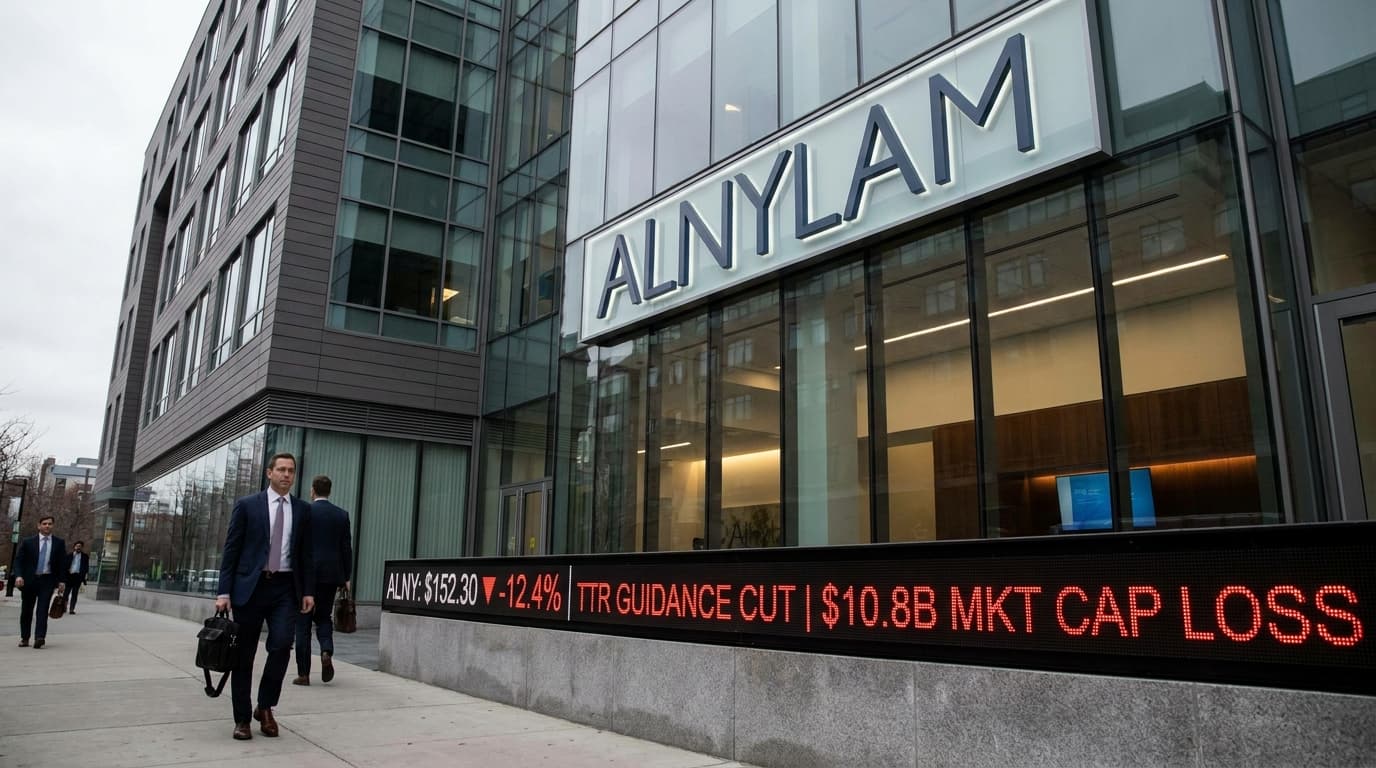
Alnylam Faces $10.8 Billion Blowback Following TTR Franchise Guidance Cut

Alnylam's recently announced revenue guidance reduction for its TTR franchise has resulted in dramatic market repercussions. Observers question the company's sales trajectory and its competitive positioning amid broader industry volatility.
In a development that has sent shockwaves across the biopharmaceutical sector, Alnylam Pharmaceuticals announced a downward revision of its full-year revenue guidance for its transthyretin amyloidosis (TTR) drug franchise. This strategic adjustment has resulted in a staggering $10.8 billion loss in market value, casting an intense spotlight on the company’s commercial outlook and raising multiple questions about the landscape surrounding RNAi-based therapies.
Understanding the TTR Franchise and the Significance of Guidance
The TTR franchise is a cornerstone of Alnylam's business, comprising therapies aimed at treating rare, life-threatening diseases caused by misfolded transthyretin proteins. Such conditions include hereditary and wild-type transthyretin amyloidosis, disorders marked by severe cardiomyopathy and neuropathy. Alnylam’s RNA interference therapies, including flagship assets like patisiran and vutrisiran, have represented some of the most advanced treatments for these patient populations.
However, the market’s reaction to the guidance cut has highlighted not only concerns regarding Alnylam’s near-term credence but also deeper anxieties about its future revenue potential. As noted by Stifel analysts, the revision “may create a near term credibility overhang,” which has the potential to influence both stakeholder sentiment and broader sector expectations.
The Drivers Behind the Guidance Cut
While specifics on the root causes of the revenue estimate reduction have not been publicly detailed in full, industry analysts point to several possible factors:
- Market Dynamics: TTR amyloidosis remains a competitive space, with multiple therapies advancing through late-stage pipelines, including those utilizing novel modalities such as gene editing, monoclonal antibodies, and next-generation RNA-targeting platforms.
- Patient Uptake and Access: Growth in rare disease markets is often constrained by diagnostic lag times, reimbursement hurdles, and variable disease awareness across geographies. Any change in one of these variables can have an outsized effect on commercial forecasts.
- Competition and Clinical Data: With emerging rivals gaining traction, even a modest stumble in clinical, regulatory, or commercial execution can lead to significant revenue shortfalls.
Strategic Implications for Alnylam
The magnitude of the market’s reaction suggests broader anxieties about Alnylam's ability to execute and maintain leadership in the TTR space. Investors and analysts are likely to probe the following issues in the months ahead:
- Reliability of Forecasts: Companies operating in rare diseases with complex markets often face forecasting difficulties. Alnylam’s adjustment, while perhaps prudent, invites scrutiny regarding its internal modeling and the assumptions underpinning its projections.
- Long-term Growth Prospects: The field is witnessing a “tailwind” from increased awareness and diagnosis rates, yet the ability of Alnylam to capture that growth is in question. Execution on payer partnerships, patient finding, and global expansion will be decisive.
- Business Development and Diversification: As peak sales potential for hallmark drugs comes under question, pressure may mount on Alnylam to diversify its portfolio, seek external collaborations, or pursue M&A to hedge against asset concentration risk.
Context: Competitive Landscape in TTR Amyloidosis
Alnylam’s franchise is not without competition. Companies such as Pfizer, Ionis Pharmaceuticals, and even new entrants employing CRISPR technology are accelerating their commercialization and development plans. This rapidly evolving landscape places a premium on clinical differentiation, payer value demonstration, and the ability to maneuver regulatory shifts with agility.
Moreover, as biopharma analysts have observed, the TTR franchise has benefited from a rising tide of disease recognition and treatment advocacy. The latest guidance cut raises the question of whether those industry-wide tailwinds will be enough to offset competitive headwinds in the years to come.
Investor Reactions and the Broader Market View
Financial markets are often quick to penalize perceived weakness, especially in capital-intensive and innovation-driven sectors like biopharma. The $10.8 billion market cap reduction serves as a stark reminder of the challenges faced by companies at the vanguard of rare disease innovation. The near-term overhang referenced by Stifel may persist until Alnylam can demonstrate renewed momentum—either through accelerating patient growth, new product launches, or strategic alternative successes.
The Road Ahead: Navigating Uncertainty
For Alnylam, the immediate focus is likely to be on rebuilding investor trust and demonstrating that the franchise still holds untapped commercial upside. This could be achieved by:
- Publishing rigorous updates on patient access initiatives and market penetration.
- Accelerating clinical development of next-in-line RNAi candidates beyond the TTR field.
- Unlocking value through geographic or therapeutic area expansion.
It will also be important for Alnylam to communicate clearly and consistently—both with investors and the broader medical community—about how it intends to navigate these commercial uncertainties while maintaining scientific innovation.
Conclusion
Alnylam’s guidance reduction and resultant $10.8 billion blowback is more than a story of temporary turbulence—it is emblematic of the daunting commercial complexity inherent to rare disease therapies and the sometimes-unforgiving expectations of the public markets. The key test for Alnylam will be whether it can turn this period of challenge into an opportunity for renewed strategic discipline and long-term resilience. Only time will tell if this franchise can return to growth, or if competitive forces and market skepticism will dictate a new chapter in Alnylam’s story.
Join the BioIntel newsletter
Get curated biotech intelligence across AI, industry, innovation, investment, medtech, and policy delivered to your inbox.