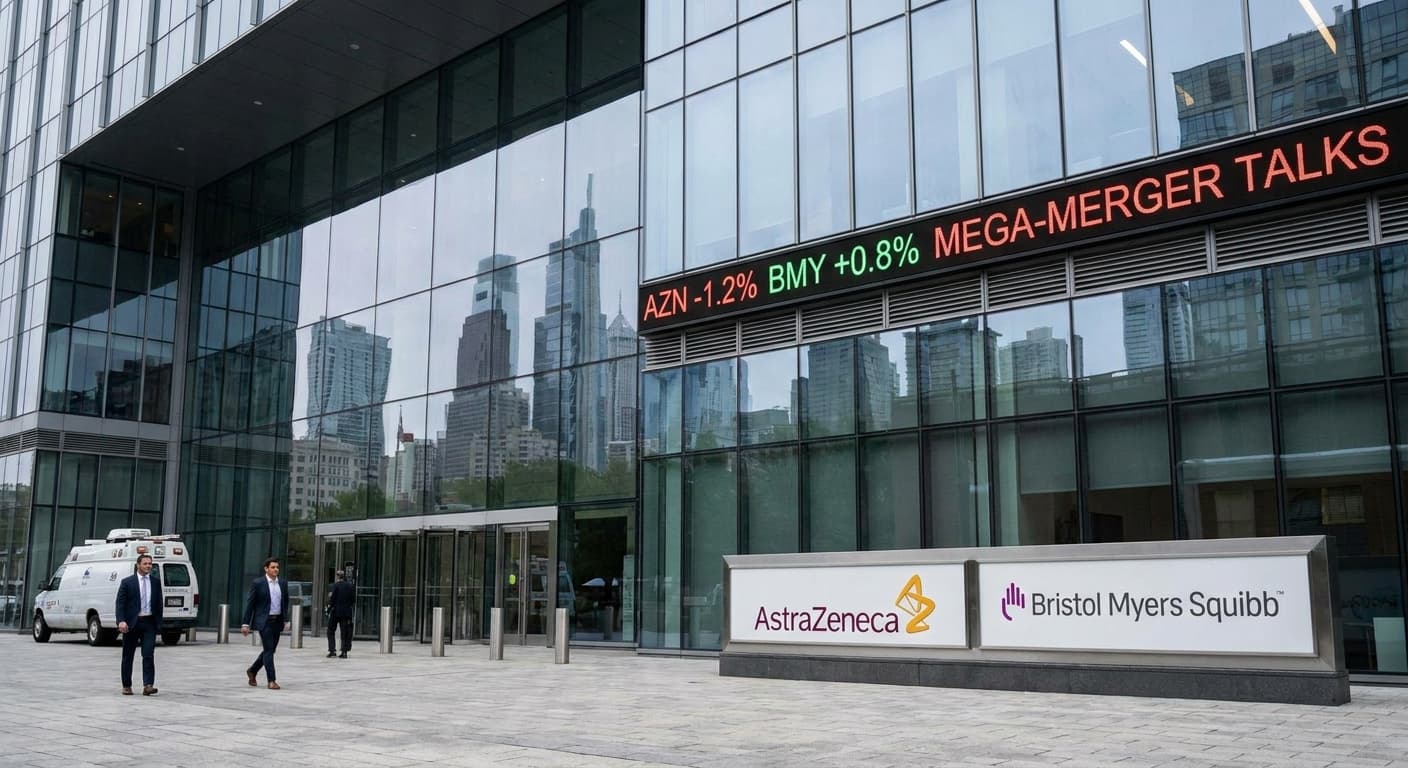
AstraZeneca-Bristol Myers Squibb Mega-Merger Talks: What’s at Stake for the Biopharma Sector?

Industry analysts and investors are closely watching potential merger developments between AstraZeneca and Bristol Myers Squibb, which if consummated, would create an unprecedented behemoth in the life sciences sector. This analysis explores the context, motivations, barriers, and possible impacts for companies, patients, and the broader market.
Introduction
The global pharmaceutical industry is no stranger to large-scale mergers, with periodic waves of consolidation shaping the landscape of drug discovery, commercialization, and patient access. In August 2026, reports surfaced suggesting that AstraZeneca and Bristol Myers Squibb could be engaged in merger talks—a scenario that, if realized, would constitute the largest pharmaceutical deal in history and profoundly shift the balance of power within the biopharma sector. These rumors have triggered immediate reactions in the markets, led investors to reassess competitive assumptions, and spurred broad questions regarding the motivations, practicalities, and potential fallout of such a deal.
This article provides a comprehensive exploration of the speculated AstraZeneca-Bristol Myers Squibb (AZ-BMS) mega-merger, considering historical M&A precedents, strategic rationales, regulatory and operational barriers, and the overarching implications for industry stakeholders and the patients they serve.
Section 1: Understanding the Rumor—Origins and Initial Reaction
The latest reports cite unnamed sources and speculative market analysis about deal discussions between AstraZeneca, a U.K.-based pharmaceutical giant known for its oncology, respiratory, and cardiovascular portfolios, and Bristol Myers Squibb, a New York-based leader in immuno-oncology, cardiovascular, and immunology therapies. As soon as these reports hit the wires, investors reacted, with AstraZeneca’s stock falling as market watchers pondered not only the size and integration challenge but also the strategic rationale behind possibly combining two of the most valuable franchises in the life sciences global market.
Previous mega-mergers, such as Pfizer’s acquisition of Wyeth or GlaxoSmithKline’s series of deals, have often set new benchmarks in R&D scope, commercial reach, and cost-control synergies. Unlike those, however, the proposed AZ-BMS deal would create a biopharma colossus with a combined market capitalization eclipsing all industry rivals to date.
Section 2: Strategic Motivation—Why a Mega-Merger Now?
There are several potential drivers behind such a strategic move:
-
R&D Synergy: By joining forces, both companies could potentially enhance the productivity and efficiency of their drug discovery pipelines, leveraging shared technologies, clinical development platforms, and a complementary or overlapping intellectual property portfolio. The aim would be to accelerate innovation and reduce duplication.
-
Market Access and Scale: Merging would allow the new entity to access broader markets more quickly and efficiently, achieve scale in global commercialization, and potentially strengthen negotiating power with payers and providers.
-
Cost Savings: As with most large mergers, anticipated cost reductions through resource sharing, combined operations, and streamlined management could be substantial, often pitched as a rationale to investors.
-
Pipeline Diversification: Both firms have deep late-stage and marketed product portfolios, but their therapeutic area strengths differ. The merger could create a diversified powerhouse with more balanced exposure to fast-growing segments such as oncology, cardiology, immunology, and rare diseases.
Section 3: Key Industry Implications—Competition, Innovation, and Patient Impact
The combined company’s reach would be global and massive, potentially affecting the ecosystem in several ways:
-
Competitive Landscape: Smaller biotechs might see acquisition appetites shift, as the mega-entity could cherry-pick pipeline assets or exert influence on early-stage innovation through strategic partnerships and investment arms.
-
Regulatory Scrutiny: Antitrust regulators worldwide, particularly in the U.S., E.U., and China, are likely to examine the deal for monopoly risk, impediments to generic/biosimilar access, and price-setting power. The lessons of previous mega-mergers—often resulting in asset divestitures as conditions of approval—suggest a turbulent path ahead.
-
Operational Complexity: Combining two major organizations with diverse cultures, IT systems, and regional compliance requirements poses integration risks that could distract management and employees, affecting near-term productivity and morale.
-
Patient and Provider Access: A larger, more efficient company could translate into faster global launch of innovative medicines; however, there is always a risk that focus narrows to blockbuster markets, potentially sidelining niche therapeutics or programs with uncertain financial returns.
Section 4: Barriers and Cautions—Why It May Not Happen
Industry analysts are quick to note that merger talks can falter for many reasons, especially at such an unprecedented scale:
-
Cultural and Leadership Hurdles: Merging two large, legacy organizations with distinct management philosophies and cultures can be a recipe for internal friction.
-
Deal Structure and Valuation: Aligning on financial terms—stock swaps, cash, leadership roles post-merger—may prove extremely complex.
-
Shareholder Resistance: Investors on either side may balk at the proposed valuation, the logic of the business case, or uncertainty about future strategy.
-
Market and Regulatory Pushback: Particularly with growing global pressure to manage drug pricing and protect generic market entry, watchdog groups and regulators may intervene to set strict conditions or block the deal outright.
Section 5: What Past Mega-Mergers Tell Us
A look back at industry history reveals mixed results from large consolidations. Sometimes, synergies and cost savings deliver on projections, but integration difficulties regularly undermine post-merger performance. Key takeaways often include time lost to internal reorganization, even as external pressures mount from changing science, regulatory requirements, and patient expectations.
For AstraZeneca and BMS, whose recent years have been marked by high-profile approvals, scientific breakthroughs, and aggressive business development, the challenge would be to maintain forward research momentum while realigning massive internal structures.
Section 6: The Market’s View—Investor Sentiment and Beyond
Investor wariness, as reflected in AstraZeneca’s slumping share price following the news reports, suggests that markets see both opportunity and risk. Enthusiasm for short-term cost savings and long-term pipeline expansion is countered by uncertainty around execution, regulatory fate, and dilution of existing shareholder equity. seasoned M&A analysts remind stakeholders that deal rumors can sometimes function as negotiating tactics or signals to other potential partners.
Section 7: Broader Biotech and Health Ecosystem Implications
Beyond industry giants, the potential merger could spark a cascade of market reactions:
-
Supplier and CRO Relationships: Contract research and manufacturing organizations would have to re-negotiate volumes, service contracts, and technical collaborations.
-
Emerging Biotech Players: M&A activity at the top can lead to greater uncertainty and opportunity for emerging players, who may benefit from asset divestitures or find themselves acquisition targets in a consolidating market.
-
Policy and Patient Advocacy: Advocacy organizations and think tanks may push to ensure the deal, if realized, is aligned with sustainable innovation, equitable access, and responsible pricing.
Conclusion: Watching, Waiting, and Assessing the Risk
The prospect of an AstraZeneca-Bristol Myers Squibb merger has captured the imagination of the business community, investors, and competitors alike. While such a combination could reset the rules for scale, innovation, and strategic focus in the biopharma space, it is not without formidable headwinds and risks. Whether or not the deal completes, its ripple effects could shape industry M&A dynamics, regulatory approaches, and even global drug access for years to come.
The world will now watch closely as talks reportedly continue—and as management, regulators, and the investment community parse the fine print of what could become the largest deal the sector has ever witnessed.
Source: STAT News
Join the BioIntel newsletter
Get curated biotech intelligence across AI, industry, innovation, investment, medtech, and policy delivered to your inbox.