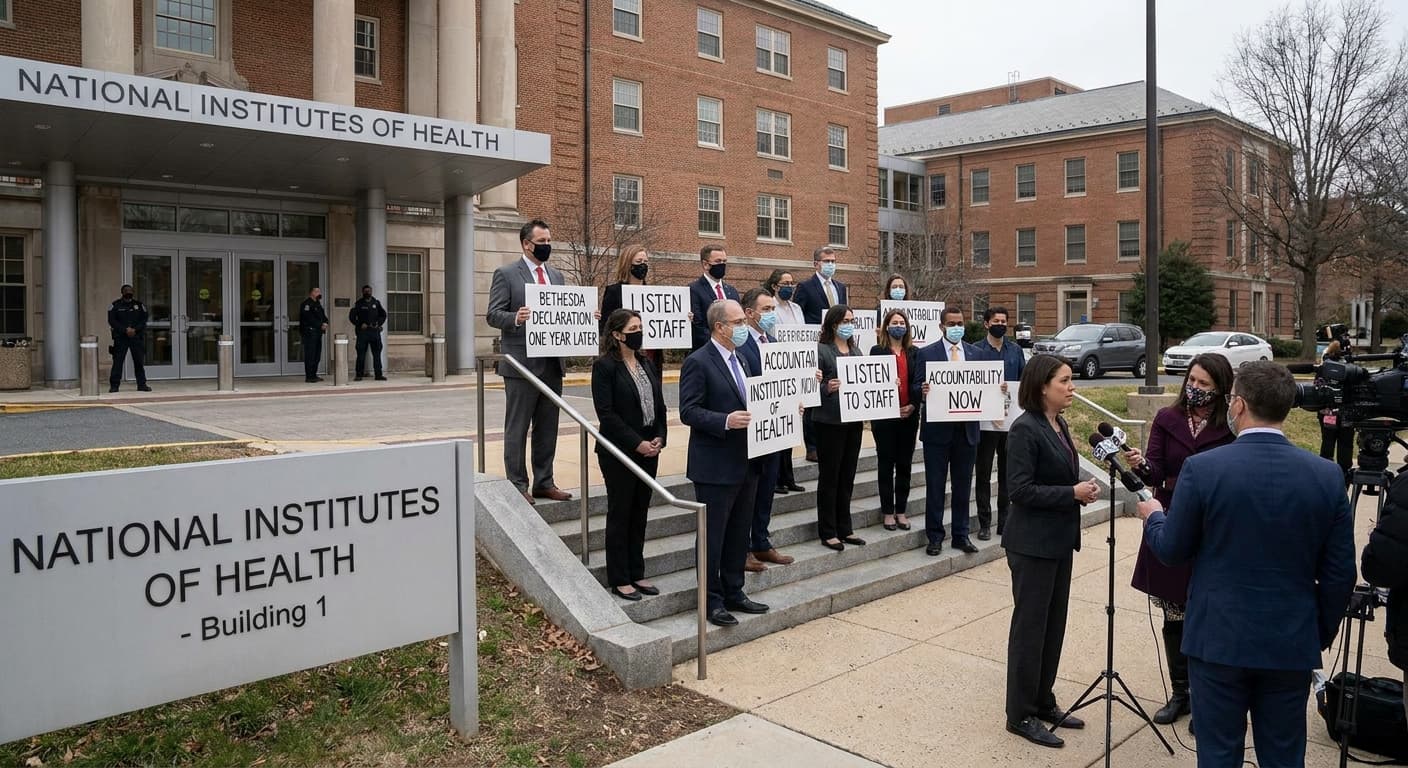
A Year After the Bethesda Declaration: Unresolved Dissent and Leadership Tensions at NIH

A year ago, the Bethesda Declaration brought internal dissent at the NIH to public attention, as staffers called for reform and voiced serious concerns about workplace issues and scientific culture. As the anniversary passes, many involved feel that not enough has changed, underscoring deep-rooted challenges within the institution.
On June 9, 2026, a report highlighting the first anniversary of the Bethesda Declaration revealed that seventy-one NIH staffers believe their leadership has largely ignored the substance of their dissent. This development casts a spotlight on the evolving dynamics of internal advocacy, scientific culture, and institutional response at one of the world's most influential health agencies. In this comprehensive exploration, we will dissect the context, implications, challenges, and broader significance of unresolved dissent at the National Institutes of Health (NIH), examining what the persistent concerns reveal about public sector science in the United States.
The Bethesda Declaration: A Flashpoint for NIH Culture
The Bethesda Declaration, published in 2025, was a rare and powerful collective statement from dozens of NIH staffers. It detailed systemic concerns within the agency, including issues of scientific integrity, management transparency, workforce well-being, and the broader direction of public health research. The letter, supported by seventy-one signatories, captured national attention for its candor and for bringing workplace culture in science into public discourse.
Among the central tenets of the declaration were requests for increased accountability, improved mechanisms for staff feedback, and concrete protections for whistleblowers and dissenting voices. NIH, as a key driver of biomedical research worldwide, faces unique scrutiny. Any hint of dysfunction or suppressed internal voices ripples across the scientific and policy communities, impacting not only internal morale but also public trust in scientific governance.
Staff Perspective: A Sense of Being Ignored
According to the June 2026 follow-up report, those who signed the original declaration feel that NIH leadership has “largely ignored" their well-articulated concerns. This prevailing sentiment among staffers suggests that whatever internal efforts have been undertaken since the declaration have not addressed, to their satisfaction, the core issues raised.
Why Do Staffers Feel Their Concerns Have Been Overlooked?
- Lack of Concrete Action: Many staffers expected substantive changes post-declaration—be it revised managerial approaches, expanded communication forums, or new safeguards for internal critics. While there may have been town halls or policy reviews, these measures seem to have had a limited impact on daily workplace realities.
- Perceptions of Tokenism: There is a sense among dissenters that leadership efforts have been more performative than impactful—committees formed, statements made, but little in the way of structural change.
- Continued Policy Disputes: Some signatories cite ongoing discord over scientific direction and mission priorities, feeling excluded from real decision-making or subsequently sidelined when raising uncomfortable truths.
Broader Impacts on Workforce Morale
The persistence of these sentiments is notable, as NIH is often regarded as a gold standard for biomedical research employment. When such a prestigious institution faces deep-seated discord, questions inevitably emerge about broader trends in public sector science workplaces: Are similar patterns present at other federal research agencies? What are the downstream consequences for research productivity and public trust?
Leadership Response and Barriers to Progress
Since the declaration, NIH leadership has publicly stated commitments to fostering a more inclusive environment and valuing staff feedback. However, the anniversary report’s findings suggest a significant disconnect between leadership messaging and employee perception.
- Institutional Inertia: Large organizations like NIH are inherently resistant to rapid change. Bureaucratic layers, longstanding hierarchies, and overlapping missions can dilute urgency.
- Communication Gaps: Initiatives aimed at improvement sometimes fail to reach the broader workforce or are poorly communicated, leaving staff feeling excluded from or unaware of reform efforts.
- Fear of Retaliation: Dissenters continue to express concerns about the risks associated with speaking out, even in environments with nominal whistleblower protection.
Context: NIH and Public Sector Workplace Challenges
The NIH’s complex organizational structure, competitive research environment, and dependency on federal funding make it a unique workplace. However, several issues raised by its staffers parallel those in other public scientific institutions:
- Transparency: Calls for open communication about funding, leadership decision-making, and research direction are common across federal research organizations.
- Voice vs. Hierarchy: Staff in hierarchical, mission-driven agencies often struggle for meaningful input into policies and practices, especially when senior leadership is insulated from day-to-day concerns.
- Balancing Mission with Well-Being: As pressures grow to deliver world-class science, workplace demands—including long hours, administrative burdens, and performance metrics—can affect employee morale, leading to burnout or disengagement.
- Protection for Dissent: Federal agencies have formal avenues for internal complaint and review, but critics argue these are often slow, intimidating, or insufficiently independent to address systemic issues.
What Has—And Hasn’t—Changed
While it is possible that incremental improvements have been made since the Bethesda Declaration, the view of signatories is that real transformation remains elusive. Potential changes cited in broader NIH communications—such as diversity and inclusion programs, advisory committees, or new employee resource groups—may not have translated into recognizable change for those most concerned.
- Incremental Steps: Reports of organizational self-examination, listening sessions, or policy reviews suggest that leadership is aware of optics, but staffers voice frustration over the pace and scope of tangible reform.
- Unresolved Tensions: The very fact that staff chose to mark the one-year anniversary with a report is a signal of dissatisfaction and a possible escalation in advocacy.
Implications for the Scientific Community
The issues raised by the declaration resonate beyond NIH. Similar debates about culture, dissent, and workplace well-being have emerged in academic research, private industry, and other government science entities. Lessons from the NIH experience—which plays out under intense political, public, and media scrutiny—will likely inform the approach of other agencies.
Risks of Unaddressed Dissent
- Reduced Innovation: Environments perceived as hostile to feedback or alternative viewpoints may stifle creativity, collaboration, and breakthroughs.
- Talent Drain: High-performing researchers may depart for more supportive workplaces, draining agencies of vital expertise.
- Erosion of Public Trust: Public revelations of internal discontent can diminish confidence in a scientific agency’s objectivity, morale, and capacity for self-correction.
What Would Real Change Look Like?
To restore trust and strengthen workforce engagement, NIH and peer institutions might consider:
- True engagement with staff input, including direct responses to dissent and tangible adjustments in leadership decisions.
- Protection and validation for those raising concerns, signaling that dissent is not only tolerated but embraced as a sign of institutional health.
- Structural changes that empower a wider array of voices and encourage bottom-up innovation.
- Transparent updates on progress, setbacks, and strategy, closing the loop with all employees.
Conclusion: The Stakes for NIH and Beyond
The one-year milestone of the Bethesda Declaration is an important moment for the NIH—and for all who care about the health of America’s scientific enterprise. While the agency’s leadership may cite efforts at cultural change, the persistence of dissent underscores how deeply rooted these issues can be in large organizations. The challenge for NIH now is to bridge the gap between rhetoric and reality, engaging with critics not just with words, but with action. How the NIH responds—or fails to respond—will reverberate far beyond Bethesda, shaping the trajectory of public science, workforce stability, and innovation in the years ahead.
For those both inside and outside NIH, the situation is a case study in the complexities of effecting change within entrenched public sector institutions. The lessons learned will inform not only biomedical research agencies but all organizations hoping to foster a culture of openness, innovation, and accountability.
Join the BioIntel newsletter
Get curated biotech intelligence across AI, industry, innovation, investment, medtech, and policy delivered to your inbox.