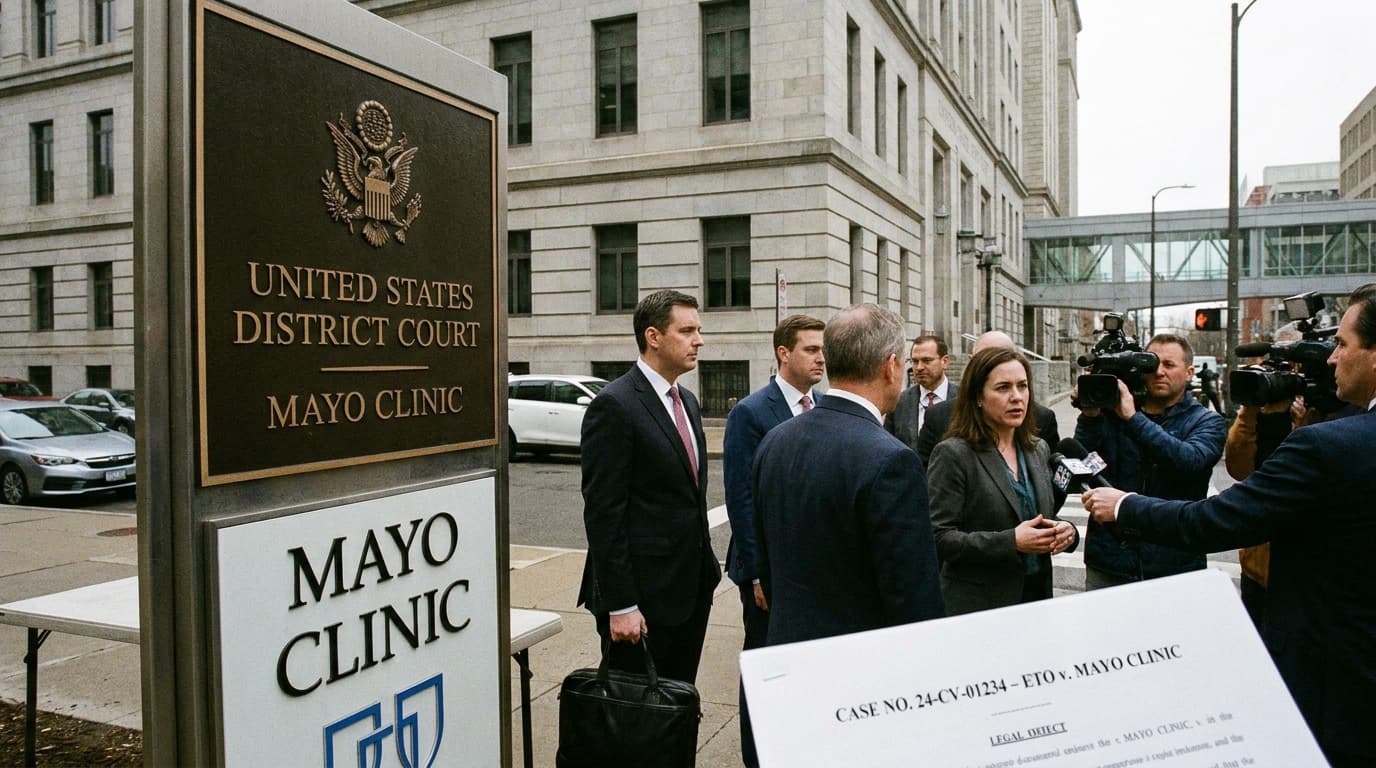
Former Mayo Clinic Leader Sues System Over Alleged AI Cover-Up: Examining Whistleblower Claims and Patient Safety Concerns

As AI technologies proliferate within healthcare institutions, a groundbreaking lawsuit filed by a former Mayo Clinic leader puts the spotlight on the balance between innovation, patient safety, institutional accountability, and the regulatory environment. With artificial intelligence playing an ever-expanding role in decision support and patient care, this case reflects the mounting tension between front-line experts and administrative priorities in large health systems.
Introduction
Artificial intelligence (AI) has taken center stage in healthcare innovation, promising breakthroughs in diagnostics, personalized medicine, and operational efficiency. However, as with any rapidly evolving technology, its deployment raises important questions about patient safety, ethics, privacy, and institutional responsibility. The healthcare industry is now witnessing a watershed moment, as a former Mayo Clinic research director, Traci Tamiko Eto, brings forward a whistleblower lawsuit alleging she was silenced, demoted, and ultimately terminated due to her efforts to speak out about lapses in AI safety and patient privacy at the prominent health system. This story is not only about one individual's quest for accountability but also about systemic issues within healthcare that stem from the tech-driven transformation and the ongoing struggle to create regulatory mechanisms that keep pace with innovation.
The Allegations at a Glance
According to publicly available information, Traci Tamiko Eto’s lawsuit centers on the alleged lack of transparency and adequate safeguards regarding AI tools in patient care at the Mayo Clinic. As AI algorithms—ranging from diagnostic risk assessments to workflow optimization—are increasingly embedded within healthcare systems, the risks associated with data privacy breaches, algorithmic bias, and unintended clinical consequences move from hypothetical to immediate and tangible.
Eto alleges that after raising legitimate warnings internally, not only did Mayo Clinic’s leadership fail to address safety and privacy gaps, but also actively sought to minimize or obscure the issues at hand. She claims to have been subjected to retaliation, including demotion and eventual termination—a scenario playing out as AI oversight becomes a prominent industrial and regulatory concern.
The Broader Landscape: AI in Healthcare and Its Regulatory Challenges
AI’s promise in healthcare is immense, ranging from disease prediction to natural language processing for medical records and support for clinical decision-making. However, the complexity of these systems, the opacity of many AI algorithms (sometimes dubbed 'black box' models), and the sensitivity of health data create a perfect storm for ethical and regulatory dilemmas. The lawsuit underscores a growing recognition that robust oversight—and the protection of those who raise concerns—must become embedded institutional processes.
What Makes Healthcare AI Unique?
- Patient Safety at Stake: Unlike other industries, errors in health-related AI systems can directly impact patient outcomes, from missed diagnoses to inappropriate treatment recommendations.
- Data Privacy and Security: Healthcare organizations handle large volumes of highly sensitive personal information, making any lapses in AI integration particularly concerning from a privacy standpoint.
- Regulatory Gaps: While the FDA and other agencies are evolving their oversight of digital health tools, the rapid pace of AI development poses a continual challenge for regulation that lags behind technology.
Institutional Pressures and Whistleblower Risks
The Mayo Clinic lawsuit points to a tension familiar in many large, reputation-driven organizations. As financial pressures, market competition, and the desire for innovation drive rapid change, there's potential for patient safety and compliance issues to be downplayed or overlooked. In this context, employees who sound alarms—especially about high-profile projects like AI—may risk professional setbacks or retaliation, despite whistleblower protections designed to encourage transparency and accountability.
Details and Implications of the Lawsuit
The Plaintiff’s Claims
Traci Tamiko Eto alleges that, despite her efforts to escalate concerns through appropriate channels, Mayo Clinic opted to "cover up" known issues. The allegations imply the following potential institutional failures:
- Lack of rigorous safety validation of AI tools prior to and after deployment
- Insufficient or siloed oversight of patient data security
- Possible compliance shortcomings with HIPAA and other privacy regulations
- Failure to create an environment where good-faith concerns can be raised without fear of retaliation
While these claims await judicial review, they raise public interest questions that transcend the details of this particular lawsuit. Even the perception of silencing safety advocates can erode trust in cherished health institutions and cast a shadow on the potential for AI to transform care for the better.
Mayo Clinic’s Response and Industry Repercussions
Major healthcare systems often respond to legal challenges by stating their commitment to “the highest standards of safety and compliance”. In this case, the outcome—whether by legal verdict, settlement, or policy reform—is likely to set important precedents. If the courts side with the whistleblower, expect:
- Accelerated internal reviews of how AI safety and privacy are governed
- Calls for additional protections for employees raising AI-related concerns
- Scrutiny from federal regulators and perhaps new reporting requirements or guidance for health systems
The Role of Whistleblowers in Health IT’s Evolution
Healthcare, as a sector, owes much of its progress in safety and quality to whistleblowers—insiders willing to challenge norms or report when the system fails to live up to its own standards. In AI, where many applications are still considered cutting-edge, the risks of groupthink and overconfidence can be acute. Whistleblowers like Eto serve as critical counterweights, asking tough questions about development rigor, post-market surveillance, patient consent, and risk management.
Case Studies and Precedents
The Mayo lawsuit is not the first to place AI under the scrutiny of U.S. courts, but it stands out due to the prominence of the institution and the subject matter. Previous cases have involved data breaches, algorithmic bias in radiology, and liability for clinical decision support system errors. None, however, have so publicly tied the fate of a top research leader to direct claims about the institutional handling of AI risk.
Regulatory Context: Are Current Laws Sufficient?
HIPAA, HITECH, and Emerging AI Guidance
U.S. federal regulations like HIPAA (Health Insurance Portability and Accountability Act) and its digital evolution, the HITECH Act, set baseline standards for privacy and security. However, these laws were created for broader electronic health data and may not explicitly address the nuances of AI—particularly the need for algorithm transparency, explainability, and provenance tracking.
Federal agencies such as the FDA have started issuing guidance on software as a medical device (SaMD) and are piloting processes for risk-based evaluation of AI-powered medical technologies. The FTC, too, has stepped up warnings about deceptive claims. However, most enforcement remains post hoc—after issues arise—rather than proactively ensuring safe and ethical AI design and integration. This reactive model places significant onus on institutions and, by extension, whistleblowers who may see risks before they manifest as harm.
Global Comparisons: Europe’s Approach
Across the Atlantic, the European Union has taken a more prescriptive approach. The proposed EU AI Act would classify certain healthcare AI applications as “high risk” and require rigorous evaluation before market entry. The U.S. has yet to adopt such stringent upfront requirements, but cases like Mayo Clinic’s may fuel momentum.
The Human Cost: Implications for Patients and Staff
For Patients
Concerns about AI safety and privacy are not abstract. If integration is rushed or poorly managed, consequences can include
- Missed, delayed, or incorrect diagnoses
- Inappropriate alerts or recommendations affecting physician and nurse workflows
- Unauthorized sharing or breach of sensitive personal data Ultimately, the promise of AI is only realized if these risks are addressed proactively, transparently, and systematically.
For Health System Staff
Beyond the immediate risks to whistleblowers, the lawsuit spotlights a broader culture issue. Staff must feel empowered to question AI systems, contribute to continuous learning and improvement, and participate in oversight—without fear that their careers will be derailed for speaking up. This cultural evolution is as necessary as technical safeguards.
Where Does the Industry Go from Here?
Institutional Recommendations
- Independent AI Oversight: Hospitals and health systems should consider appointing independent committees with authority to review AI deployments and suggested improvements without conflict of interest.
- Transparent Risk Communication: Patients and staff alike deserve to understand what AI is being used, how, and what checks are in place.
- Robust Whistleblower Protections: Policies must actively encourage, not discourage, internal reporting of vulnerabilities or noncompliance—and protect those who come forward.
- Continuous Post-Deployment Monitoring: AI efficacy and safety cannot be a "set and forget" endeavor; monitoring performance and outcomes is critical.
Regulatory Outlook
Regulators are watching cases like this closely—not only for their legal outcomes but for clues as to where the regulatory environment must evolve. Key areas include
- Expansion of existing protections under HIPAA and related frameworks
- Consideration of requirements for algorithm transparency and explainability
- Guidance or regulation specific to personnel protections concerning AI and digital health whistleblowers
Conclusion
The lawsuit brought by Traci Tamiko Eto against the Mayo Clinic comes at a time when healthcare’s digital transformation is accelerating—magnifying both the opportunities and the risks. As AI moves further into the clinical core, trust, transparency, accountability, and regulatory adaptation are all pressing priorities. Ensuring the industry learns from such cases—rather than repeating the mistakes that make them possible—will be critical to the future of healthcare that is not only innovative but safe, ethical, and inclusive of the voices of those best positioned to protect patients.
Source: MedCity News
Join the BioIntel newsletter
Get curated biotech intelligence across AI, industry, innovation, investment, medtech, and policy delivered to your inbox.