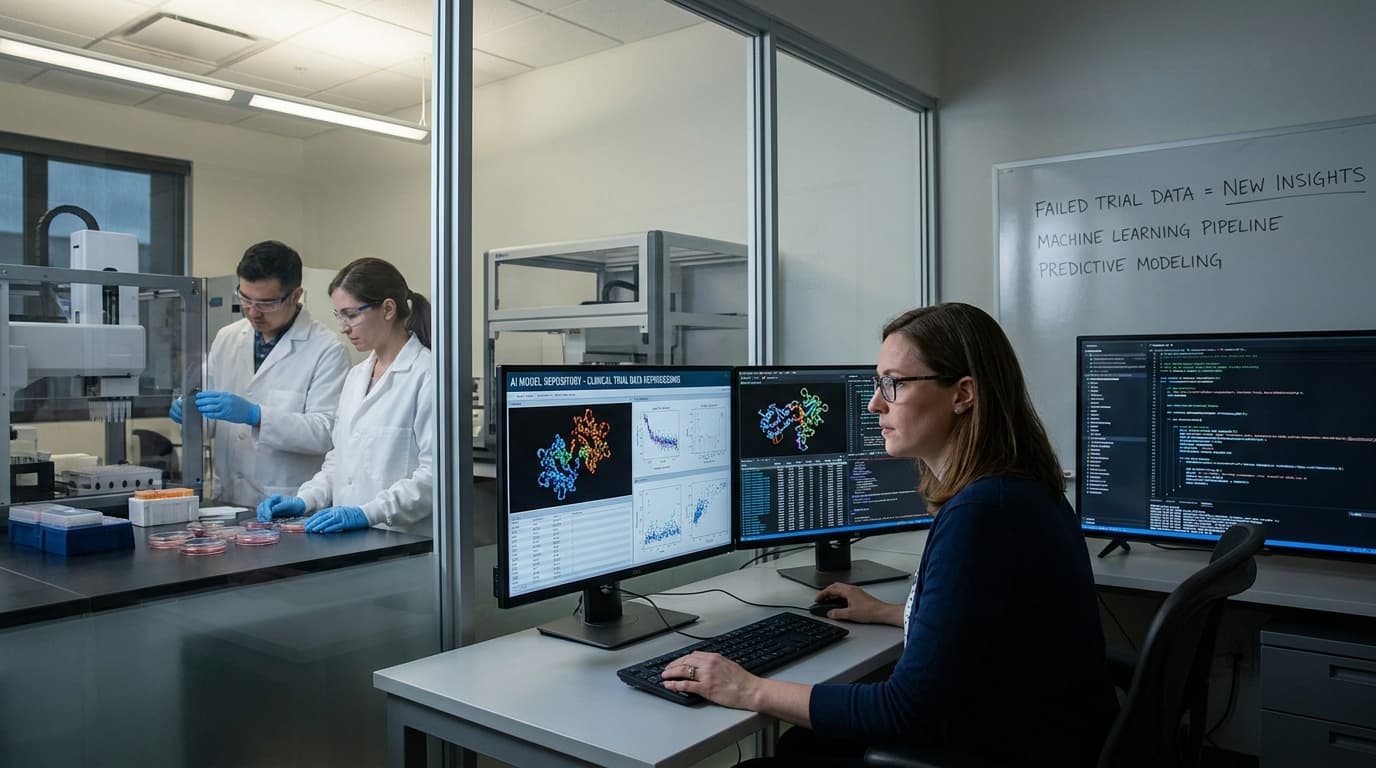
How a Biotech Startup Transformed Clinical Failure Into an AI Success Story

In a climate where failed clinical trials often signal major financial and reputational losses, a biotech company is flipping the narrative—transforming negative trial data into valuable resources for artificial intelligence modeling. This approach exemplifies the increasing integration of AI within health tech and its ongoing potential to redefine success metrics in drug discovery.
Introduction
Failures in clinical trials are common in the pharmaceutical industry. Traditionally, these failures lead to both financial losses and significant setbacks for companies striving to bring new therapies to market. However, the integration of artificial intelligence into drug discovery is ushering in a new era, where the data from unsuccessful trials can become powerful resources for innovation. This post explores how one biotech startup has turned a failed clinical trial into a foundation for advanced AI-modeling, potentially reshaping expectations across the health tech sector.
The Traditional Challenge of Failed Trials
Historically, the cost and effort required to conduct clinical trials have meant that failure carries a high price—often leading companies to shelve projects entirely. Negative results are rarely, if ever, published or transformed into useful assets, which has left vast amounts of valuable data underutilized or simply lost. But what if these "failed" trials were in fact rich sources of information?
A New Way Forward: Turning Failure Into Opportunity
In the latest example, highlighted in STAT Health Tech, a biotech startup looked beyond immediate disappointment. Their failed clinical trial—rather than being discarded—was used as raw material to fuel the development of a breakthrough AI model. This approach not only salvaged years' worth of work and investment but also created an opportunity to extract new insights, inform future trial design, and enhance drug development approaches overall.
Why Don't More Companies Do This?
One pivotal reason lies in pharma's traditional business and research culture. There is often a stigma attached to failure, and some organizational structures lack the flexibility to pivot from outdated approaches. The resources, technical infrastructure, and strategic vision required to extract meaningful AI insights from trial data are not always present. This biotech startup’s story shows that adapting to a data-driven, technology-enhanced strategy can potentially convert what seem to be dead ends into new beginnings.
AI’s Value Proposition in Drug Discovery
The underlying principles are compelling: AI can sift through massive datasets, spot trends, and develop predictive models far faster and more comprehensively than human researchers. When clinical trial data—regardless of outcome—is fed into sophisticated machine learning algorithms, those systems can identify factors that predicted response or failure, suggest patient subtypes, and even unravel unrecognized biological pathways. As this biotech startup demonstrated, failed data can become fertile ground for iterative AI modeling, de-risking future clinical work and boosting the efficiency of new candidate selection.
Implications for the Industry
Pharma’s reluctance to share or repurpose negative data has long hampered the industry’s collective progress. Successfully converting failed trials into AI models may encourage companies to be more open with their datasets and less risk-averse. This transformation holds far-reaching implications for regulatory policies, investment decisions, and patient outcomes. It may mean more judicious resource allocation, faster innovation cycles, and improved patient safety due to a deeper understanding of what does not work and why.
The Growing Role of Artificial Intelligence
Artificial intelligence now stands at the heart of pharma’s push toward smarter, faster drug development. With the integration of advanced data science pipelines, companies can create digital twins of clinical trials, simulate various intervention scenarios, and tailor new studies more precisely. This innovative biotech’s move is emblematic of this trend: rather than focusing solely on hypothesis-driven designs, companies are leveraging empirical data—good, bad, or inconclusive—to inform their next moves.
From Data Waste to Data Wealth
Large swathes of information generated by failed trials are so far locked in silos. The biotech industry’s future may well depend on how efficiently it can transform this latent data into actionable intelligence. In this recent case, a startup’s choice to view failure as a foundation for machine learning, not just a loss, could signal a broader industry shift. If scaled, such practices might spur calls for open data repositories, the emergence of secondary analysis platforms, and regulatory incentives for data sharing, thus fostering a more collaborative ecosystem.
Ethical and Regulatory Considerations
The use of patient data—even from failed trials—raises crucial ethical considerations. Ensuring privacy, proper anonymization, and adherence to data-sharing policies is paramount. As more companies take this approach, new regulatory frameworks may be required to keep pace with evolving AI methodologies. Striking the right balance between innovation and patient protection will be a key challenge as the sector progresses.
The Broader Health Tech Ecosystem
This story is not just about one company or one sector. As the boundaries between biotech, data science, and machine learning continue to blur, other segments of healthcare are likely to follow suit. Diagnostic developers, device companies, and even health systems themselves are asking how they can convert routinely collected but underutilized data into AI assets. The example set by this startup could reverberate well beyond pharmaceuticals, influencing how all health tech companies approach trial, error, and invention.
Looking Ahead: A Shift in Mindset
Industry observers note that success in this new paradigm demands a shift in mindset—from risk aversion to informed risk-taking, from the secrecy of "failures" to the open embrace of all data as a potential resource. The practical outgrowth of this perspective will likely be an influx of AI-driven approaches to both drug development and clinical study design. With AI technologies only growing more capable, each failed study has the possibility to become the lynchpin for the next breakthrough.
Conclusion: Innovation Born from Adversity
The biotech startup’s journey—turning a failed clinical trial into a high-performing AI model—underscores a larger message: in a data-rich world, every result holds value. As artificial intelligence becomes increasingly embedded within the research and development lifecycle, more companies may see opportunity where they once saw only loss. For patients, providers, regulators, and investors alike, this could herald a new era defined not just by better drugs and faster development, but also by a willingness to learn from every step, successful or not, along the way.
For a full discussion on this transformation in biotech, see the original report at STAT Health Tech.
Source: STAT Health Tech
Join the BioIntel newsletter
Get curated biotech intelligence across AI, industry, innovation, investment, medtech, and policy delivered to your inbox.