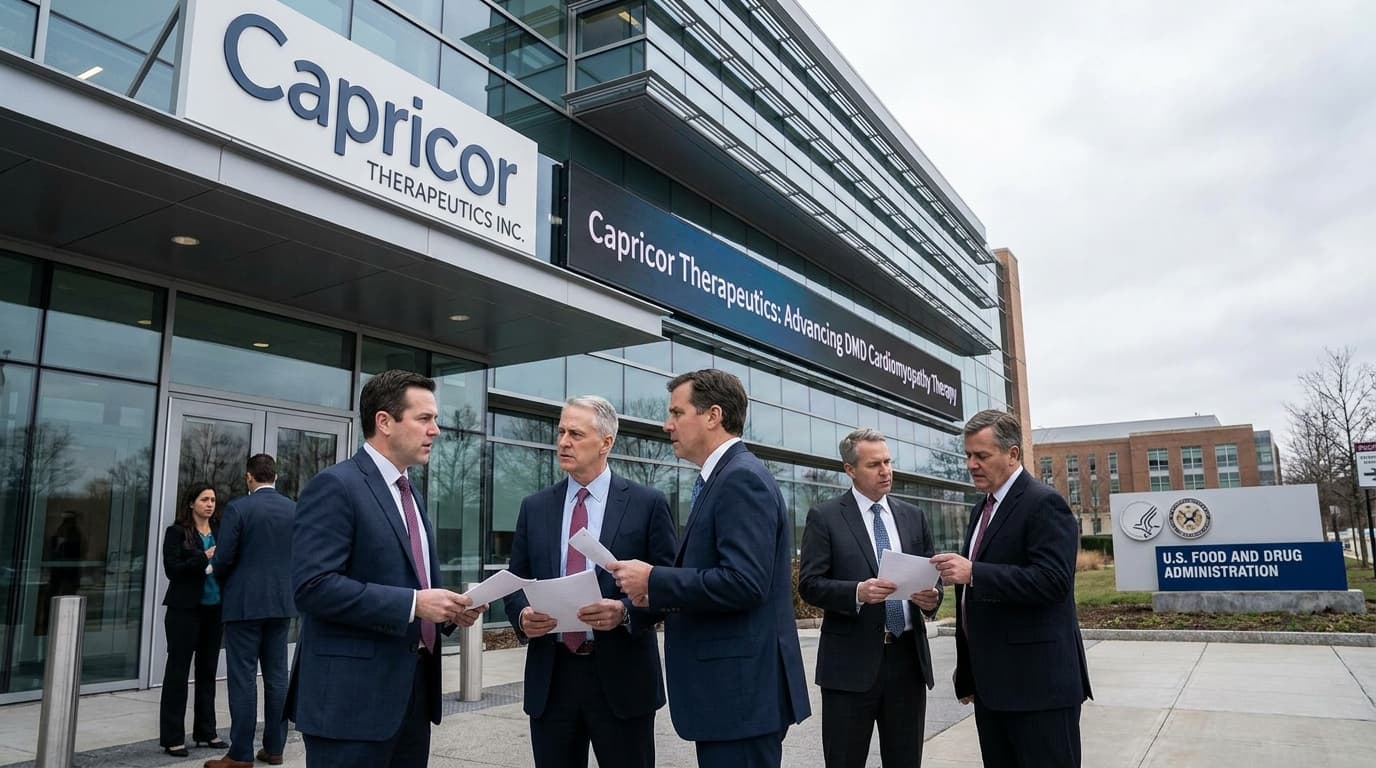
Capricor Faces Further Uncertainty as FDA Schedules Advisory Committee for DMD Cardiomyopathy Therapy

The U.S. Food and Drug Administration's (FDA) decision to convene an advisory committee to evaluate Capricor’s deramiocel—following a prior rejection and silent resubmission process—spotlights ongoing unpredictability in the path to approval for rare disease therapies. This move has significant implications for Capricor and the DMD community, touching on both the regulatory environment and biotech investor sentiment.
Executive Summary
Biopharmaceutical innovation is marked by uncertainty, especially in the rare disease space where the clinical stakes, patient needs, and regulatory pathways are all particularly high. Capricor Therapeutics’s pursuit of approval for deramiocel, its therapy for Duchenne muscular dystrophy (DMD) cardiomyopathy, has been emblematic of these dynamics. In a development that surprised Capricor's leadership and its many stakeholders, the U.S. Food and Drug Administration (FDA) has announced the convening of an advisory committee meeting to discuss the drug—despite the fact that the company’s resubmitted application was returned with no stated deficiencies or concerns from the agency.
This step by the FDA—after having previously rejected the drug just last July—has reignited debate about the predictability and transparency of the drug review process for rare conditions. It also raises new questions for the DMD community about what comes next for a patient population whose therapeutic options are limited and whose medical needs are acute.
Background: The Road to Deramiocel and Its Place in DMD Care
Duchenne muscular dystrophy is a progressive neuromuscular disorder, almost exclusively affecting boys, that leads to muscle weakness, loss of mobility, and—critically—cardiac complications that are often life limiting. Addressing the cardio component of DMD remains a major unmet medical need. Capricor’s candidate, deramiocel, has been positioned as an innovative therapy designed to address the severe, degenerative cardiomyopathy observed in DMD patients as the disease progresses.
From its initial investigational new drug (IND) status, deramiocel has navigated the lengthy, high-stakes path typical for rare disease programs. Like many other rare disease drug candidates, the therapeutic rationale has included both preclinical and clinical data, sometimes with smaller patient numbers due to the rarity of the condition, leading to inevitable regulatory tensions around evidentiary standards.
The FDA’s Review Timeline: From Rejection to Resubmission—Now, an AdComm
Capricor initially faced a major setback in July 2025 with a formal rejection of its application. The company responded by engaging in discussions with the FDA, clarifying points of contention, and preparing a resubmission designed to address regulatory feedback. According to Capricor CEO Linda Marbán, the resubmitted application was not met with further issues or questions until the announcement of the advisory committee (adcomm) meeting. This lack of communication prior to the adcomm is notable because the agency is typically expected to indicate points of concern or remaining questions it wishes the advisory committee to address.
The FDA’s imposition of an advisory panel thus signals heightened caution or a renewed need for outside expert input, particularly on matters of risk/benefit, clinical meaningfulness, or broader health system considerations. For Capricor, the adcomm could be an opportunity or a further hurdle, depending on the perspectives of the committee members and the scope of the issues raised.
Implications for Capricor Therapeutics
Internal Challenges
The uncertainty surrounding the FDA’s decision-making process is a source of frustration and anxiety for Capricor. The company must now prepare extensively for the adcomm, a public and often high-stakes forum where company scientific leadership, clinical data, patient advocates, and independent experts all weigh in. The surprise announcement provides little runway for strategic pivots, heightening urgency for Capricor’s regulatory, medical, and investor relations teams.
Investor Sentiment
Biotech investors, especially those focused on rare disease and emerging therapies, often cite regulatory unpredictability as a key obstacle to capital deployment. A sudden request for an adcomm following a silent resubmission phase may be seen as further evidence of inconsistent standards or shifting agency priorities. The situation could affect short-term investor confidence and have ripple effects as other companies gauge the likelihood of similar experiences in their own rare disease portfolios.
The Broader Context: FDA Advisory Committees as a Regulatory Safety Valve
FDA advisory committees serve as public, expert forums for reviewing controversial or complex drug applications. Topics that might be flagged by such a panel include:
- Clinical data sufficiency: Is the evidence from limited or unconventional clinical trials robust enough to support marketing approval?
- Patient subpopulation specifics: Are the benefits confined to a well-defined subset, and can safety risks be properly managed?
- Long-term outcomes: How do the duration and magnitude of the benefit hold up across the expected timeline of patient use?
- Risk management plans: Have the safeguards needed to safely deliver therapy in real-world contexts been adequately established and tested?
For rare disease therapies, these questions are often even more challenging, as data can be sparse and the ethical imperative to bring therapies to patients as quickly as possible can sometimes conflict with risk-averse regulatory instincts.
Uncertainty in Rare Disease Drug Approval: Persistent Structural Tensions
The deramiocel case is only the latest example of the fundamental tensions in rare disease drug approval. The FDA has long touted its commitment to flexibility and innovation in evaluating new therapies for underserved populations. Nevertheless, the agency must also weigh the risks inherent in small data sets and potentially incomplete understanding of drug effects over time.
While advisory committees are intended to provide a transparent venue for these debates, some patient advocates and industry observers worry that reliance on such panels can signal indecision or reluctance on the part of the FDA to act decisively on its own. For patients and their families, delays—regardless of their purpose—can mean prolonged suffering or missed windows of therapeutic opportunity.
Impact on the DMD Community
For many families touched by Duchenne muscular dystrophy, the prospect of a new therapy specifically targeting cardiomyopathy has fueled hope amid a landscape with all-too-few options. Uncertainty over the outcome of the adcomm process can be distressing, especially knowing that, historically, FDA advisory votes can be unpredictable. Patient advocacy organizations often mobilize to support the evidence base for new treatments while also calling for the highest safety standards to protect vulnerable populations.
Questions Moving Forward
- What prompted the FDA to call the advisory committee after a period of silence?
- Is this an indication of concerns about safety, efficacy, or broader policy considerations affecting all rare disease approvals?
- How will the DMD patient community respond to another delay in the pathway to a novel therapy targeting cardiomyopathy?
- Will this episode prompt further calls for clarity and consistency in FDA communications with companies operating in the rare disease space?
Conclusion
The FDA’s decision to convene an advisory committee meeting for Capricor’s deramiocel—after previously rejecting it and then receiving a resubmitted application with no new concerns flagged—spotlights the ongoing challenge of regulatory unpredictability in the field of rare disease therapy. The outcome will not only determine the fate of a promising DMD therapy but also shape perceptions of the FDA’s approach to handling innovation in complex, high-need patient populations.
For now, Capricor’s leadership, patient advocates, and biotech investors must prepare for a highly scrutinized adcomm that will determine whether deramiocel can finally cross the regulatory finish line.
Source: BioSpace – Capricor thrown for another loop as FDA sets adcomm for DMD cardiomyopathy therapy
Join the BioIntel newsletter
Get curated biotech intelligence across AI, industry, innovation, investment, medtech, and policy delivered to your inbox.