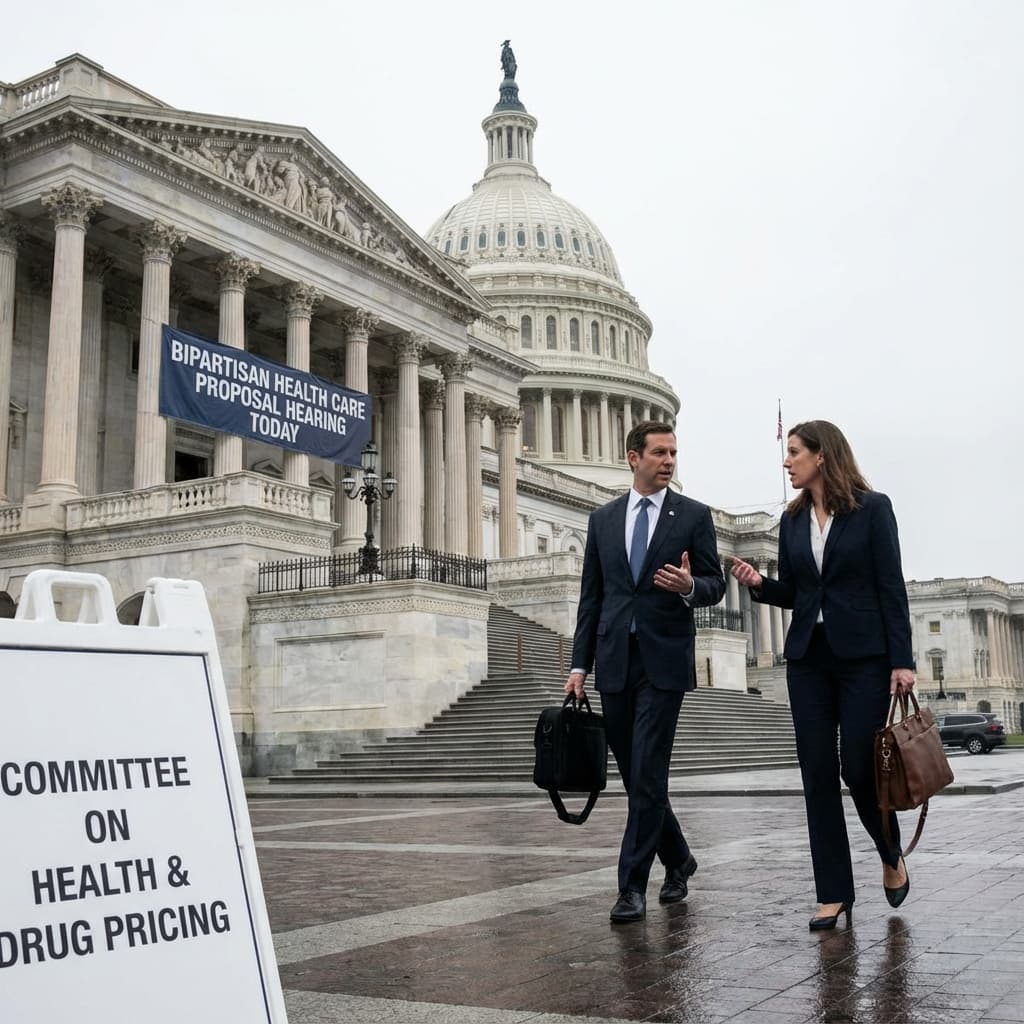
Congress Revives Bipartisan Health Care Proposal Including Drug Middlemen Provisions

After previously being stymied, elements of a bipartisan health care package have reemerged in Congressional discussions. Central to the proposal are updated regulations on pharmacy benefit managers and strategies to mitigate drug pricing inflation, reflecting the complexity and urgency in reforming the U.S. health care system.
In a significant development within the U.S. health care policy landscape, Congress has revived a bipartisan health care proposal that notably includes provisions aimed at pharmacy benefit managers (PBMs), often referred to as drug middlemen. This move comes after previous setbacks, including a high-profile derailment attributed in part to opposition figures such as Elon Musk, highlighting the contentious nature of health care reform efforts.
Pharmacy benefit managers play a critical role in the drug supply chain by negotiating drug prices and managing pharmacy benefits for insurers and employers. However, their practices have come under scrutiny for contributing to high drug costs, opaqueness in rebate mechanisms, and complex pricing structures that ultimately impact patients and payers alike.
The revived bipartisan proposal seeks to address some of these challenges by introducing regulatory measures aimed at improving transparency and curbing profiteering that can arise within the PBM sector. While details of the legislative text remain under negotiation, key provisions under consideration include restricting rebate practices that inflate list prices, ensuring more direct savings for consumers, and enhancing oversight to prevent anti-competitive behavior.
This legislative activity reflects a broader consensus across party lines recognizing the urgent need to make prescription drugs more affordable and health care more accessible. Beyond PBM reforms, the package incorporates several elements designed to strengthen the overall health care delivery system, reduce administrative burdens, and incentivize value-based care approaches.
Stakeholders across the health care industry are closely monitoring the evolution of this proposal. Patient advocacy groups have expressed cautious optimism, emphasizing that meaningful reform must translate into tangible cost reductions for patients. Meanwhile, PBMs and some insurers are likely to push back against regulatory changes that could impinge on their current business models.
The proposal’s bipartisan nature could improve its prospects in an often polarized Congress, indicating potential for meaningful movement on health care legislation早 a sector that has seen limited major reform efforts in recent years. With drug pricing remaining a top issue for the American public, any advancement of this bill could signal a pivotal moment in reshaping health care policy for greater equity and sustainability.
As this bipartisan health care package advances, stakeholders and observers anticipate detailed debates addressing the balance between controlling costs, encouraging innovation, and preserving patient access to necessary medications. The legislation’s success will largely depend on the ability of lawmakers to reconcile diverse interests and technical complexities inherent in regulating a multifaceted industry.
For additional context and continuous updates on this developing story, visit the primary source at STAT News.
Source: STAT+: Congress revives bipartisan health care proposal, including drug middlemen provisions
Join the BioIntel newsletter
Get curated biotech intelligence across AI, industry, innovation, investment, medtech, and policy delivered to your inbox.