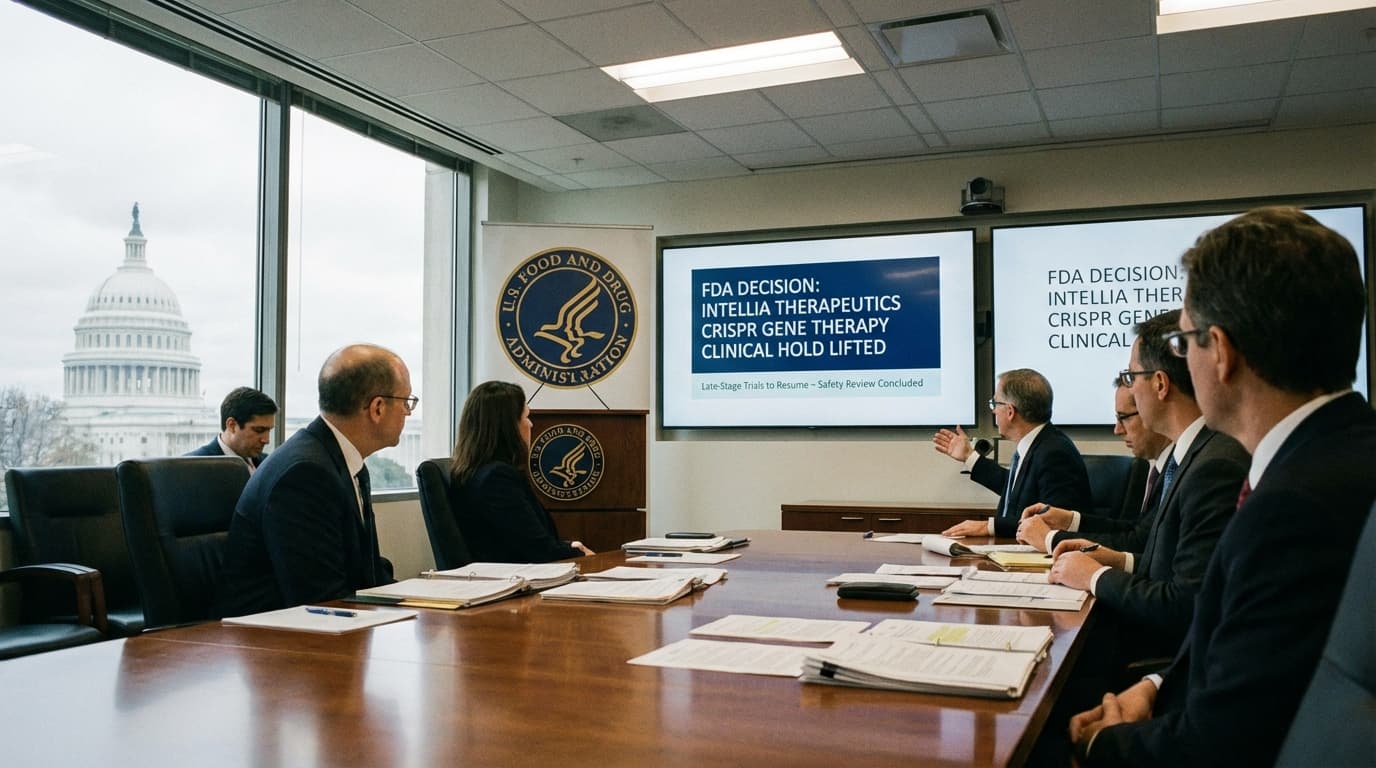
FDA Fully Lifts Hold on Intellia’s Late-Stage CRISPR Gene Therapy Trials

Intellia Therapeutics faced a setback last October when the FDA paused its CRISPR gene therapy studies after a patient experienced life-threatening enzyme elevations leading to death. After a thorough investigation and safety evaluation, the FDA has now fully lifted the hold, allowing Intellia to proceed with its late-stage clinical programs, marking a significant milestone in CRISPR therapeutic development.
The landscape of gene editing therapies has seen a pivotal moment as the U.S. Food and Drug Administration (FDA) has fully lifted the clinical hold on Intellia Therapeutics' late-stage CRISPR gene therapy clinical trials. This move comes over four months after the agency imposed a pause following a tragic adverse event involving a patient who suffered life-threatening enzyme elevations and subsequently died.
Intellia Therapeutics, a leader in CRISPR gene editing technology, has been working on innovative treatments with the potential to address severe genetic disorders. The temporary hold by the FDA was a critical intervention aimed at ensuring participant safety during the ongoing trials. Such holds are not uncommon in the development of cutting-edge therapies and serve as necessary precautions to thoroughly evaluate safety signals.
The FDA's decision to fully lift the hold follows a comprehensive review of the clinical data, adverse event investigations, and additional safety measures instituted by Intellia. This thorough scrutiny reassures stakeholders and the public that patient safety continues to be the utmost priority while facilitating the advancement of promising medical innovations.
Resuming these trials enables Intellia to continue its pursuit of delivering transformative therapies to patients who have limited or no effective treatment options. The late-stage trials target severe and often life-threatening genetic conditions where CRISPR technology offers the prospect of precise genetic correction, potentially providing durable and curative benefits.
The reinstatement of these clinical studies is a testament to the rigorous regulatory oversight that governs the development of gene therapies. It reflects the balancing act between fostering innovation and safeguarding patient health—a cornerstone of the FDA's mandate.
This milestone also underscores the evolving understanding of the safety profiles associated with CRISPR interventions. As therapies mature through clinical evaluation, each stage brings deeper insights that inform risk management and trial design, helping to optimize outcomes and minimize unforeseen events.
For the broader field of gene editing, the FDA's lifting of this hold sets a precedent for other developers navigating regulatory pathways amid complex safety landscapes. Intellia's experience will undoubtedly contribute valuable knowledge that informs policy, clinical protocols, and patient monitoring strategies.
In summary, the FDA's full lifting of the hold on Intellia Therapeutics' late-stage CRISPR gene therapy trials marks a critical advancement in the pathway toward next-generation genetic medicines. As these trials resume, all eyes will be on the outcomes that promise to shift paradigms in how genetic diseases are treated.
The next phases of Intellia's trials will be closely observed by researchers, clinicians, and patients alike, with cautious optimism underpinned by stringent regulatory oversight and a commitment to innovation.
Source: Intellia’s CRISPR Gene Therapy Free To Move Forward After FDA Fully Lifts Hold
Join the BioIntel newsletter
Get curated biotech intelligence across AI, industry, innovation, investment, medtech, and policy delivered to your inbox.