Experts Question CDC's Limited Involvement as Hantavirus Outbreak Escalates

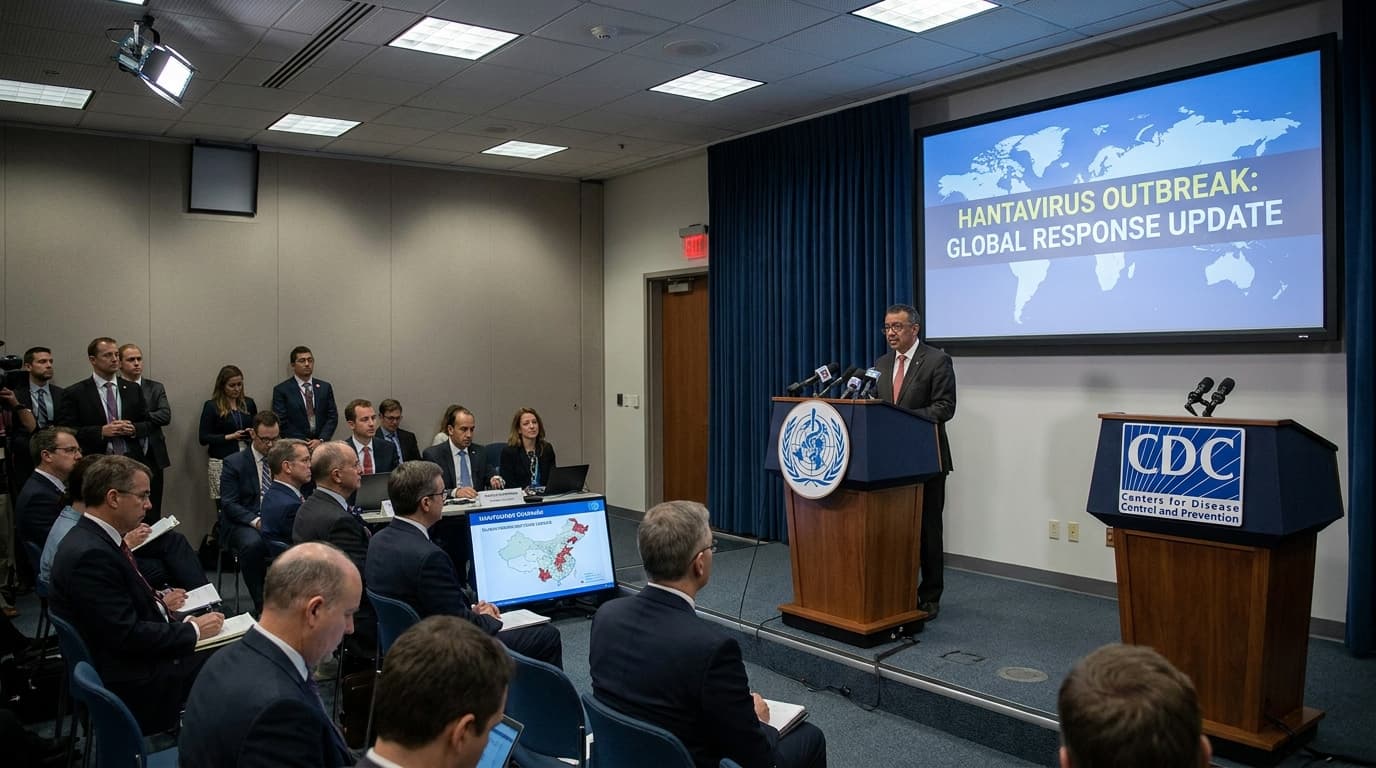
As the hantavirus outbreak unfolds, public health authorities are closely watching the dynamics between key agencies. Notably, the Centers for Disease Control and Prevention (CDC) appears to have stepped back, allowing the World Health Organization (WHO) to take the forefront in response efforts. This shift is raising questions about the U.S. public health response framework and the implications for managing infectious disease outbreaks.
The hantavirus outbreak that has recently garnered global attention is notable not only for its public health implications but also for the unexpected dynamics between leading health agencies responsible for disease surveillance and containment. Traditionally, the Centers for Disease Control and Prevention (CDC) has been the primary U.S. agency overseeing responses to infectious disease outbreaks domestically and often plays a significant role internationally. However, in the current situation, experts are observing that the CDC's role has been notably subdued.
Instead, the World Health Organization (WHO) has emerged as the principal body coordinating the outbreak response, assuming the central leadership role in managing and communicating about the crisis. This pivot has generated discussions among public health professionals and stakeholders about the CDC's strategy and capacity in addressing emerging infectious threats.
The CDC's limited involvement raises several critical questions. One prominent consideration is the agency's operational capacity and strategic priorities amidst competing public health challenges. There may also be structural or jurisdictional factors influencing the delegation or assumption of lead roles in global health emergencies.
This situation recalls past outbreaks where the division of responsibilities between national and international bodies necessitated careful coordination. It underscores the importance of clear leadership pathways and effective communication channels to ensure timely and efficient outbreak management.
The hantavirus itself is a rodent-borne virus capable of causing severe respiratory disease in humans. The current outbreak has manifested in clusters of cases, including incidents on cruise ships and in specific geographic regions, prompting local and international health alerts.
Spanish authorities, for instance, prepared for evacuations from a cruise ship hit by the virus, reflecting the international dimension of the outbreak. The spread in such contained environments highlights the complexity of containment and the necessity for rapid coordinated action.
Adding to the challenge are concerns over misinformation spreading faster than the virus itself. Accurate and timely information dissemination by health authorities is critical to combating public fear and preventing harmful speculation.
The evolving response to this outbreak invites broader reflection on the roles of national agencies like the CDC vis-à-vis international organizations and the expectations placed on them by the public and health professionals.
Understanding why the CDC has taken a back seat and how the WHO is stepping in may inform future policies for managing global health threats, ensuring preparedness, and optimizing inter-agency cooperation.
For ongoing developments and expert analyses on this emerging public health issue, it remains essential to monitor reputable news sources and official statements.
Source: STAT News
Join the BioIntel newsletter
Get curated biotech intelligence across AI, industry, innovation, investment, medtech, and policy delivered to your inbox.