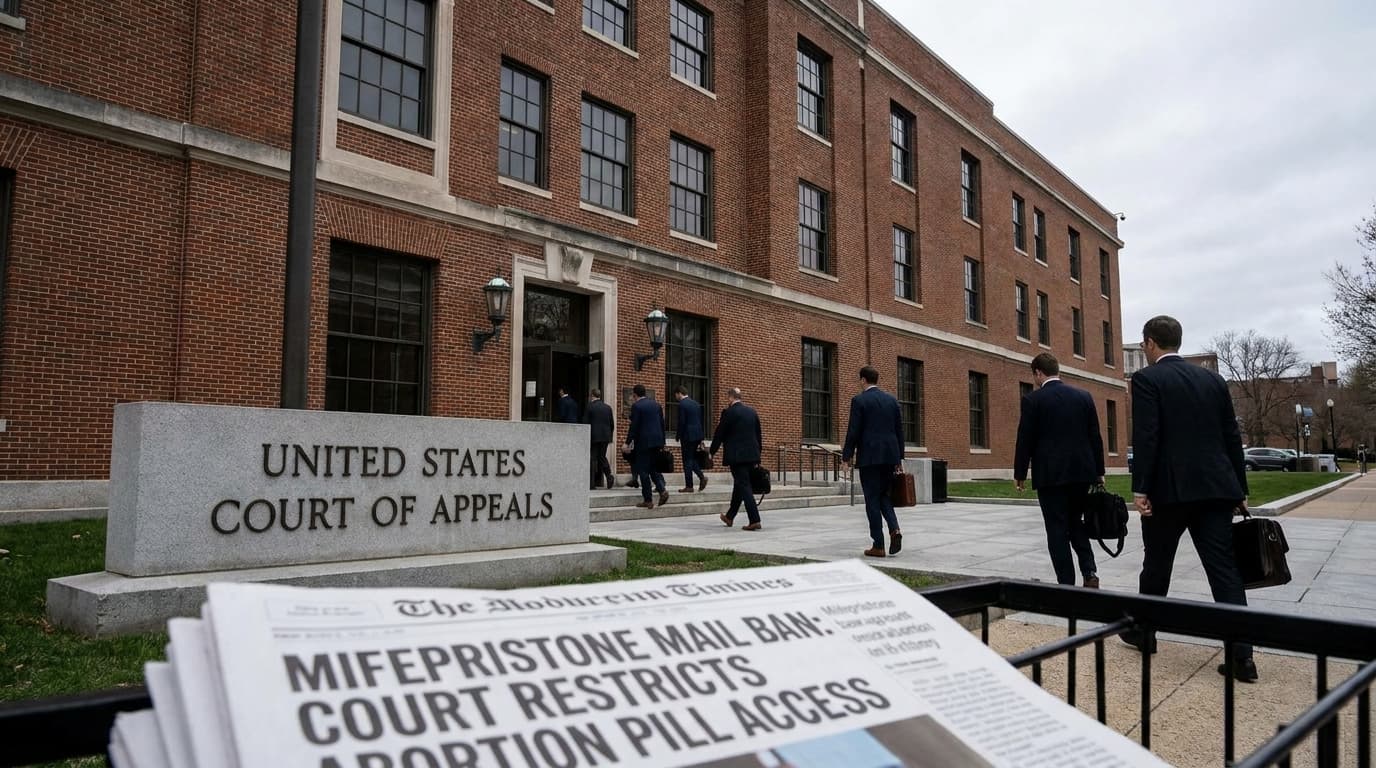
Federal Appeals Court Restricts Mifepristone Distribution to In-Person Clinics

Mifepristone, a key drug involved in the majority of abortion procedures across the United States, faces new regulatory hurdles after a federal appeals court ruled to block its distribution via mail. This ruling mandates that the drug can only be administered in clinical settings with direct patient presence. The decision raises important implications for access to abortion care nationwide.
Introduction
The distribution and accessibility of mifepristone, a critical medication used in most abortion procedures in the United States, has undergone a significant change following a recent federal appeals court ruling. This court decision has effectively blocked the mailing of mifepristone, restricting its distribution exclusively to in-person dispensation at clinics and other authorized medical facilities.
Background on Mifepristone
Mifepristone, often referred to as the abortion pill, is widely used for medical abortions, primarily during the early stages of pregnancy. Since its approval, it has provided an option that many consider safer and less invasive compared to surgical abortion methods. Due to its mode of action and administration requirements, regulatory authorities have implemented specific controls over its distribution.
Details of the Court Ruling
The appeals court ruling insists that mifepristone must now be dispensed in person, reflecting concerns over patient safety, drug misuse, and regulatory compliance. This ruling curtails the practice of mailing the pill, a method that had previously expanded access to abortion care by allowing patients to receive the medication without the need to visit clinics physically.
Implications for Patients and Healthcare Providers
The ruling directly impacts patients who rely on telemedicine and mail delivery for obtaining mifepristone, particularly those in rural or underserved areas. It potentially introduces new barriers to accessing abortion care, especially where clinic availability is limited. Healthcare providers must adapt to this regulatory environment, ensuring compliance while navigating the challenges this change presents.
Wider Context and Response
This development comes amid ongoing debates and legal battles surrounding abortion rights and access in the U.S. It reflects broader tensions in health policy, reproductive rights, and regulatory oversight. The decision may prompt further legislative or judicial actions as stakeholders respond to the evolving landscape.
Conclusion
The federal appeals court decision to block mailing of mifepristone marks a significant shift in regulatory policy affecting abortion care access in the United States. As the medical community and patients adjust to these changes, ongoing discussions around reproductive health regulations and patient rights will continue to shape the future of such essential healthcare services.
Source: STAT News
Join the BioIntel newsletter
Get curated biotech intelligence across AI, industry, innovation, investment, medtech, and policy delivered to your inbox.