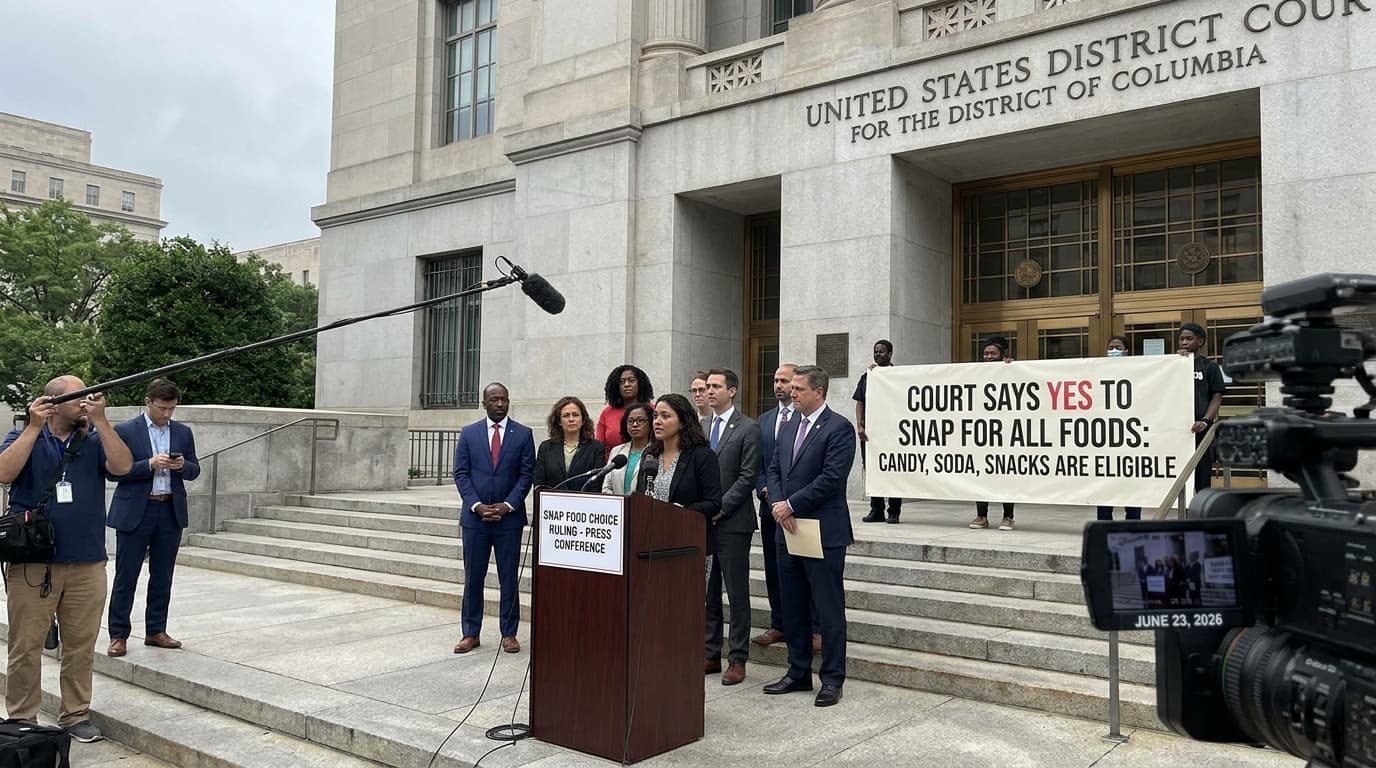
Court Blocks Government's Attempt to Restrict SNAP Purchases on Sugary Snacks

A judge has ruled that the federal government cannot restrict recipients of the Supplemental Nutrition Assistance Program (SNAP) from using their benefits to purchase candy, soda, and other sugary beverages. The decision is likely to have a substantial impact on ongoing debates around food security, nutrition, public health, and the regulation of federal aid programs.
Introduction
A recent judicial decision has sent shockwaves through the landscape of federal nutrition policy. On June 23, 2026, a federal court ruled that the government cannot halt participants in the nation’s largest food aid program, the Supplemental Nutrition Assistance Program (SNAP), from using their benefits to purchase candy, soda, and other sugary drinks. The case, which stems from ongoing debates around the nutritional quality of items subsidized by public dollars, raises far-reaching questions about the role of government in influencing consumer choices, the persistent challenge of food insecurity, and the intersection of public health and policy.
Background: What Is SNAP?
The Supplemental Nutrition Assistance Program (SNAP)—formerly known as the Food Stamp Program—has long served as the primary federal safety net for millions of low-income Americans, ensuring access to basic food staples. Each month, SNAP distributes benefits in the form of electronic vouchers, which can be used at participating food retailers nationwide. In fiscal year 2025, SNAP served over 41 million individuals, reflecting both persistent food insecurity and the program's central role in the American social safety net.
Controversy has swirled for years over what items should be eligible for purchase with SNAP benefits. While most grocery products are broadly eligible (with a handful of exceptions, such as prepared hot foods and alcohol), critics have pointed to the widespread availability and purchase of sugary products under the program as a source of public health concern.
The Legal Challenge
In the case now at the center of national conversation, the government sought to restrict the use of SNAP funds for buying candy, soda, and other sugary drinks. Proponents of the restriction argued that federal resources should not subsidize consumables that have direct links to chronic illnesses like diabetes and obesity, particularly given the high rates of these conditions among low-income communities. On the opposing side, critics claimed that such restrictions were both paternalistic and disproportionately affected those already facing barriers to food access and limited choices in so-called 'food deserts.'
The recent ruling sided with the latter camp, with the judge determining that the government has overstepped its statutory authority by attempting to police the purchases of SNAP recipients. According to the legal reasoning offered by the court, the government cannot 'impose additional eligibility requirements on SNAP purchases through administrative action alone.' Any substantive changes to SNAP's scope, the ruling suggests, would require an act of Congress.
The Public Health and Economic Context
The debate over SNAP-eligible items is part of a broader narrative in American policy: how best to balance individual freedoms, public health imperatives, and the administrative reach of government programs. On one hand, the widespread consumption of candy and sugary drinks is an established driver of negative health outcomes. According to the Centers for Disease Control and Prevention, added sugars account for more than 13% of daily caloric intake among children and adolescents—a figure that is even higher among low-income demographics, in part due to greater price sensitivity and limited availability of healthier alternatives.
On the other hand, food insecurity remains a stubborn social problem. Limiting eligible purchases could inadvertently reduce program participation or force recipients to pay out-of-pocket for culturally important foods, snacks, or drinks that do not fit federal nutritional guidelines. Many food advocates stress the need to respect individual choice and autonomy, rather than imposing top-down restrictions that may not account for the diversity of dietary preferences or the realities of local food retail environments.
The Economic Impact on Retailers and Food Makers
Retailers, especially smaller corner stores and grocers that operate in underserved or rural areas, are deeply affected by any change to eligible SNAP items. For some, sales of snacks and sugary drinks represent a critical revenue stream necessary to maintain business viability. Restricting purchases could disrupt local food economies, reducing exposure to at-risk populations and jeopardizing businesses that depend on SNAP-eligible sales.
Conversely, some large food and beverage producers have opposed such restrictions, arguing that they unfairly target certain product categories rather than addressing broader drivers of poor nutrition, such as limited access to fresh produce and whole foods.
Legal Precedent and Next Steps
This ruling now becomes a reference point for future policy debates over SNAP, government regulation, and public health. By reinforcing Congressional authority as the necessary mechanism for changing program eligibility, the court sets a high bar for administrative interventions. Should lawmakers wish to revisit the nutritional criteria for SNAP purchases, such a move would likely entail high-profile legislative negotiations and the engagement of a wide array of stakeholders: public health officials, anti-hunger advocates, the food and beverage industry, retailers, and most importantly, program beneficiaries themselves.
The Intersection of Public Opinion, Research, and Policy
Research has consistently shown that SNAP recipients’ purchasing decisions reflect both budget constraints and the food environments in which they shop. Studies indicate that while SNAP families do buy candy and soda, the overwhelming majority of benefits are spent on staple items like meat, dairy, breads, and vegetables. The push to restrict certain foods, therefore, faces criticism not only on ideological grounds but also on the basis of empirical data.
Public opinion is divided. Some view SNAP as an essential anti-hunger effort that should not act as 'the food police.' Others argue that public subsidies should explicitly support healthier consumption. The most effective policy interventions, many experts suggest, may lie not in restricting purchases but in incentivizing healthier ones—such as through higher benefit levels for fruits and vegetables or enhanced nutrition education initiatives.
Broader Social Implications
At a more granular level, the debate highlights persistent disparities in health, education, and social support. Low-income families already face a well-documented array of challenges in making healthy food choices, including limited access to stores with fresh produce, higher prices for nutritious options, and time constraints associated with work and caregiving responsibilities. Overlaying additional restrictions onto SNAP may further compound these barriers.
The discussion also reflects historical tensions over the function of welfare programs in the U.S.—and who gets to decide what those “in need” should receive. The failure to reach national consensus has led to patchwork experimentation at the state and municipal levels, with some areas piloting incentive programs for healthy eating and others exploring public-private partnerships aimed at improving retail food infrastructure.
The Political Environment
The timing of this ruling is particularly salient, coming as both state and federal lawmakers intensify debate over welfare program reform, public health spending, and the role of evidence-based policy. It also underscores the legal limitations of regulatory overreach and the enduring influence of courts in shaping the rules of major government aid programs. As lawmakers and agency officials weigh next steps, advocates on both sides will be monitoring whether Congress takes up the issue—and what compromises, if any, might emerge.
Conclusion
The court’s decision to prevent the federal government from restricting SNAP benefits for the purchase of candy and sugary drinks will likely have significant repercussions for food policy, public health strategy, and the broader debate over nutrition assistance in the United States. With questions of food security, personal freedom, health equity, and government authority all in the mix, the issue is poised to remain at the forefront of national discussion for months, if not years, to come.
For now, SNAP recipients retain the right to make their own choices about how to use their food benefits, even as advocates, policymakers, and researchers continue to search for policies that effectively address hunger and poor health without sacrificing dignity or autonomy. Future legislative or regulatory changes will require a careful balancing of evidence, ethics, and economic impact, with the voices of those most affected kept firmly at the center of the conversation.
Source: STAT News
Join the BioIntel newsletter
Get curated biotech intelligence across AI, industry, innovation, investment, medtech, and policy delivered to your inbox.