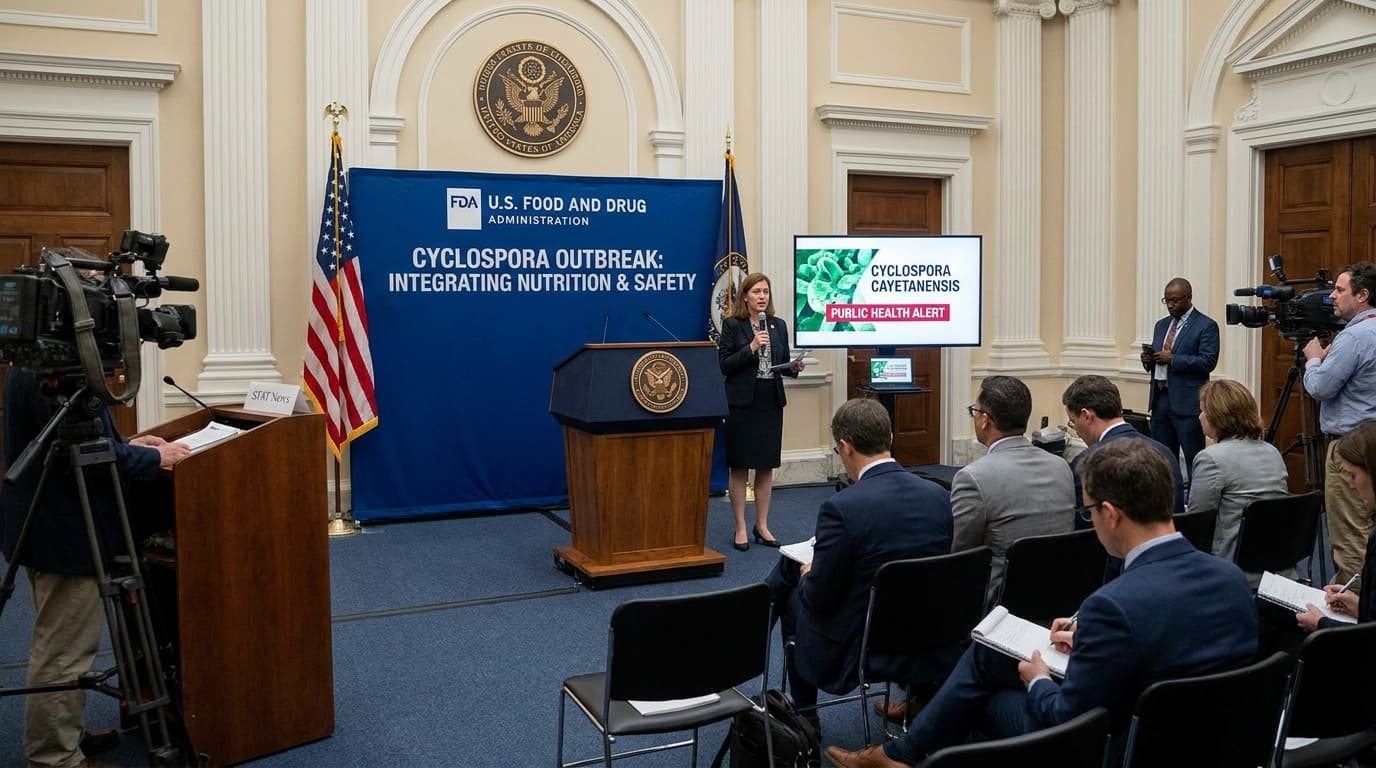
U.S. Cyclospora Outbreak Prompts Renewed Calls for Nutrition and Food Safety Integration

The latest cyclospora outbreak in the United States has brought renewed scrutiny to the balance between nutrition and food safety. Susan Mayne, former director of the FDA Center for Food Safety and Applied Nutrition, argues that systemic reforms are needed to ensure Americans no longer have to choose between eating healthy and preventing foodborne illness.
Understanding the Cyclospora Outbreak
In the midst of the ongoing cyclospora outbreak in the United States, public health experts and former regulators are highlighting a persistent and troubling contradiction: Americans are often faced with a choice between consuming highly nutritious, fresh foods and ensuring that those foods are safe from contamination. This perennial dilemma has resurfaced as federal health officials investigate yet another wave of Cyclospora, a parasite that causes severe, watery diarrhea and is typically linked to fresh produce.
Cyclospora cayetanensis, the protozoan parasite responsible for outbreaks in the U.S., is most commonly associated with imported fresh fruits and vegetables such as lettuce, cilantro, and berries. Since the late 1990s, cyclospora-related illnesses have been periodically reported across the country, often resulting in nationwide recalls and renewed scrutiny of the produce supply chain.
The Nutrition vs. Safety Contradiction
In an opinion published by STAT, Dr. Susan Mayne, former director of the FDA Center for Food Safety and Applied Nutrition, articulates a major concern: “Consumers should not be faced with a trade-off between nutrition and food safety.” The current system, she argues, places the burden on individuals to balance the risks and benefits of eating fresh produce—one of the most health-promoting food groups, yet increasingly susceptible to foodborne pathogens.
The paradox is both longstanding and deeply embedded in American food policy and culture. Despite decades of progress in public awareness about the health benefits of fruits and vegetables, frequent outbreaks of pathogens, notably cyclospora in recent years, create fear and confusion. The challenge is exacerbated by limited tools for detection and eradication of Cyclospora in food production and distribution, leaving gaps in the nation’s food safety net.
The Shortcomings of Current Monitoring Systems
Cyclospora is uniquely difficult for regulators and food companies to monitor. Unlike bacteria such as E. coli or Salmonella, cyclospora cannot be detected rapidly through routine screening methods due to its size, the difficulty in culturing it in laboratories, and the intermittent nature of contamination. While molecular techniques have improved detection capacities over the past decade, gaps remain.
There are additional systemic barriers within the food supply chain, including the global nature of produce imports, variability in agricultural practices, and the challenge of ensuring consistent safety protocols across borders. Existing monitoring efforts—such as the FDA's Food Safety Modernization Act (FSMA) and the FDA’s broader surveillance programs—have pushed for more preventive controls on both domestic and imported produce. Still, ensuring safety at every step remains elusive, particularly for pathogens as challenging as Cyclospora.
Public Health Implications
The public health consequences of cyclospora outbreaks are significant. Cyclospora infections are characterized by prolonged, watery diarrhea, fatigue, weight loss, and in some cases, more severe complications that require hospitalization. Vulnerable populations, including immunocompromised individuals, young children, and the elderly, are at greatest risk of developing severe symptoms.
Every year, outbreaks lead to hundreds—sometimes thousands—of documented cases, but experts estimate that the true number of cases is much higher due to underreporting or misdiagnosis. These recurring foodborne outbreaks undermine consumer trust in the safety of the food system and risk reversing hard-earned gains in encouraging healthier eating patterns among Americans.
Balancing Transparency, Regulatory Action, and Industry Responsibility
As the cyclospora outbreak has demonstrated, the fragmented approach to food safety and nutrition policy must evolve. Experts like Dr. Mayne advocate for a more holistic strategy, one that aligns incentives across regulatory agencies, the food industry, and public health authorities to ensure that products entering the supply chain are both highly nutritious and rigorously monitored for safety.
Key to this approach is the development and deployment of improved diagnostic and monitoring technologies for hard-to-detect pathogens. Investment in such technologies, coupled with robust traceability systems, could provide an early warning for contamination and streamline recalls when food safety lapses occur.
Furthermore, collaboration between regulatory authorities like the FDA and USDA—along with international partners in countries that supply U.S. produce—is essential for closing the gaps in surveillance and enforcement.
The Role of Policy and Consumer Education
Building a safer food environment will also require more effective communication with consumers about the risks and preventive strategies associated with foodborne illnesses. Public messaging must be clear, accurate, and timely—not only during outbreaks, but as part of routine food safety education.
Policy interventions could include increased funding for food-borne illness prevention, incentives for industry adoption of best practices in agricultural hygiene, and greater transparency in reporting. A critical aspect is empowering consumers with practical guidance to minimize risk while maintaining a nutrient-rich diet—such as safe washing techniques, proper storage, and quick reporting of suspected foodborne illnesses.
Looking Ahead: Integrating Nutrition and Food Safety
Ultimately, the recurring cyclospora outbreaks reveal the limitations of siloed approaches to nutrition and food safety. Integrating these domains, according to policy experts, should be a core priority for U.S. regulatory and public health strategy moving forward. This means not only strengthening outbreak response capabilities, but also fostering a culture of continuous improvement and accountability across the food industry.
Efforts must prioritize innovation in rapid pathogen detection, data sharing among agencies, and closer global partnerships with the countries supplying America’s produce. At the same time, cultivating public trust will demand transparency, effective risk communication, and clear governmental leadership.
In an era marked by frequent foodborne outbreaks and changing consumption habits, the path forward—according to authorities like Dr. Susan Mayne—requires a mindset shift. Americans should never have to choose between eating well and staying safe. A cohesive strategy integrating nutrition and food safety is not merely ideal, but essential for a healthier nation.
Join the BioIntel newsletter
Get curated biotech intelligence across AI, industry, innovation, investment, medtech, and policy delivered to your inbox.