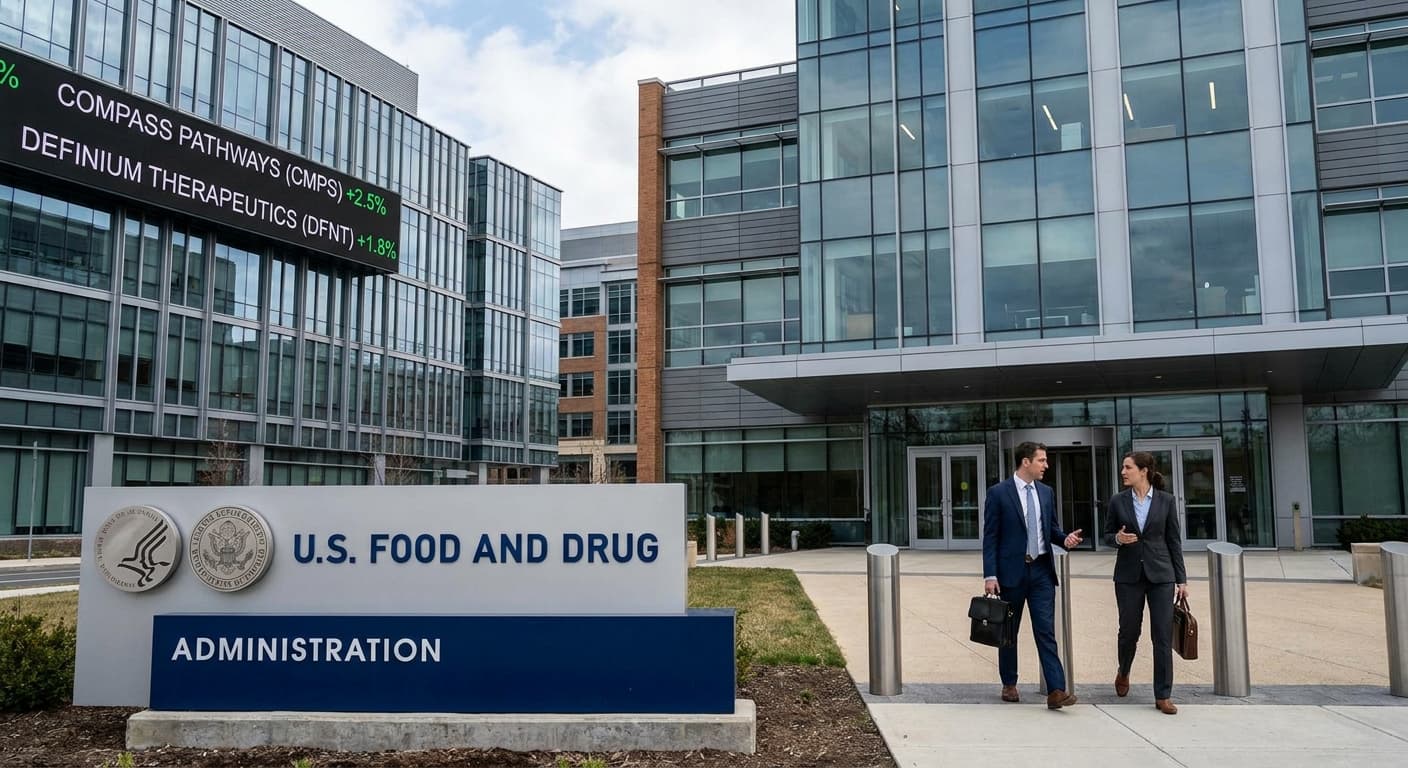
Definium Nears Phase 3 Anxiety Data As Compass Starts Rolling FDA Review For COMP360

The immediate catalyst is Definium’s Voyage readout in generalized anxiety disorder, with a second Phase 3 GAD study, Panorama, expected in September. At the same time, Compass has moved COMP360 into a partially filed rolling NDA for treatment-resistant depression, giving investors a more concrete marker for how psychedelic programs may transition from late-stage data into launch execution.
Psychedelic drug development is entering a stretch where investor attention is moving from broad category enthusiasm to company-specific execution. This week’s focal point is Definium Therapeutics, which is expected to report Phase 3 Voyage data for its single-dose oral LSD candidate DT120 in generalized anxiety disorder in the next few days.
Compass Pathways added a separate milestone last week, saying its depression candidate COMP360 is now under active FDA review with a new drug application partially filed. Taken together, the updates suggest the sector’s near-term debate is no longer only about whether psychedelic drugs can produce late-stage efficacy, but whether those results can translate into a viable approval and launch path.
The Data Setup
Definium’s coming readout follows late-stage Emerge data released earlier this summer in major depressive disorder. In that study, DT120 produced an 8.1-point placebo-adjusted change from baseline over six weeks on a scale of MDD symptoms. Stifel analysts said at the time that the results “exceeded expectations with clear and highly robust efficacy in the MDD population.”
Jefferies wrote in a Thursday note that it is “70-75%+ confident a single-dose can safely produce a rapid, robust and durable” benefit out to week 12 in generalized anxiety disorder, citing both the late-stage MDD data and what it called “compelling” results from a Phase 2b GAD study. Jefferies also said positive anxiety data could move Definium’s stock up “25-50% or more.”
Stifel has argued that the MDD results help derisk the GAD program because of what it described as “significant overlap between the MDD and GAD populations.” For the upcoming readout, Stifel said it will be looking for a strong p-value.
A second DT120 Phase 3 dataset in generalized anxiety disorder, from the Panorama study, is expected in September. Definium is also developing the LSD candidate for post-traumatic stress disorder, with a late-stage trial slated to launch in 2027.
The Commercial Question
Even if the anxiety studies work, the remaining argument is about market shape rather than raw efficacy. Stifel said the broader investor question is what the revenue implications are for GAD, given that most generalized anxiety disorder is treated by primary care and that there have not been any new GAD launches for 20 years to serve as an analog.
Jefferies is modeling at least $1.5 billion in peak sales across MDD and GAD for DT120, with an expected total valuation surpassing $9 billion. The firm added that if the two Phase 3 GAD datasets reconfirm what it called profound efficacy, investors may assign even higher peak-sales assumptions.
For Compass, the commercial relevance lies in timing. H.C. Wainwright wrote in a Friday note that the company has shifted from data generation to filing and launch execution, with initial modules from the rolling new drug application for COMP360 in treatment-resistant depression already under FDA review. The note said that confirms the expected timeline of a fourth quarter filing and a commercial launch in the first half of next year.
The Regulatory Signal
Compass also said the FDA has started asking questions after reviewing submitted modules. H.C. Wainwright called that “the most tangible evidence yet that the Commissioner’s National Priority Voucher and rolling framework are functioning as intended.”
That matters beyond one company. If Compass can convert a partially filed application into an approval process that stays on schedule, it gives the field a practical template for how psychedelic assets might move through the regulator rather than only through late-stage trials. The sector still has to answer questions about market adoption and treatment delivery, but the next leg of the story is increasingly about regulatory mechanics and launch discipline, not just scientific intrigue.
Join the BioIntel newsletter
Get curated biotech intelligence across AI, industry, innovation, investment, medtech, and policy delivered to your inbox.