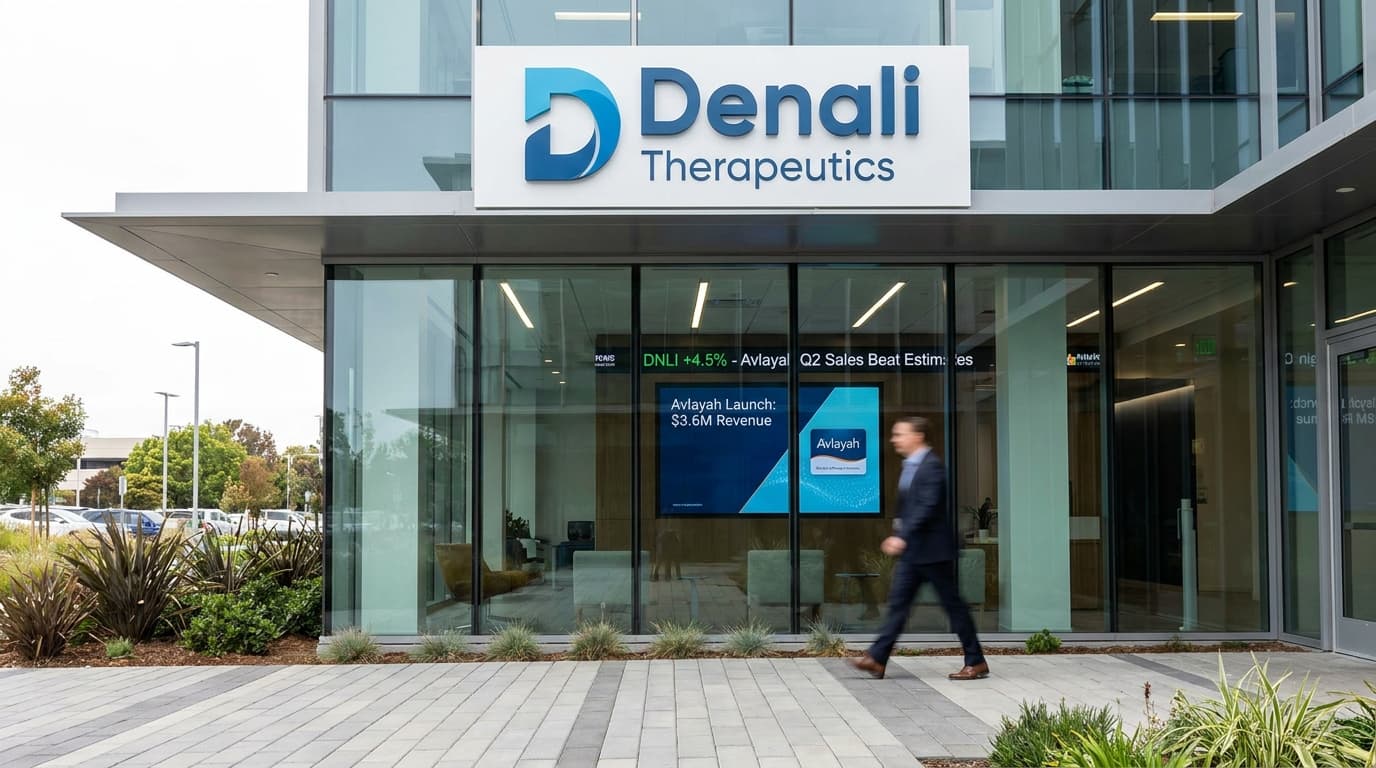
Denali Tops Early Avlayah Sales Expectations With $3.6 Million, Strengthening Hunter Syndrome Launch Case

The early sales beat suggests Denali is converting patient access work into paid prescriptions faster than some investors expected. It also offers an early commercial test for the company’s TransportVehicle blood-brain barrier technology, with analysts framing the launch as a switch-driven opportunity in a market long dominated by Takeda’s Elaprase.
Denali Therapeutics reported $3.6 million in revenue for Avlayah in the drug’s first quarter on the market, beating expectations that had been set lower after the Hunter syndrome therapy won clearance on March 25 and launched in April. Analysts cited by BioSpace had expected $1.3 million in second quarter sales, making the initial readout a stronger commercial start than the company’s earlier guidance for a slower ramp had implied.
Stifel said it was encouraging that Denali was able to get patients onto paid drug within the first full quarter of launch while the company focused on securing access. CEO Ryan Watts, speaking on Denali’s second quarter earnings call, attributed the response to an engaged patient and physician community built through years of work with patients, families, advocacy organizations and clinicians.
The Commercial Picture
Denali raised its third quarter revenue guidance for Avlayah to $10 million to $12 million on the strength of the launch. BioSpace reported that William Blair had previously predicted $6 million for the next quarter, and the firm said it continues to view the switch therapy-based launch as underappreciated.
Avlayah enters a market that has long been led by Takeda’s Elaprase, an enzyme replacement therapy first approved 20 years ago. According to the source, Avlayah is the first new treatment approved for Hunter syndrome since then. That market structure shapes the launch dynamic: Jefferies said about 90% of existing patients are taking Takeda’s drug, so most Avlayah prescriptions are expected to come from switches rather than newly diagnosed patients.
Jefferies added that physicians are highly motivated to switch, and noted that participants in Denali’s clinical trials could also move to the now-marketed product by the end of the year. Using an estimated annual price of $500,000, Jefferies believes Denali is currently serving about 35 patients.
Denali said there are about 375 eligible patients in the U.S. Chief Commercial Officer Katie Peng said on the earnings call that the company’s goal is to reach all eligible patients worldwide. Stifel cautioned that the U.S. market opportunity is not very large overall, but called the early signs bullish in the context of global peak sales potential and the prospect of switching Elaprase patients to a therapy that can treat both peripheral and CNS symptoms.
Strategic Readthrough
The launch matters beyond near-term revenue because Avlayah is also the first approval using Denali’s TransportVehicle blood-brain barrier technology. That gives the sales curve extra importance as a commercial proof point, not just for one rare disease product but for how investors may value the broader platform.
William Blair sees Avlayah exceeding $250 million in U.S. sales in the late 2030s, with worldwide sales potentially reaching $1 billion. The firm also said the product creates strong commercial synergies for DNL126, Denali’s upcoming Sanfilippo syndrome type A therapy, which the company expects to file with the FDA for an accelerated approval next year.
Elsewhere, BioSpace noted that Denali is advancing DNL628 for Alzheimer’s disease and is expected to reveal Phase 1b data for that program in the first half of 2027. For now, though, the clearest signal from the quarter is narrower and more immediate: Denali has shown that a rare disease launch built around switching entrenched patients can move faster than expected when access work and physician demand line up early.
Join the BioIntel newsletter
Get curated biotech intelligence across AI, industry, innovation, investment, medtech, and policy delivered to your inbox.