Documentation Tools Aren’t Just for Doctors: Reid Health’s Pioneering Use of Abridge’s Nurse Tech

With nurse burnout driving ongoing workforce shortages in rural hospitals, Reid Health aimed to reverse the trend by implementing Abridge’s advanced documentation technology directly in nursing workflows. Early results point to significant benefits for both care quality and staff retention, raising questions about broader adoption.
Introduction: The Documentation Burden on Nurses
The ongoing staffing crisis in American healthcare is particularly acute in rural hospitals, where nurse burnout and retention pose existential challenges. While much attention in clinical technology has focused on tools for physicians, a transformative pilot at Reid Health suggests that documentation technology might be just as impactful when extended to nursing staff. The rollout of Abridge’s AI-powered documentation solution at Reid Health offers a lens into a larger shift in how technology may help to stabilize and support core clinical roles.
The Challenge: Administrative Overload in Nursing
Across the health system, clinicians report that documentation demands have soared in recent years. In nursing, this translates to hours spent charting—often after the end of scheduled shifts—which in turn contributes to chronic stress, dissatisfaction, and high vacancy rates. At rural health systems such as Reid Health, the stakes are amplified: limited staff coverage means every lost nurse jeopardizes care for vulnerable populations who already face access barriers.
Healthcare leaders have long debated the best path forward. While some have proposed task-shifting or increased use of aides, others focus on digital process improvement. Abridge, a company initially better known for its physician-facing technology, now seeks to extend the same technology to nurses in direct care roles.
Reid Health’s Experiment: Implementing Abridge for Nurses
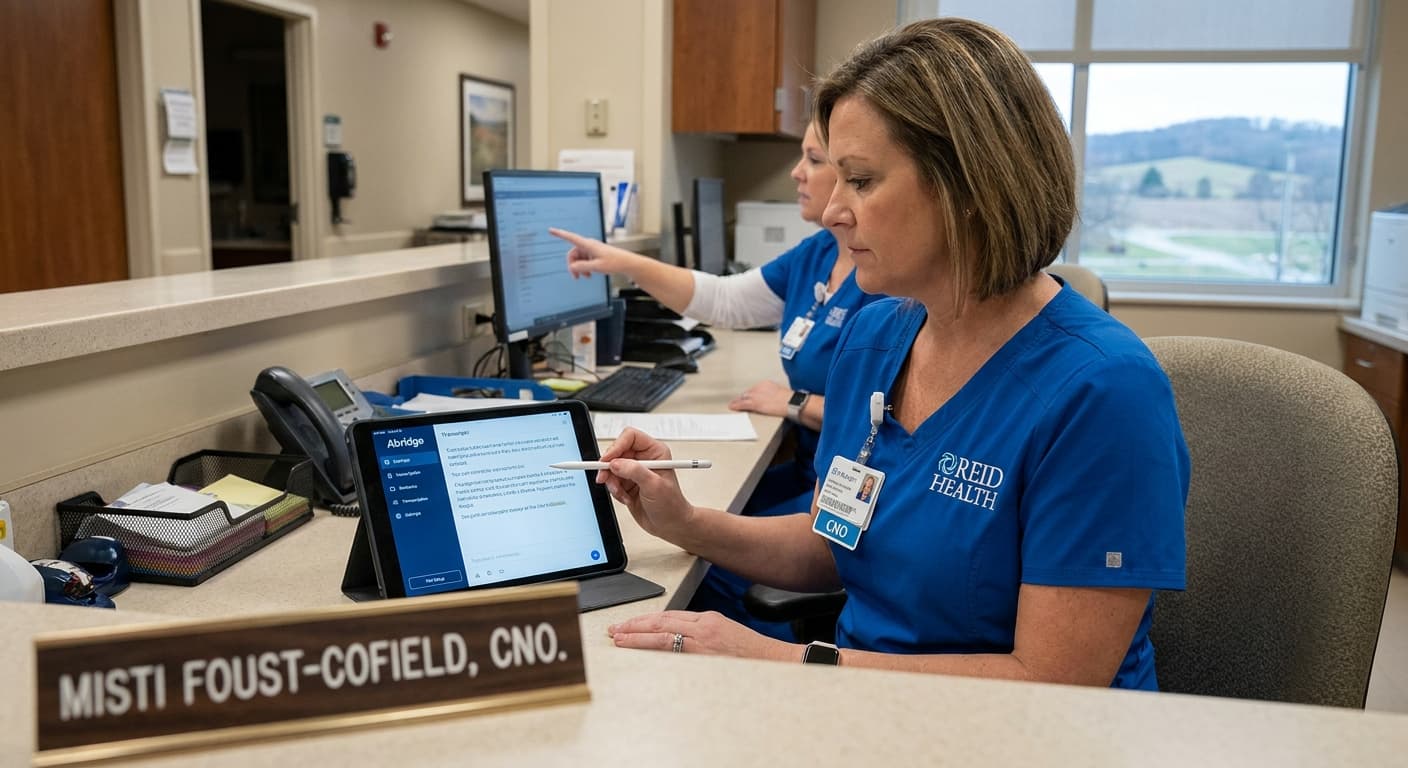
Reid Health’s chief nursing officer, Misti Foust-Cofield, spearheaded a comprehensive effort to ease the administrative burden on bedside nurses. By integrating Abridge’s AI documentation platform, the goal was to automate portions of the clinical note-taking process and reduce redundant, manual data entry.
Foust-Cofield’s approach extended beyond a mere tech deployment: it incorporated extensive staff feedback, change management best practices, IT support, and constant assessment of burnout and satisfaction metrics. The decision to focus on after-shift workload was grounded in operational realities—long charting sessions after a shift end up driving both burnout and inaccuracies in documentation, impacting not only nurse wellness but also patient safety and overall care quality.
Results: Early Wins for Care Teams and the Organization
According to Reid Health’s internal metrics, after-shift charting time has dropped by as much as 45 minutes per nurse per shift. This dramatic time savings translates to more time available for direct patient care, peer education, and recovery between shifts. Far from being a marginal improvement, this change has led to a more than 50% reduction in the RN vacancy rate—a significant feat at a time when many rural hospitals struggle simply to keep pace with departures.
This retention impact suggests that solving the documentation burden may be more central to workforce stabilization than previously thought. While compensation and organizational culture matter, the ability to deliver primary care rather than administrative labor appears highly correlated with lower turnover.
Staff Response: Improved Morale and Patient Focus
Anecdotal reports from nurses at Reid Health echo the quantitative findings. Many highlight being able to leave at the scheduled end of their shift, reduced feelings of anxiety about incomplete records, and greater confidence during shift handovers. The feedback loop between IT and clinical teams was particularly important to the success of the early roll-out, enabling fast iteration and refinements to AI-generated outputs.
Furthermore, nurses emphasize that enhanced documentation does not simply save time—it allows them to focus more fully on patient needs. This refocusing on primary nursing tasks, such as assessment, education, and holistic care, has both clinical and psychological benefits.
Key Features of Abridge’s Solution
Abridge’s platform leverages large language models and specialized medical ontologies to streamline the translation of nurse-patient dialogues into structured EMR entries. Beyond speech-to-text, the system uses clinical context to populate standardized note fields, flag possible charting omissions, and integrate with hospital EHRs for seamless workflow.
The tool is designed to anticipate the unique flow of information during nurse rounds, discharge instructions, and multi-provider handoffs—a marked departure from systems built primarily for physicians. Security and HIPAA-compliance are core considerations, and early feedback highlights the value of the system’s explainable AI features.
Broader Implications: From Pilot to Systemic Change
The implications extend beyond Reid Health’s walls. If burnout can be dramatically reduced through targeted technology, other rural systems may also find pathways to improved retention and potentially better clinical outcomes. However, the solution is not purely a technical one; thoughtful implementation, deep partnerships between IT and nursing, and attention to clinical workflows remain central.
Observers from health policy and workforce planning suggest these results could influence both the design of future digital health products and the priorities of health system leaders. There is growing recognition that innovation in administrative burden and user-centered design may rival clinical technology in importance for system sustainability.
Challenges and Unanswered Questions
While the results at Reid are promising, uncertainties remain:
- Scalability: Can gains achieved in a controlled pilot be replicated at scale, across different units and levels of nurse experience?
- Vendor Dependence: To what extent might reliance on a specific technology stack introduce new risks, such as workflow lock-in or unforeseen software failures?
- Patient Perceptions: While nurses benefit from greater focus, will patients notice or value shifts enabled by background technology?
- Regulatory and Privacy Concerns: Ensuring compliance as documentation AI becomes more sophisticated remains a constant consideration, especially given ongoing scrutiny of health data in both legislative and public spheres.
Expert Commentary: The Future of Nurse Technology
Healthcare technology analysts note that tools for nursing staff have historically lagged physician-facing solutions. With nurse workloads only rising, broader and more sophisticated deployment of AI-based documentation could mark a paradigm shift. If Reid Health’s figures prove generalizable, workforce stabilization and improved care quality could be within reach for other institutions willing to commit to staff-centered process improvement.
The Economic Case for Documentation AI
Given the magnitude of nurse turnover costs—ranging from recruitment to temporary staffing and lost institutional knowledge—even modest improvements in retention create meaningful financial impact. When combined with quality-of-care improvements, decision-makers may have a compelling argument for continued investment in such solutions, even during tight budget cycles.
Conclusion: New Priorities for Innovation and Leadership
Reid Health’s experience with Abridge’s documentation platform offers a case study in the power of aligning technology with real-world clinical challenges. As health systems contend with staffing crises, regulatory pressures, and the drive to enhance care quality, the lessons from this rural pilot may resonate across the sector.
Going forward, hospitals and technology developers alike may do well to ask not what technology can do for clinicians, but how thoughtfully chosen tools can transform the lived reality of patient care. For nurses at Reid Health—and perhaps soon beyond—the answer may be a surprising amount.
Source: MedCity News
Join the BioIntel newsletter
Get curated biotech intelligence across AI, industry, innovation, investment, medtech, and policy delivered to your inbox.