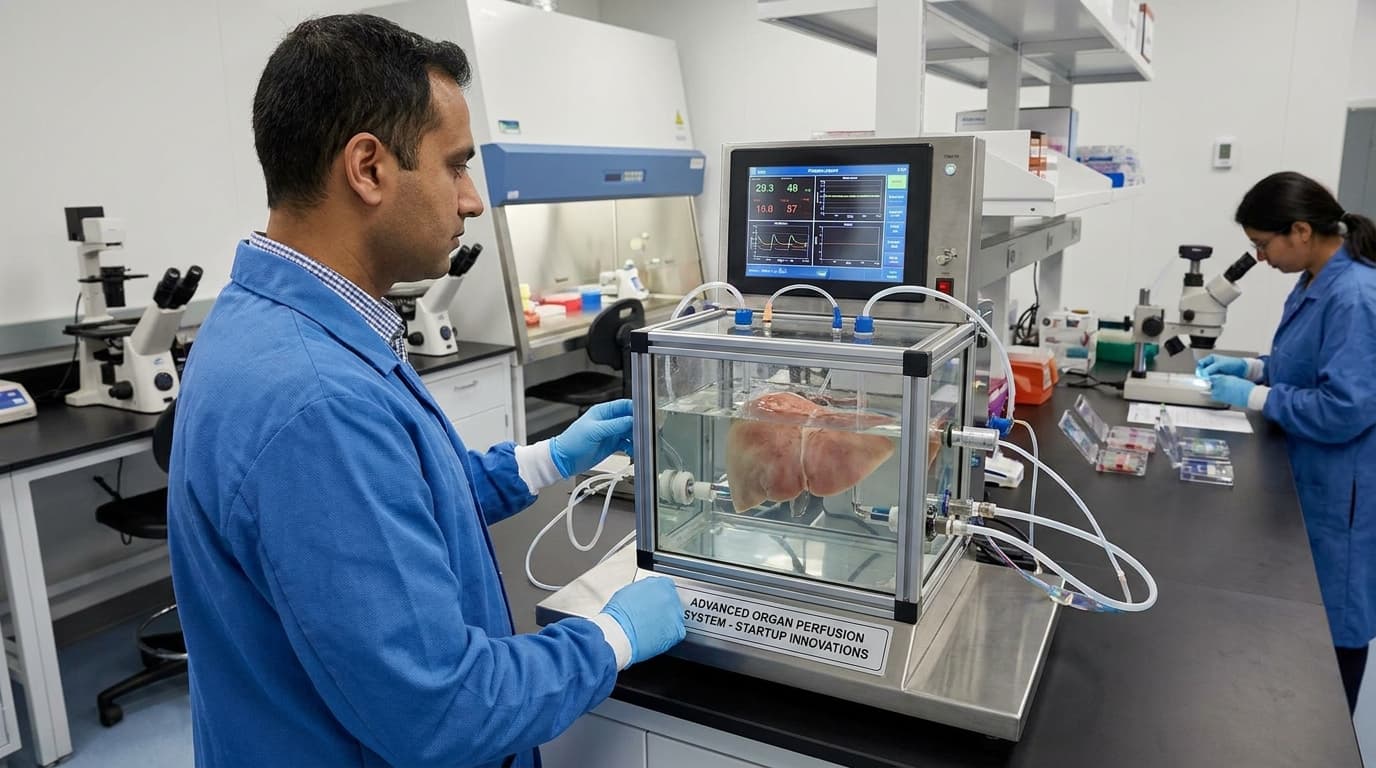
Drug Testing’s Next Leap: Startup Pushes Whole Organ Experiments Beyond Organoids and Chips

In the wake of FDA’s policy evolution away from exclusive reliance on animal testing, startups and established companies alike are racing to refine preclinical drug testing methods. While technologies like organoids and organ-on-a-chip platforms are gaining popularity, a new push for whole-organ testing by a Connecticut-based startup may reshape industry standards for evaluating human drug response.
Introduction
For decades, the foundation of preclinical drug testing has rested heavily on animal models. However, the limitations of translating animal data into reliable predictions for human biology have increasingly come under scrutiny. In recent years, alternatives such as organoids (tiny, simplified adaptations of organs grown from stem cells) and organ-on-a-chip systems (microfluidic devices mimicking organ function) have moved to the forefront, particularly after a pivotal shift in U.S. Food and Drug Administration (FDA) policy. Now, a new contender is entering the stage: drug testing on whole human organs.
A Connecticut-based startup is leading this movement, betting that assessing drug effects directly on fully intact human organs will unlock deeper insights into efficacy and safety. This emerging approach, its implications for the industry, and questions about practicality and regulatory acceptance form the heart of a growing debate within biotech innovation.
The Momentum for Change: FDA Policy Evolution
In a move that sent ripples through the research and biotechnology worlds, the FDA signaled reduced reliance on animal models for drug evaluation. This policy pivot reflects broader scientific consensus that traditional animal models, while invaluable, often fail to adequately predict human responses, particularly in areas like chronic diseases or immune-system-mediated conditions.
Instead, cutting-edge approaches harnessing human data are reshaping preclinical studies. Innovations in biotechnology and analytics, including organoids, organ-on-a-chip, and computational ("in silico") models, have received a boost from both regulatory encouragement and market demand for improved safety and lower development costs.
Organoids and Organ-on-a-Chip: The Current Landscape
Organoids derive from adult or pluripotent stem cells, forming rudimentary but functional versions of organs such as the liver, kidney, brain, and intestines. These models enable researchers to test drug toxicity, absorption, and efficacy in systems that replicate key elements of human physiology, albeit at a micro scale.
Organ-on-a-chip devices advance this revolution further. By integrating living cells with microfluidic channels, these chips recapitulate organ-level functions—like "lung-on-a-chip" or "liver-on-a-chip"—allowing dynamic monitoring of tissue health, mechanical strain, and real-time drug transport.
However, both models often fall short in representing the full complexity of multicellular interactions, blood flow, and metabolism seen in whole, intact organs. While they illuminate important mechanisms, gaps remain in replicating comprehensive human biological responses that occur in the real world.
The Case for Whole-Organ Testing
The Connecticut startup and like-minded innovators advocate going beyond the limitations of miniaturized models. Whole-organ testing, they argue, offers the closest possible approximation to living human systems short of actual clinical trials. Using donor organs unsuitable for transplantation or organs removed during surgery, researchers can assess:
- Drug distribution, metabolism, and transport across intact tissue structures
- Vascular, immune, and neural responses at full scale
- Adverse or off-target effects that could be missed in smaller models
Such testing may be particularly valuable for complex organs like the liver or kidney, where metabolic and filtration mechanisms play pivotal roles in drug breakdown and toxicity. Furthermore, whole-organ studies allow for longer-term, repeated dosing experiments that capture nuances not seen in acute settings.
Challenges and Considerations
Despite the scientific rationale, several hurdles confront the field of whole-organ drug testing:
Supply and Standardization: Donor organs are rare, and variability in age, comorbidities, and procurement methods create challenges in standardizing results. The need for rapid delivery, preservation technology, and consistency across test runs remains a formidable logistical barrier.
Ethical Considerations: As with organ transplantation, issues of consent, ownership, and use of human tissue require careful ethical oversight. Public support and clear regulatory guidance will be necessary to scale up organ procurement for research purposes.
Cost and Accessibility: Compared to organoids or chips, whole-organ setups are more resource-intensive, requiring specialized facilities, preservation fluids, and sophisticated data collection systems.
Data Integration: Linking insights from whole-organ studies with other preclinical and computational platforms is critical for creating holistic predictive models for human health.
Industry Response and Competitive Landscape
Startups specializing in organ-chip technology and organoid development have not overlooked the push for whole-organ testing. Some companies are beginning to explore hybrid approaches, integrating organ-on-a-chip readouts with data from ex vivo organ studies. Established pharmaceutical companies, always on the lookout for more robust predictive tools, are evaluating pilot collaborations and supporting exploratory research in this space.
At the same time, the regulatory environment is slowly adapting. The FDA’s openness to non-animal methodologies bodes well for innovators willing to validate whole-organ approaches, though evidence requirements remain stringent.
The Path Forward: Blending Models for Maximum Predictive Power
Most experts agree that no single model will fully replace animal testing in the immediate term. Instead, an integrated approach leveraging organoids, organ-on-a-chip systems, whole-organ testing, and in silico predictions appears most promising. By triangulating results from complementary platforms, researchers can better de-risk drug candidates before they reach costly and complex clinical trial phases.
In addition, advances in tissue engineering and organ preservation will, in the coming years, determine how scalable and informative whole-organ studies become. Ultimately, the objective remains unchanged: predicting human drug responses with the highest possible accuracy, safety, and efficiency.
Conclusion
The Connecticut startup betting on whole-organ drug testing represents a crucial thread in the tapestry of biotech innovation. With regulators, industry, and patients all demanding safer, faster, and more cost-effective drug development, every improvement in preclinical modeling is a step forward for the entire field.
In a world where technology is rapidly transforming legacy practices, the interplay between organoids, chips, computational models, and whole organs will define the next era of drug discovery. The degree to which these tools can accurately recreate—and ultimately replace—traditional animal studies will shape the speed, safety, and success of tomorrow’s medicines.
Source: MedCity News
Join the BioIntel newsletter
Get curated biotech intelligence across AI, industry, innovation, investment, medtech, and policy delivered to your inbox.