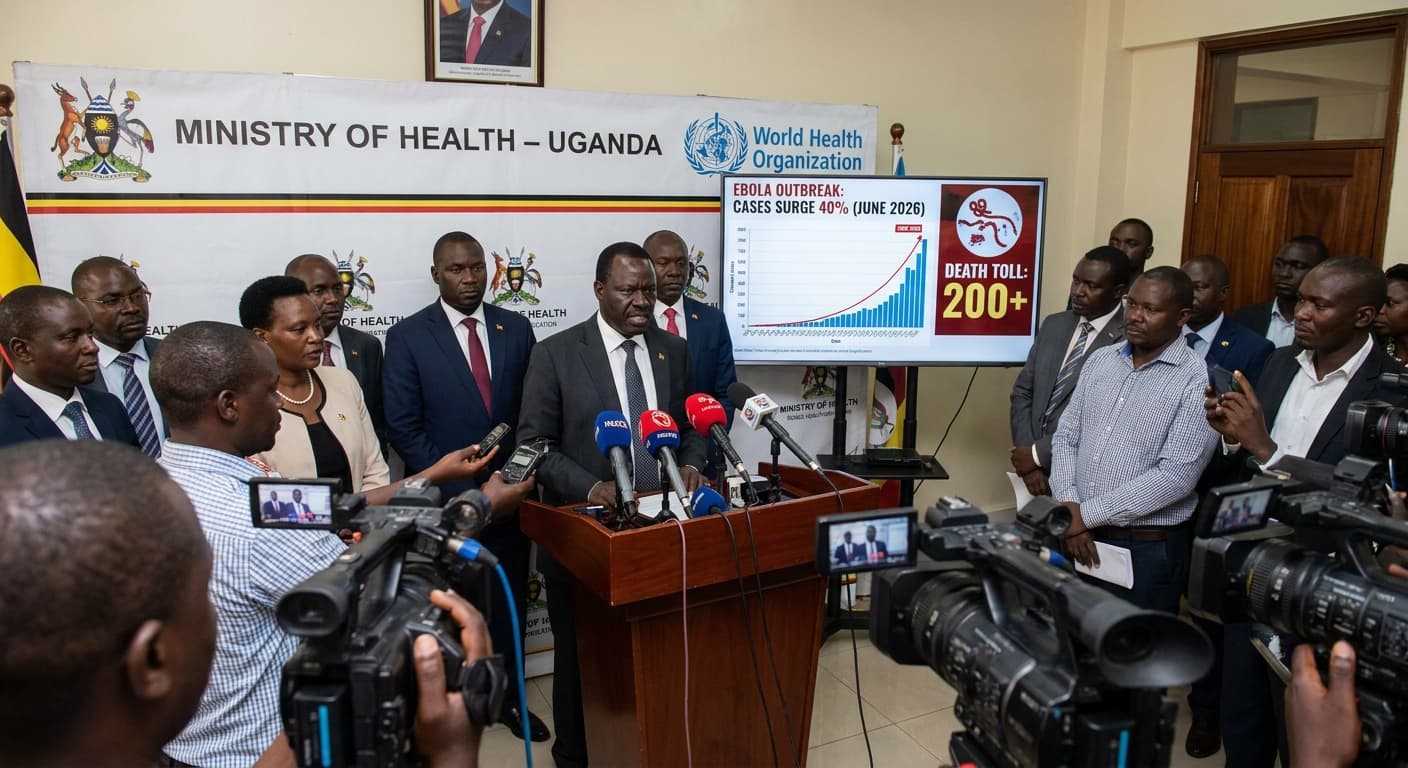
Ebola Outbreak in Congo and Uganda: Cases Surge by 40% in a Week, Death Toll Tops 200

A dramatic surge in Ebola cases in Congo and Uganda underscores the urgency of coordinated global health responses and offers a sobering look at ongoing gaps in outbreak detection and containment. With the death toll crossing 200 and public health infrastructure under strain, regional and international collaboration will be pivotal in containing the epidemic and preventing further spread across borders.
Introduction
As of June 2026, Central Africa faces a daunting public health emergency, with the Ebola virus once again illustrating its devastating capacity for rapid transmission and high mortality. According to the latest news coverage, Ebola cases in the current outbreak in Congo and Uganda have increased almost 40% in just a single week, driving the total number of confirmed and suspected infections upward and pushing the official death toll beyond 200. These developments have reignited global concern and brought renewed scrutiny to the region’s preparedness, surveillance infrastructure, and international support mechanisms.
In this in-depth analysis, we examine the factors contributing to the accelerated spread of the Ebola virus, the implications for regional and cross-border containment strategies, and the profound policy and humanitarian questions raised by this outbreak. We also explore the broader context of recurring infectious disease threats in the region, assess gaps in the existing response, and consider the lessons for future epidemic preparedness and resilience efforts.
Ebola: An Ongoing Threat in Central Africa
Ebola is a viral hemorrhagic fever characterized by high contagion and extremely high fatality rates, particularly in settings lacking robust healthcare infrastructure. Over the past two decades, the region encompassing the Democratic Republic of Congo (DRC) and Uganda has witnessed recurring outbreaks, each testing the limits of national and international response capabilities. Despite significant scientific and policy advances—including improved diagnostics, clinical protocols, and vaccine development—the virus continues to exploit gaps in surveillance and public health systems.
Surge in Cases: Numbers and Trends
According to reporting from STAT News, the latest outbreak has seen cases climb by nearly 40% in just one week—a startling acceleration compared to many past epidemics. While the precise reasons for this surge are still being studied, public health experts point to several likely contributors:
- Delayed detection in remote communities, fueling hidden chains of transmission before local and international teams can intervene.
- Social and economic instability in affected regions, including persistent conflict, which hampers public health efforts and complicates contact tracing.
- Ongoing mistrust between communities and health authorities, sometimes leading to resistance against isolation and medical interventions.
As a result, the official death toll has already passed 200, and health authorities fear the epidemic curve may climb higher if decisive measures are not implemented.
Health System Strain and Human Cost
The rising case count and fatalities are placing unsustainable pressures on frontline healthcare workers, many of whom operate with limited resources, outdated infrastructure, and ongoing threats to personal safety. Reports from the ground indicate that hospitals are stretched to their limits, and supplies of personal protective equipment and critical medicines remain unreliable in many affected zones. The psychological toll on communities is profound, with families facing isolation, loss, and uncertainty about when or if operations can return to normal.
Policy and Preparedness Response: What Is Being Done?
In response to the alarming uptick in cases, health ministries in Congo and Uganda—assisted by international organizations such as the World Health Organization (WHO) and Médecins Sans Frontières (MSF)—are escalating emergency interventions. These include intensified contact tracing, the expansion of isolation and treatment units, and the deployment of newly developed vaccines where feasible. However, logistical and financial constraints continue to slow the rollout of comprehensive response efforts.
International Support and Gaps
While global health emergencies like Ebola regularly prompt pledges of aid and solidarity, the latest outbreak highlights persistent challenges in delivering support quickly and effectively. Central Africa’s recent crises have demonstrated the limits of existing rapid response frameworks, particularly when host countries face broader instability—and when donor fatigue or competing global emergencies siphon attention and resources.
Despite some progress, experts note the following ongoing difficulties:
- Cross-border coordination, especially given the movement of populations seeking safety, work, or medical attention across porous borders.
- Slow disbursement of funds and supplies, even as international actors acknowledge the need for speed.
- Limited integration of local leaders and traditional health workers in outreach, risking reduced community trust and the perpetuation of rumors or misinformation.
Lessons from Previous Outbreaks
The Congo-Uganda outbreak is far from an isolated incident: Both countries have long been at the front lines of the Ebola threat. Previous epidemics, particularly the West African outbreak of 2014-2016, demonstrated both the immense cost of delayed action and the critical value of early warning systems, coordinated logistics, and international solidarity.
Still, the current outbreak serves as a reminder that scientific breakthroughs—such as improved vaccines and diagnostics—must be matched by enduring investments in public health infrastructure, governance, and emergency preparedness.
Broader Humanitarian and Economic Impact
Beyond the grim health statistics, the Ebola outbreak is having cascading effects on the livelihoods, educational prospects, and economic security of millions of people in affected and adjacent regions. Markets, schools, and local businesses face recurrent shutdowns, fueling socioeconomic distress and, in some cases, amplifying tensions that can further stymie public health efforts. The long-term public health implications extend to disrupted healthcare for other diseases, rising malnutrition, and the erosion of fragile systems.
Outlook: What Needs to Happen Next?
The pressing question now facing policymakers, humanitarian actors, and the scientific community is how best to contain the current surge and apply lessons learned from past crises. Areas for immediate focus include:
- Reinforcing surveillance and detection capabilities in remote or hard-to-reach areas.
- Prioritizing rapid access to vaccines and innovative therapies—balanced, crucially, with robust community engagement to counter misinformation.
- Scaling up psychosocial support for patients and families.
- Ensuring that assistance strategies are flexible and responsive to rapidly changing on-the-ground realities.
- Fostering continued international funding and coordination even as media attention wanes, recognizing the lingering threats that persist long after the headline death tolls subside.
Conclusion
The shocking 40% surge in Ebola cases in Congo and Uganda within a single week, and the death toll now well over 200, demands a renewed sense of urgency and a comprehensive strategic response. At stake is not only the immediate containment of a deadly virus but also the broader credibility of international health systems and the promise of scientific and policy advances in infectious disease control.
The world must remain vigilant and proactive, investing in proven solutions while also building the trusted relationships and agile systems that will be required for future outbreaks. As the situation unfolds, ongoing attention and action are required to address both the acute human toll and the long-term resilience of health systems on the front lines.
Join the BioIntel newsletter
Get curated biotech intelligence across AI, industry, innovation, investment, medtech, and policy delivered to your inbox.