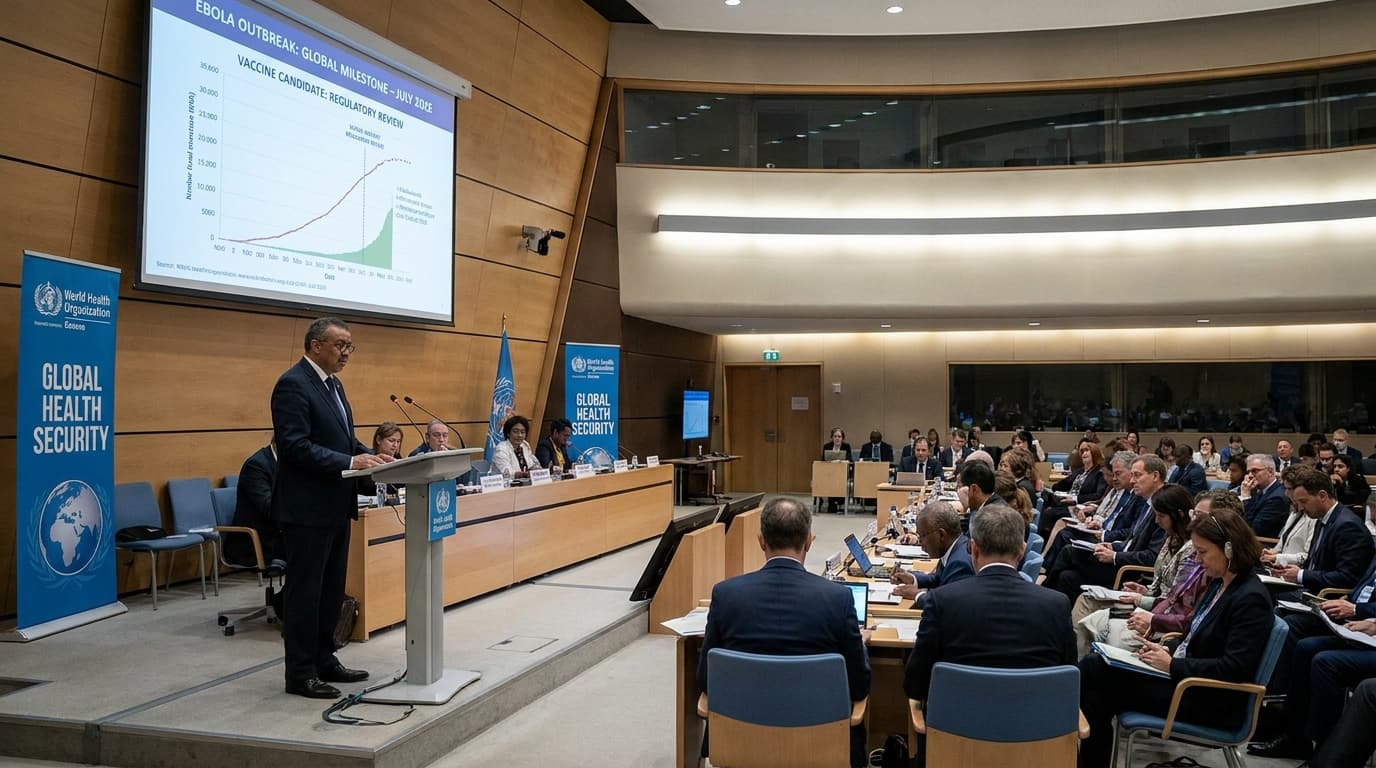
Ebola Outbreak Nears Key Milestone as Vaccine Candidate Edges Closer to Readiness

Amid continued public health concern, the ongoing Ebola outbreak has entered a pivotal phase, but optimism is rising as scientists indicate that a promising vaccine is close to deployment. This development could significantly influence the management of future Ebola crises and demonstrates progress in infectious disease preparedness.
Ebola Outbreak Approaches Milestone, With New Vaccine on the Horizon
The world continues to monitor the ongoing Ebola outbreak, which is reportedly nearing a significant milestone according to recent reports. As the outbreak unfolds, there is an emerging sense of optimism in the public health community, driven by news that a promising vaccine is close to readiness for use. This development has broad implications for outbreak response, global health security, and the future of infectious disease preparedness.
Context: The Current Ebola Outbreak
Ebola virus disease (EVD) is a severe and often deadly illness caused by the Ebola virus, which has plagued several regions in Africa with intermittent outbreaks since its discovery in 1976. The virus is known for its high case fatality rate, as well as the rapid and aggressive nature of its spread within communities and healthcare settings. Outbreaks can place enormous strain on local and international public health systems, provoke widespread fear, and trigger significant economic disruptions in affected countries.
As of late July 2026, the latest outbreak is "nearing a milestone," a phrase that signals the public health community is reaching a critical juncture—possibly in terms of case numbers, trend of infection rates, or effectiveness of containment efforts. While the exact details of the milestone are not provided in the initial report, such periods in epidemic management are often characterized by a peak in infections, the beginning of a downward trend, or the imminent completion of a vaccination campaign.
Progress in Vaccine Development
A distinguishing feature of the current response is the progress toward developing and deploying a new Ebola vaccine. In past Ebola outbreaks—notably the 2014-2016 West Africa epidemic and subsequent smaller events—vaccine development has either lagged behind the spread of the virus or faced significant logistical hurdles in reaching vulnerable populations.
Now, researchers close to the situation report that a vaccine is "close" to deployment. The significance of this cannot be overstated. A safe and effective Ebola vaccine is a critical tool not only in ending the current outbreak but also in preventing future re-emergence by:
- Protecting front-line workers and first responders,
- Reducing the chance of transmission in communities,
- Creating a ring of immunity around detected cases.
Public Health Implications
The anticipation of a near-term vaccine raises important public health questions, including:
- How effective is the latest candidate compared to previously available vaccines?
- Will the new vaccine be available in sufficient quantity to cover high-risk populations?
- What regulatory and logistical hurdles remain before full deployment?
The answers to these questions will influence the trajectory of not only the current outbreak but also future preparedness and response strategies. Factors such as dosing regimens, cold chain requirements, and cultural acceptance play an essential role in the practical rollout of any new vaccine.
Broader Regulatory and Policy Context
The global response to Ebola—both the outbreak control efforts and vaccine development—typically involves a complex, coordinated effort among international agencies, national health authorities, non-governmental organizations, and research consortia. Regulators such as the U.S. FDA, the European Medicines Agency (EMA), and the World Health Organization (WHO) often face the challenge of adapting review timelines and emergency use protocols to respond to public health emergencies.
Looking ahead, policymakers may draw important lessons from this near-milestone moment, especially about maintaining adequate funding for vaccine research targeting emerging infectious diseases, establishing infrastructure for rapid clinical trials during outbreaks, and improving mechanisms for fast-track regulatory approval in crisis contexts.
Lessons for Infectious Disease Preparedness
Ebola remains a litmus test for global pandemic preparedness. Though the development of a deployable vaccine marks progress, the ongoing outbreak reminds stakeholders that:
- Rapid identification and response remain vital to contain spread,
- Community trust and effective communication are key to successful vaccination campaigns,
- Long-term investment in surveillance and healthcare infrastructure is crucial to reducing risk of major outbreaks in the future.
Conclusion
The nearing of a significant milestone in the Ebola outbreak, coupled with promising news about a vaccine candidate, offers hope for containment and for improved responses to similar crises in the future. The effectiveness of these efforts will depend on sustained coordination across public health authorities, researchers, and frontline communities—as well as on lessons learned from past and current outbreaks.
Source: STAT News
Join the BioIntel newsletter
Get curated biotech intelligence across AI, industry, innovation, investment, medtech, and policy delivered to your inbox.