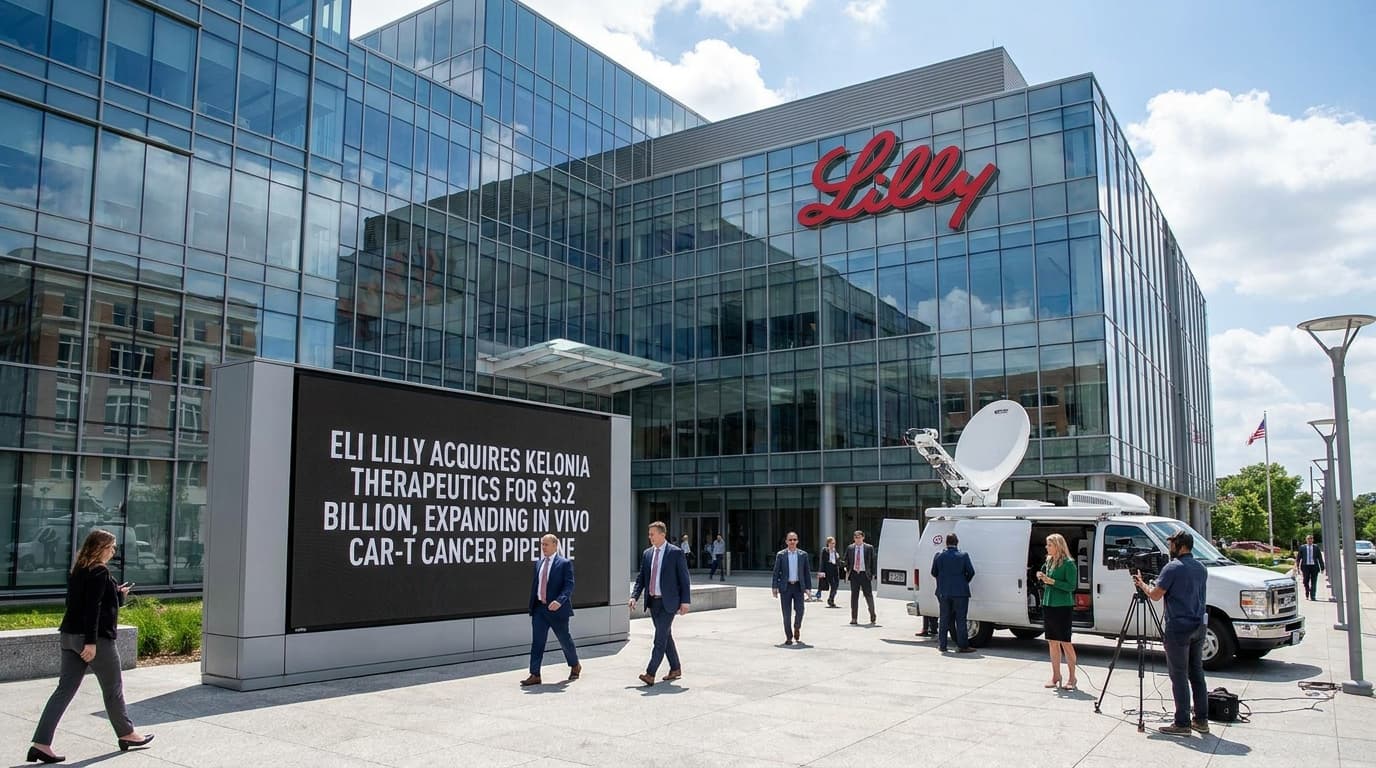
Eli Lilly’s Strategic $3.2 Billion Kelonia Acquisition Advances In Vivo CAR-T and Genetic Medicine

The acquisition of Kelonia Therapeutics marks a significant milestone in Eli Lilly’s ongoing commitment to in vivo genetic medicine. This deal complements their recent strategic purchases and underscores a focused expansion into cell therapy fields such as CAR-T, aiming to bring novel treatments for multiple myeloma to clinical fruition.
In a major move signaling the increasing importance of in vivo genetic medicine and CAR-T technologies, Eli Lilly announced the acquisition of Kelonia Therapeutics for approximately $3.2 billion. This strategic transaction expands Eli Lilly’s capabilities and pipeline in cell and gene therapy, particularly for cancer indications such as multiple myeloma.
Kelonia Therapeutics is known for its pioneering work in an in vivo cell therapy platform designed to deliver engineered CAR-T therapies within the body, a technology that could potentially circumvent some of the limitations associated with ex vivo CAR-T manufacturing. This approach offers promising solutions to improve scalability, reduce costs, and enhance patient accessibility to advanced cellular therapies.
The acquisition is part of a broader Eli Lilly strategy, which over the past year has included complementary purchases of Verve Therapeutics and Orna Therapeutics, each offering distinct platforms for genetic medicine. Kelonia’s unique gene delivery technology fits well within this portfolio, especially as CAR-T therapies continue to represent a powerful modality for hematologic cancers.
The clinical stage in vivo cell therapy from Kelonia specifically targets indications like multiple myeloma, a blood cancer that remains an area of high unmet medical need. By integrating Kelonia’s technology, Eli Lilly aims to accelerate development timelines and enhance therapeutic innovation in multiple myeloma treatment.
Kelonia’s acquisition also reflects the dynamic nature of the biotech ecosystem where promising startups often face operational and financial challenges before being absorbed by larger pharma companies positioned to further develop and commercialize groundbreaking technologies. Kelonia’s journey to this milestone, as outlined in internal memos, highlights the obstacles biotech startups can encounter in advancing their therapeutic platforms amidst competitive and capital-intensive environments.
Eli Lilly’s substantial investment signals confidence in the transformative potential of in vivo CAR-T approaches, which may offer improved patient experiences and broaden the applicability of cell therapies beyond current indications. By bolstering its pipeline through such acquisitions, Eli Lilly positions itself at the forefront of next-generation cancer therapeutics.
As the industry watches closely, this acquisition could serve as a bellwether for future consolidation and innovation trends in the field of genetic medicines and cancer immunotherapy.
Join the BioIntel newsletter
Get curated biotech intelligence across AI, industry, innovation, investment, medtech, and policy delivered to your inbox.