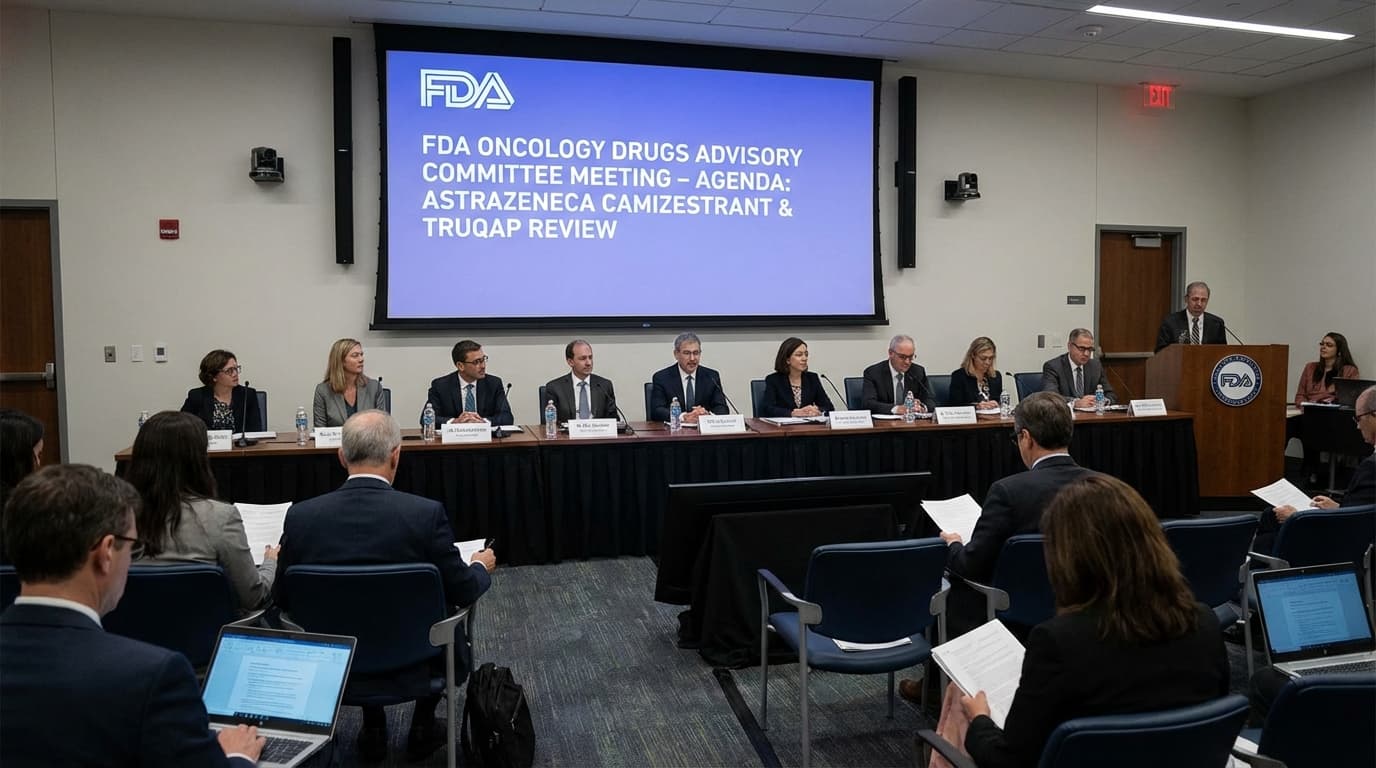
FDA to Review Two AstraZeneca Cancer Drugs in First Advisory Panel in Nine Months

AstraZeneca is facing a pivotal review as the U.S. Food and Drug Administration (FDA) prepares to hold the first cancer advisory panel meeting in nine months. The committee will evaluate the applications for camizestrant, an oral selective estrogen receptor degrader (SERD) for breast cancer, and Truqap, an AKT inhibitor aimed at prostate cancer treatment. This meeting underscores the critical role that advisory panels play in guiding regulatory decisions for cutting-edge oncology drugs.
The FDA's advisory committees serve as key mechanisms for scientific evaluation and public transparency in the drug approval process. After a period of reduced activity, the cancer advisory committee is set to resume its deliberations with a high-profile agenda focused on two AstraZeneca drug candidates.
Camizestrant is an oral selective estrogen receptor degrader (SERD) developed for the treatment of breast cancer. This targeted therapy is designed to intervene in estrogen receptor-positive breast cancers, which constitute a significant portion of breast cancer cases globally. The oral formulation represents a potential advancement over existing therapies, possibly improving patient compliance and efficacy.
Truqap is an AKT inhibitor intended for prostate cancer treatment, targeting a critical pathway associated with cancer cell survival and proliferation. AKT inhibitors represent a promising class of targeted therapies in oncology, addressing molecular drivers of tumor growth and resistance.
The FDA's upcoming advisory panel will analyze clinical data supporting these agents' safety and efficacy, providing insights and recommendations that often influence final regulatory decisions. The meeting marks the first cancer advisory panel convening in nine months, after a notable period with fewer public scientific reviews in this area, which has drawn attention from industry and healthcare stakeholders.
This renewed activity at the FDA reflects ongoing challenges and complexities in oncology drug approvals, balancing expedited patient access with rigorous evaluation to ensure therapeutic benefit and safety.
The advisory panel serves as a platform for diverse input, including expert scientists, clinicians, patient advocates, and regulatory officials. This multidisciplinary dialogue is essential given the high stakes involved in cancer treatment development, where new therapies can significantly alter clinical paradigms and patient outcomes.
AstraZeneca’s submissions follow an intense period of oncology drug innovation and competition, with numerous companies seeking to develop therapies that address unmet needs such as resistance to existing treatments and improved tolerability.
The outcome of this meeting could have broad implications not only for AstraZeneca’s pipeline but also for future drug development strategies and regulatory pathways in oncology.
Additionally, the resumption of public advisory meetings is being viewed as a positive step toward greater transparency and collaborative decision-making in drug approvals, which some critics had called for amid concerns about regulatory isolation.
Beyond the implications for these two drugs, the advisory panel’s proceedings will likely signal the FDA’s evolving approach to evaluating novel cancer therapies amidst scientific advances and complex clinical trial data.
This development fits into the larger context of oncology innovation, where personalized medicine and targeted treatments are increasingly defining the future landscape.
In summary, the FDA’s scheduled review of AstraZeneca’s camizestrant and Truqap highlights a significant moment in cancer drug development and regulatory policy, with potential impacts on patient care and industry dynamics.
Source: BioSpace
Join the BioIntel newsletter
Get curated biotech intelligence across AI, industry, innovation, investment, medtech, and policy delivered to your inbox.