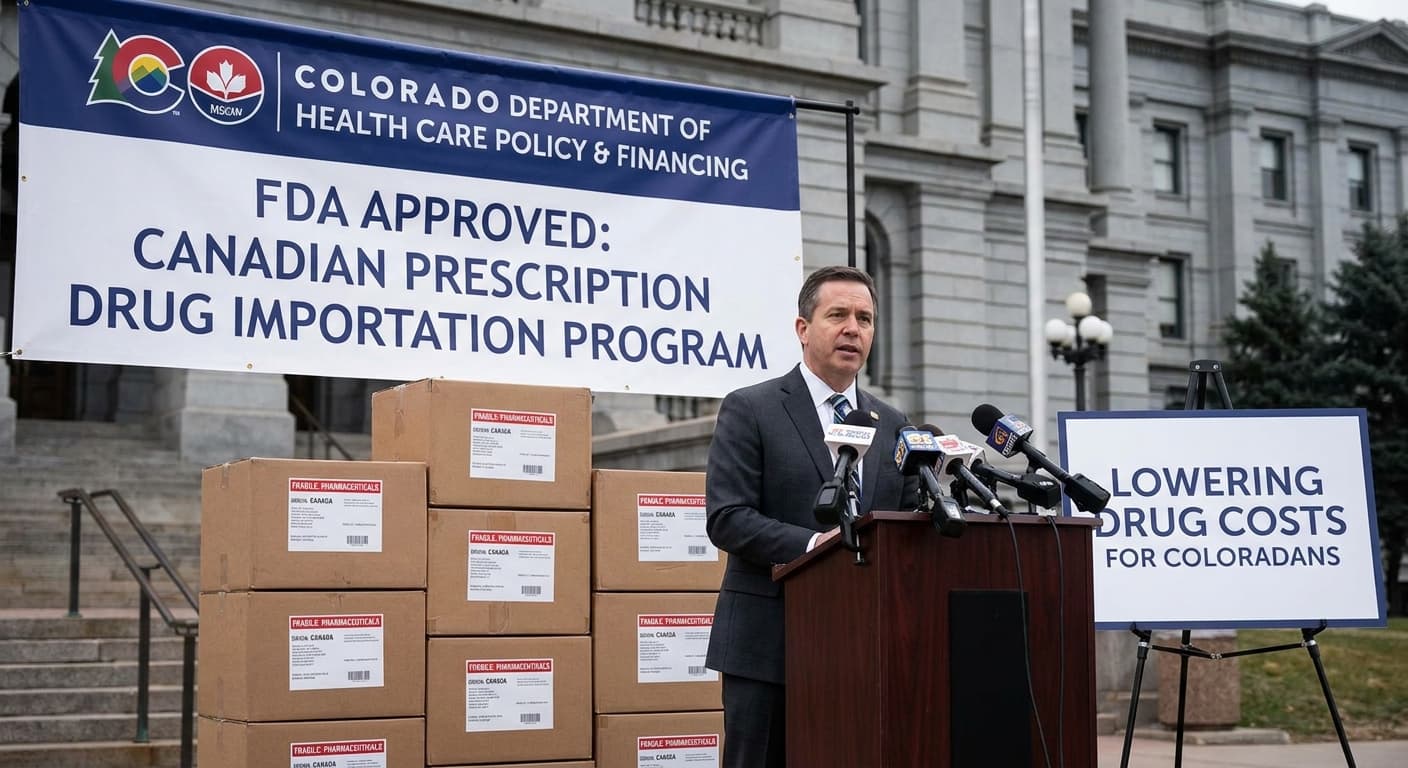
FDA Approves Colorado’s Plan to Import Cheaper Drugs from Canada: Implications, Challenges, and the Future of U.S. Drug Pricing

With the FDA's endorsement, Colorado will become a testing ground for drug importation aimed at reducing prescription costs for residents. The initiative’s success or failure could inform national strategies and reshape industry approaches to cross-border pharmaceutical policy.
Introduction
Rising prescription drug costs in the United States have long been a source of public concern, with patients, healthcare providers, insurers, and policymakers seeking creative solutions to rein in spending. On June 15, 2026, the Food and Drug Administration (FDA) announced its approval of Colorado’s proposal to import certain prescription drugs from Canada. This regulatory approval is not just a milestone for Colorado but a test case that could pave the way for broader adoption of similar drug importation strategies across states. This development brings forth a complex interplay of regulatory oversight, international trade, supply chain considerations, healthcare affordability, and the ongoing debate over U.S. drug pricing mechanisms.
In this in-depth analysis, we examine what the FDA’s approval means for Colorado, the pharmaceutical industry, healthcare systems, and, most importantly, patients. We consider the regulatory framework underpinning the decision, potential savings for consumers, possible disruption to U.S.-Canada pharmaceutical relations, safety concerns, industry pushback, and the national implications for drug pricing policy.
Background: The Quest for Cheaper Drugs
The high cost of prescription medications in the United States has repeatedly landed the issue at the forefront of policy debates. Americans pay substantially more for prescription drugs than residents of other developed nations. For years, policymakers have cited Canada as a model, where government policies and negotiation strategies generally deliver lower prices for many commonly prescribed medications.
Importing from Canada, however, has faced significant regulatory, logistical, and diplomatic hurdles. Historically, federal law prohibited large-scale importation of prescription drugs, citing safety, quality assurance, and intellectual property protection concerns. States, growing more desperate to manage Medicaid budgets and address consumer outcry, have explored loopholes or pilot programs, but few have advanced beyond conceptual stages — until now.
The Colorado Plan: Details and Scope
The FDA’s recent approval enables Colorado to implement an importation program that targets specific prescription drugs. The intent is to source these drugs from licensed Canadian suppliers, ensuring that medications imported are subject to equivalent safety and quality standards as those manufactured and sold in the U.S. The scope of the plan involves select medications for which there are substantial price differences between the two countries, excluding certain controlled substances and most biologics.
The program’s primary objectives are:
- Lowering prescription drug prices for Colorado residents, especially those who are uninsured or underinsured
- Creating state-level competitive pressure on domestic manufacturers and U.S. pricing structures
- Collecting data and real-world evidence on the feasibility and risks of international importation programs
Regulatory and Industry Response
The FDA’s formal approval comes after years of regulatory review and pilot proposals by multiple states. The agency has established stringent requirements for drug tracking, supply chain integrity, and pharmacovigilance.
Pharmaceutical industry groups have expressed concern, arguing that importation will undercut domestic pricing structures and potentially compromise drug safety. Canadian authorities, for their part, have historically warned of potential shortages and disruptions to their own pharmaceutical supply when confronted with large-scale U.S. importation efforts.
Patient and Health System Impacts
One of the anticipated benefits for Colorado residents is direct savings on prescription drug purchases, particularly for those managing chronic diseases or requiring expensive specialty medications. The initiative may also provide an affordability lifeline for safety-net providers and Medicaid programs strained by rising costs.
Healthcare providers will need clear guidance on prescribing, dispensing, and monitoring drugs sourced via the Canadian importation program. Insurers may need to adjust benefit structures to adapt to new cost baselines and reimbursement models.
International and Supply Chain Considerations
Canada represents a fraction of the U.S. population and market size, raising questions about whether its supply chain can satisfy additional demand without adverse effects for Canadians. Should states like Florida, New Hampshire, and Vermont — which have also lobbied for similar importation programs — follow Colorado’s lead, the pressures and complexities would amplify.
Pharmaceutical manufacturers face new uncertainties regarding volume commitments, pricing strategies, and inventory management. The program also highlights ongoing diplomatic negotiations between the U.S. and Canada regarding healthcare policy convergence, trade priorities, and cross-border collaboration versus protectionism.
Regulatory Oversight and Monitoring
The FDA’s role will remain central as the plan unfolds. Rigorous drug tracking, comprehensive quality assessments, and system-wide pharmacovigilance are prerequisites to mitigate counterfeit risks and ensure patient safety. State agencies will be held to high standards of transparency and accountability, providing regular performance data and safety reports.
National Policy Implications
The Colorado experiment serves as a live case study for federal and state legislators weighing broader systemic reforms. Should the program succeed — measured by patient savings, absence of major safety incidents, and manageable stakeholder pushback — political pressure could mount for creating federal pathways for larger-scale importation or for granting states more autonomy in tackling pharmaceutical affordability.
Conversely, implementation challenges such as regulatory fragmentation, diplomatic strain, logistics failures, or patient safety incidents could dampen enthusiasm for expanding such programs nationwide.
Opposition and Critique
Industry associations have signaled mounting legal challenges, contending that importation undermines the U.S. drug development ecosystem, threatens intellectual property by encouraging parallel trade, and raises questions about liability in adverse event cases.
Canadian policymakers have previously sought to limit bulk pharmaceutical exports, fearing shortages and price spikes domestically if U.S. demand surges. The Canadian federal government may respond with additional export controls or negotiations with manufacturers to limit outbound flows.
Safety Concerns: Reality and Perception
Patient groups and advocates have celebrated the potential for cost savings but urge vigilance about drug authenticity, transport conditions, and supply chain breakpoints. The FDA’s regulatory framework is designed to allay these fears through advanced tracking and traceability, tightened supplier standards, and inter-agency collaboration with Canadian regulators. Nevertheless, skepticism persists in both countries.
Broader Trends in Drug Pricing Reform
This experiment takes place against a backdrop of continued debate over allowing Medicare to negotiate directly with drugmakers, efforts to speed generic competition, and attempts to rein in patent protections for high-cost drugs. Colorado’s program could ultimately serve as a catalyst for federal legislative action, influencing broader regulatory philosophy on drug importation and pharmaceutical market competition.
Conclusion
The FDA’s approval of Colorado’s plan to import certain prescription drugs from Canada marks a landmark moment in U.S. healthcare policy. Touted as a potential breakthrough for affordability, the plan’s implementation will be watched closely by patients, providers, insurers, pharmaceutical companies, and regulators nationwide. Outcomes in Colorado could redefine policy debates, industry practices, and international healthcare dynamics for years to come.
As this initiative unfolds, BioIntel will continue monitoring the real-world impacts, stakeholder responses, and evolving debates regarding cross-border pharmaceutical imports, all of which collectively shape the future affordability and accessibility of medications in the U.S.
For detailed source information, refer to STAT News: FDA approves Colorado’s plan to import cheaper drugs from Canada.
Join the BioIntel newsletter
Get curated biotech intelligence across AI, industry, innovation, investment, medtech, and policy delivered to your inbox.