FDA Approves First New Sunscreen Ingredient in a Generation: What This Means for U.S. Consumers and the Dermatology Community

Federal regulators' decision to approve a novel sunscreen ingredient, bemotrizinol, signals a critical benchmark for sun safety in the United States. This policy move could reshape how the public and dermatology experts approach UV protection, with ramifications that extend across consumer health, industry innovation, and regulatory practice.
Introduction
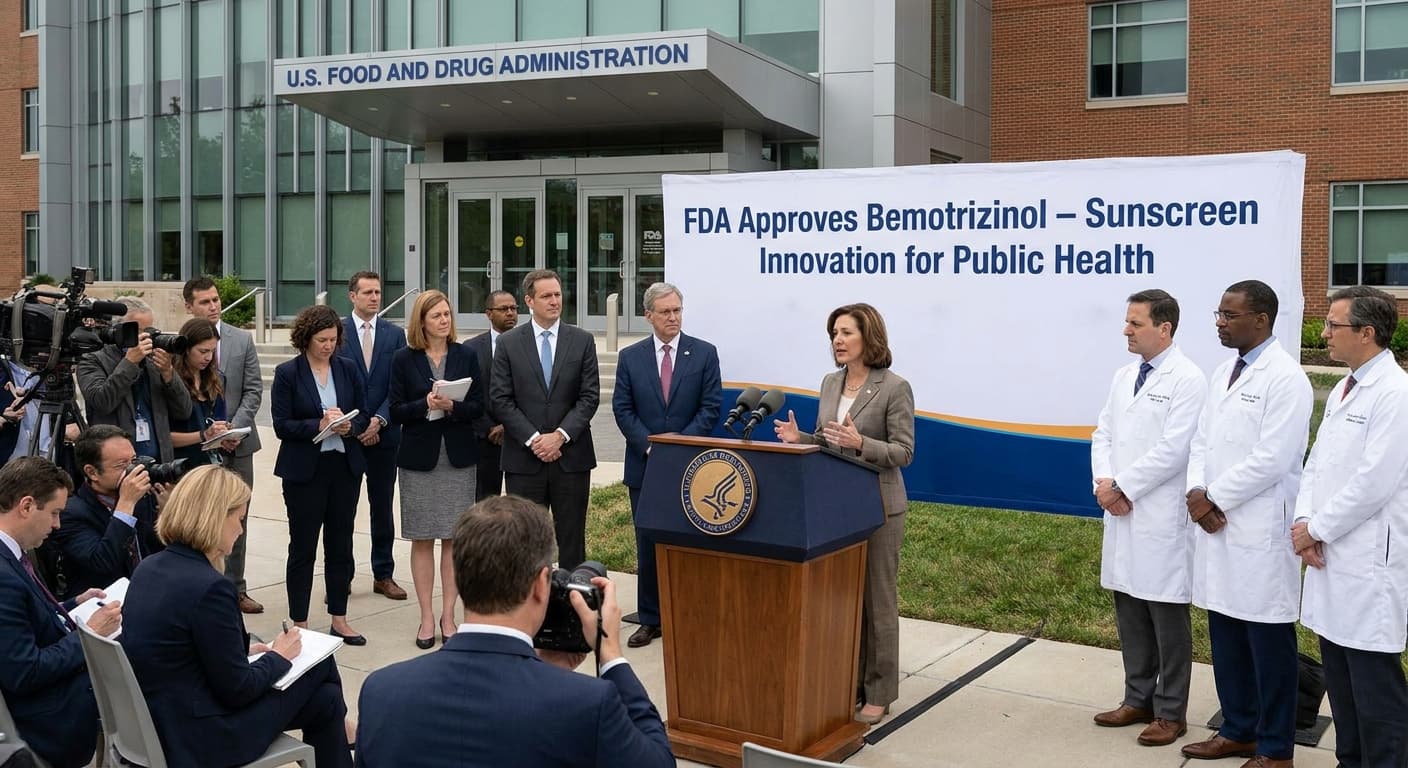
In a move that underscores both the evolving landscape of public health policy and the persistent call for innovation in sun protection, the U.S. Food and Drug Administration (FDA) has approved bemotrizinol as the first new sunscreen ingredient for the domestic market in over a quarter of a century. This long-anticipated regulatory action is poised to have significant implications for American consumers, sunscreen manufacturers, dermatologists, and public health officials concerned with rising rates of skin cancer and sun damage.
Background: The Protracted Path to U.S. Sunscreen Innovation
The United States has historically lagged behind other world regions, particularly Europe and Asia, when it comes to access to advanced sunscreen ingredients. For more than two decades, American consumers have been limited to a narrow list of ultraviolet (UV) filters approved by the FDA. The regulatory citation for this stagnation has centered around the agency's stringent safety and efficacy standards, coupled with drawn-out testing requirements and complex bureaucratic procedures.
Bemotrizinol, known outside the U.S. as Tinosorb S, has been used in Europe and other markets since the early 2000s. It is regarded as a broad-spectrum UV filter, meaning it provides protection against both UVA and UVB radiation. The U.S., however, only now takes this major step to address the demands of a marketplace eager for more advanced sun-protection technologies.
What Is Bemotrizinol and How Does It Work?
Bemotrizinol is a synthesized organic molecule that absorbs ultraviolet rays, functioning as a 'chemical' sunscreen filter. Unlike mineral filters such as zinc oxide or titanium dioxide, bemotrizinol acts by forming a protective barrier that scatters and absorbs UV radiation, converting it into less harmful energy (heat) before it can damage skin cells.
Its chief advantage is its efficiency in covering a wide part of the UV spectrum, including those rays most implicated in premature skin aging, skin cancer, and other sun-induced harm. The ingredient is also known for its photostability—it does not degrade or lose effectiveness quickly when exposed to sunlight, a crucial feature for prolonged outdoor activity.
Scientific and Regulatory Milestones: Why Did It Take So Long?
For decades, sunscreen ingredient approval in the U.S. has been arduous. The FDA treats these UV filters as over-the-counter (OTC) drugs, rather than as mere cosmetic additives, meaning a far higher safety and efficacy bar than that required for similar ingredients in Europe. Several applications for new ingredients, including bemotrizinol, had languished in regulatory limbo for years—frustrating both manufacturers and skin health advocates.
Pressure has increased in recent years from consumer safety groups, dermatological societies, and manufacturers, all pushing for the modernization of the sunscreen monograph. The 2026 approval is a watershed moment, potentially signaling the agency’s willingness to re-evaluate and update its risk-benefit calculations for sun-protection products amid mounting evidence of skin cancer rates and evolving scientific consensus.
Implications for Consumers
With bemotrizinol’s entry, consumers can expect products that promise more comprehensive broad-spectrum protection, greater longevity, and improved cosmetic feel, among other potential benefits. More Americans may gain access to sunscreen formulations that are less greasy, more water-resistant, or better suited for sensitive skin, all derived from global best-in-class standards.
This is particularly relevant at a time when skin cancer remains the most common cancer diagnosed in the United States. Melanoma—the deadliest form—continues to increase in prevalence. Enhanced protection, with more innovative sunscreen products, becomes not only a matter of personal care but also of broader preventative healthcare measures.
What Do Dermatologists and Public Health Experts Say?
Many in the dermatological community have welcomed the FDA’s decision. For years, clinicians and researchers have urged American regulators to expand the toolkit available in the fight against skin cancer. The hope is that the approval of bemotrizinol will not only improve sun safety, but also catalyze additional research and development aimed at ever more effective and cosmetically elegant formulations.
Experts stress that no sunscreen can offer perfect protection, and sun-avoidance behaviors—such as seeking shade, wearing protective clothing, and scheduling outdoor activities outside of peak UV hours—remain essential. However, improved sunscreen options can help bridge the gap in populations with high exposure or barriers to optimal sun-avoidance lifestyles.
Impact on Domestic and Global Industry
The FDA’s approval could ignite a new wave of competition among manufacturers, with American and multinational companies rushing to formulate new products or update existing ones to include bemotrizinol. Companies with established products overseas may now align U.S. offerings with their global bestsellers, resulting in a more harmonized market and possibly more affordable and effective options for American families.
Furthermore, the regulatory precedent set here may prompt faster FDA review for other pending sunscreen ingredients. The industry could see increased interest in research and development, more transparent safety assessments, and competitive differentiation based on cutting-edge UV protection science.
Potential Challenges and Ongoing Questions
While this announcement is broadly celebrated, questions remain. Will the approval of bemotrizinol spur the FDA to overhaul its broader approach to sunscreen ingredients? How swiftly will manufacturers bring new products to market, and how will existing regulations affect labeling and consumer guidance? What level of public education will be required to inform consumers about the differences among sunscreen filters and how to choose the best options for their needs?
Additionally, some skeptics urge vigilance over long-term safety, particularly as higher concentrations of chemical filters become common in daily-use skincare. The FDA will continue to demand post-market surveillance, ensuring a balance between expanded choice and ongoing health monitoring.
International Comparisons
Many global markets, primarily the European Union and countries in Asia-Pacific, have benefited from a broader menu of approved ingredients for years. U.S. acceptance of bemotrizinol creates an interesting paradigm for international regulatory harmonization. American travelers and immigrants often report confusion or dissatisfaction when comparing the efficacy and properties of U.S. sunscreens to those available abroad.
The move may narrow this gap, encouraging more U.S.-based development and possibly influencing regulatory pathways in other countries as American scientists contribute new safety data and post-market insights.
Conclusion: A Milestone for Public Health Policy and Consumer Protection
The FDA’s decision to allow bemotrizinol on the U.S. market marks not only a scientific achievement but also a regulatory turning point. As sun-related illness is projected to remain a significant burden on the U.S. healthcare system, broader access to advanced sunscreen technologies is a critical preventive tool. All eyes will be on industry and regulators alike as this new ingredient rolls out to consumers across the country, and as public health organizations work to ensure the safe, effective, and informed use of sunscreen for Americans of all ages.
Source: STAT News – FDA OKs first new sunscreen ingredient in more than 25 years
Join the BioIntel newsletter
Get curated biotech intelligence across AI, industry, innovation, investment, medtech, and policy delivered to your inbox.