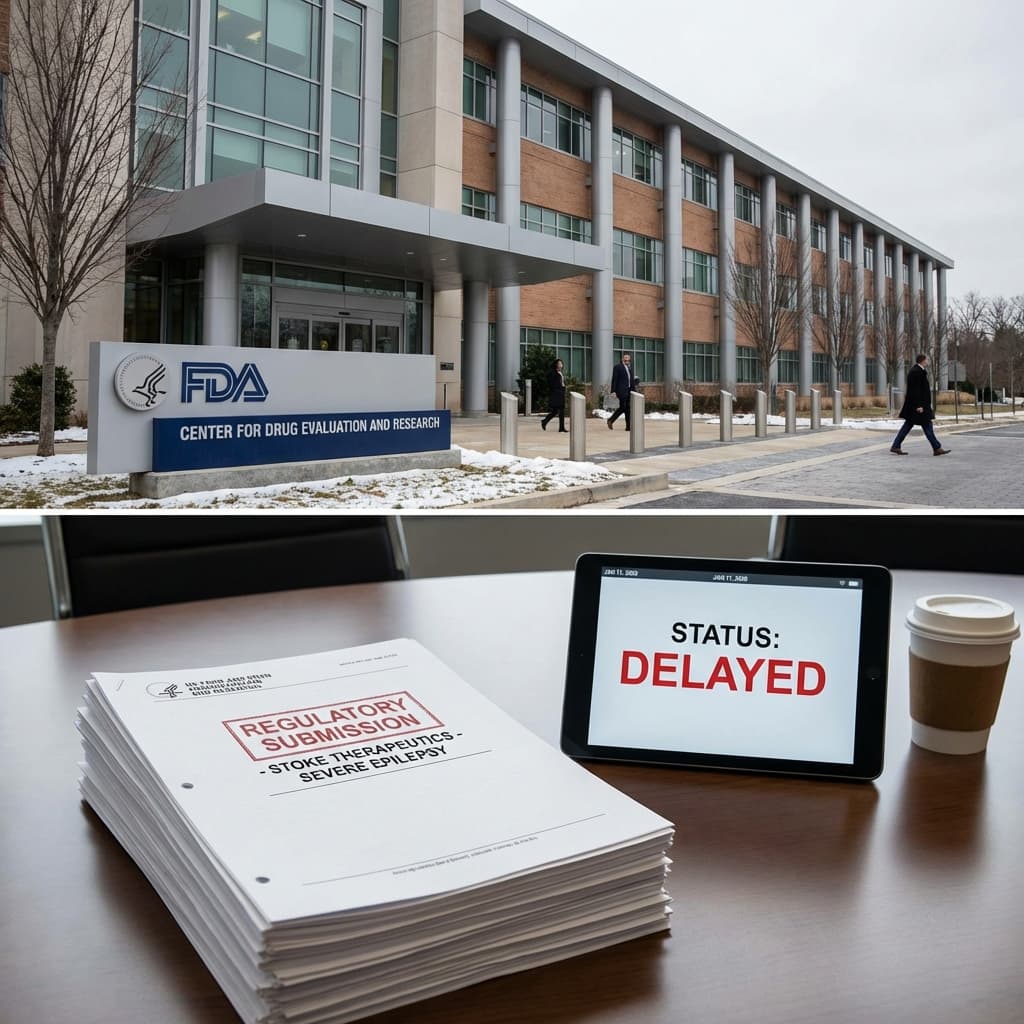
FDA Delays Expedited Submission Request for Stoke Therapeutics' Severe Epilepsy Drug

The dialogue between Stoke Therapeutics and the FDA surrounding the expedited review of a promising severe epilepsy drug underscores the complexities facing regulatory approvals in neurology. This development highlights ongoing tensions in balancing regulatory rigor with the urgent needs of patients with rare and debilitating conditions.
Overview of the Stoke Therapeutics FDA Expedited Submission Delay
Stoke Therapeutics recently announced that its request for an expedited submission for a drug intended to treat severe epilepsy was put on hold as discussions with the US Food and Drug Administration (FDA) did not culminate in an agreement. This news came to light on January 11, 2026, indicating the regulatory process can often be complicated and protracted for novel therapies, especially in challenging disease areas such as severe epilepsy.
Background on Stoke Therapeutics' Epilepsy Drug
The drug in question is designed to treat one of the most debilitating forms of epilepsy, which poses significant clinical challenges and hard-to-manage symptoms. Given the severity and urgency associated with this disease, both the medical community and patients have keen interest in the development of effective therapies.
Expedited Submission and Its Importance
An expedited submission is a regulatory mechanism that allows for faster review and potential approval of breakthrough or urgently needed therapies. Stoke Therapeutics aimed to leverage this pathway to bring relief to patients sooner. However, the FDA's decision to delay agreement suggests unresolved concerns or unmet regulatory requirements.
Implications for Patients and the Industry
The delay impacts stakeholders in multiple ways. For patients, it may mean a longer wait for access to new treatment options. For Stoke Therapeutics, it affects strategic planning, investor confidence, and clinical development timelines. The broader biotech sector observes this as a case study in regulatory interactions for severe neurological disorders.
Navigating FDA Interactions
The FDA maintains a rigorous framework to ensure that treatments meet safety and efficacy thresholds. This sometimes results in disagreements or delays, particularly when data is emerging or when the disease mechanism is complex. Sponsors and regulators must collaborate transparently to advance therapies without compromising patient safety.
Conclusion
The current status of Stoke Therapeutics’ drug application is a reminder of the challenges inherent in drug development for rare and severe diseases. The coming months will be critical as the company and the FDA continue their dialogue to potentially revisit the submission strategy.
For more detailed reading, visit the primary source: STAT News.
Join the BioIntel newsletter
Get curated biotech intelligence across AI, industry, innovation, investment, medtech, and policy delivered to your inbox.