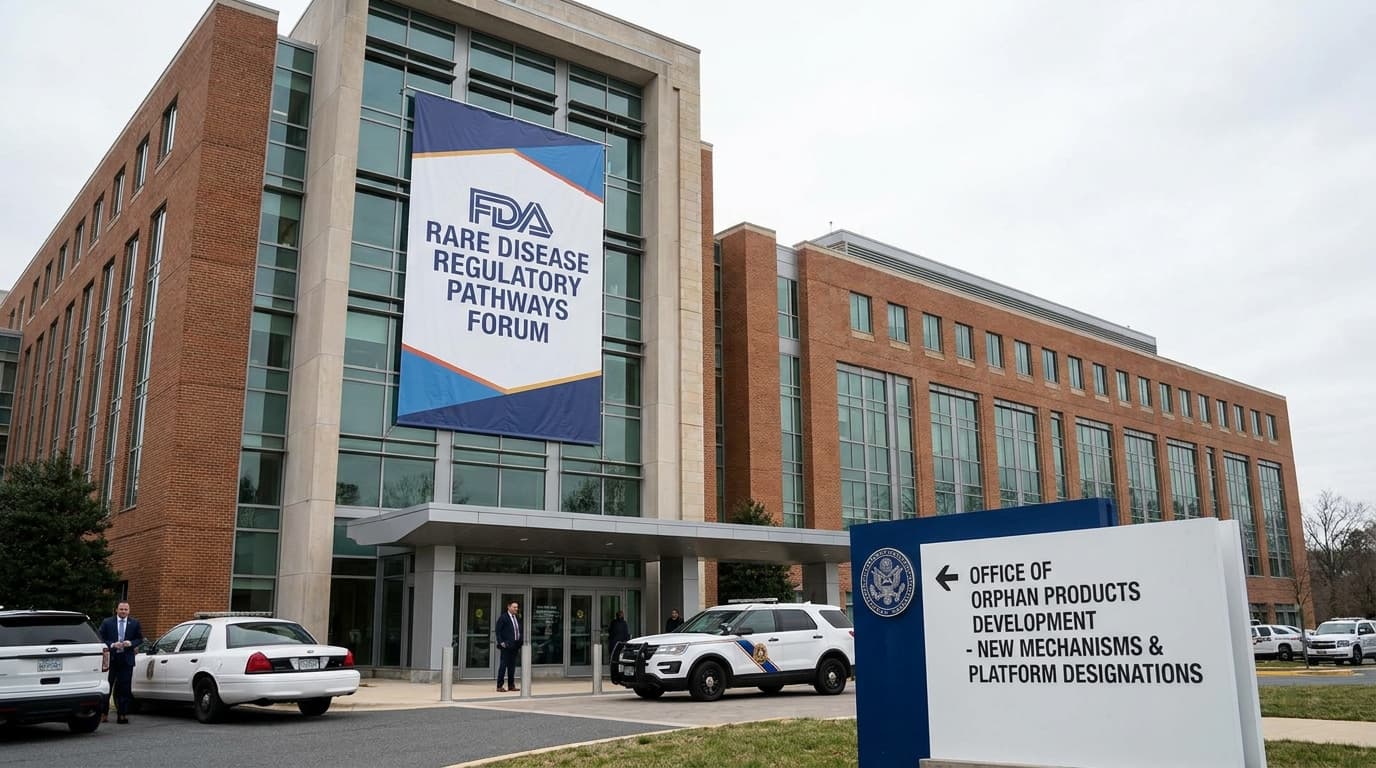
Busy FDA Gives Rare Disease Sector Complementary Pathways, But Leaves Lingering Questions

As rare diseases attract increasing attention, the FDA responds by expanding approval and review pathways. While these steps signify progress, persistent ambiguities around the new tools create friction for drug developers and patient advocates, leaving some stakeholders searching for greater clarity.
Introduction: Regulatory Shifts in the Rare Disease Arena
The landscape for rare disease drug development in the United States is undergoing notable transformation, largely due to evolving priorities at the Food and Drug Administration (FDA) under President Donald Trump's second term. Notably, the FDA has expanded its regulatory toolset, introducing additional mechanisms specifically aimed at rare diseases while bringing the Biden-era platform technology designation into practice. These regulatory shifts reflect both a growing national awareness of the challenges facing the rare disease community and an agency effort to adapt to a complex medical innovation ecosystem.
Growth of the Rare Disease Market: Context and Challenges
Rare diseases, traditionally defined by the FDA as conditions affecting fewer than 200,000 Americans, collectively impact millions of people worldwide. Despite the rarity of individual diseases, the aggregate public health burden is substantial. Development for rare disease therapies, however, is encumbered by market incentives, small, geographically-dispersed patient populations, lengthy and expensive clinical trials, and persistent uncertainty about regulatory expectations.
New FDA Mechanisms: What's Changing?
Recent regulatory reforms at the FDA have introduced new complementary pathways for rare disease therapies. These changes are meant to accelerate review, incentivize investment, and keep pace with rapidly advancing science—from gene therapies to cell-based products and clinical applications of platform technologies. During the second Trump administration, the agency has not only built on prior frameworks, but made substantive moves to expand the regulatory toolkit.
Key highlights include:
- Activation of Platform Technology Designation: Building on groundwork laid during the Biden administration, the FDA is operationalizing this designation, potentially streamlining approval for technologies applicable across multiple disease targets.
- New Accelerated Pathways: The agency is reportedly piloting new fast-track and compassionate use mechanisms designed to shorten the route from bench to bedside for high-need patient groups, particularly in rare indications where unmet need remains significant.
These measures aim to reduce drug development bottlenecks and foster innovation by harmonizing regulatory requirements with the realities of leading-edge biopharmaceutical science.
Industry Response: Opportunities and Lingering Uncertainties
Stakeholders—including drug manufacturers, academic researchers, advocacy groups, and patients—have hailed the new pathways as positive first steps. The breadth of diseases that may be impacted is significant, as platform technologies spanning gene editing, RNA-modulating drugs, and next-generation cell therapies become increasingly relevant.
Nevertheless, the changes are not without criticism or confusion. Key areas of concern and ambiguity include:
- Lack of Detailed Guidance: While new mechanisms have been announced, detailed regulatory guidance remains limited. Developers seeking to leverage these pathways face uncertainties around data requirements, endpoints, and post-marketing commitments.
- Consistency and Transparency: Industry leaders express concern over the consistency with which new tools are deployed. The transition between presidential administrations and evolving leadership within the FDA further complicate expectations.
- Resource Allocation and Operational Readiness: The volatility of the FDA's budget and staffing, particularly amidst shifting federal priorities, constrains the agency’s ability to meet the demands of a growing rare disease portfolio.
Implications for Patients and Innovators
For patients affected by rare diseases, these regulatory adaptations could spell faster—or at least more predictable—access to novel therapies. However, the lingering lack of clarity may also slow innovation, with drug developers possibly hesitating to invest in costly research programs until guidance stabilizes.
Moreover, the rare disease community emphasizes the need for inclusive policymaking. As more therapies target ultra-rare and even individualized conditions, patient advocates insist that regulatory frameworks must not only accelerate access but also ensure long-term safety, efficacy, and equitable healthcare access.
Conclusion: A Work in Progress
Ultimately, the FDA’s recent initiatives to expand its rare disease regulatory toolkit mark a significant milestone in American drug policy. By leveraging lessons from the past and seizing upon new scientific paradigms, the agency can drive transformative change in the rare disease field.
However, with every change comes uncertainty. Until more detailed, predictable, and transparent guidance becomes available, key unanswered questions will remain. The success of these new pathways will depend on ongoing engagement between regulators, the biopharmaceutical industry, clinicians, patients, and advocacy groups.
As the sector moves forward, the prospect of more agile, science-driven regulatory oversight may set the stage for a new era of rare disease innovation—provided the FDA can turn this evolving toolset into actionable, enduring progress.
Original Source: BioSpace - FDA gives rare disease sector complementary pathways, unanswered questions
Join the BioIntel newsletter
Get curated biotech intelligence across AI, industry, innovation, investment, medtech, and policy delivered to your inbox.