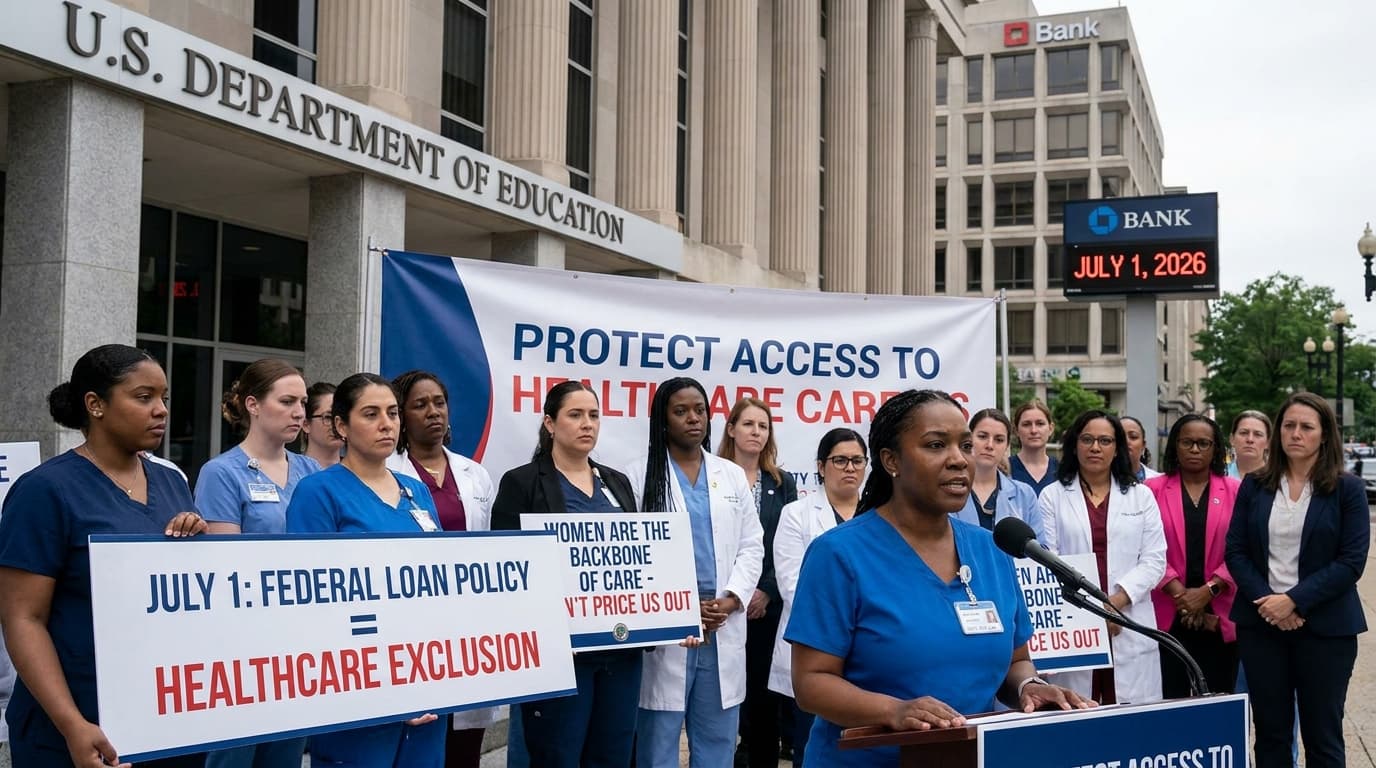
Federal Loan Policy and the Price of Exclusion: Women Sidelined from Healthcare’s Most Critical Roles

Starting July 1, alterations to federal student loan policy are having profound implications for aspiring healthcare professionals, especially women. As debate intensifies over what kinds of labor—and whose labor—receive public investment, the industry faces a reckoning over gender equity, workforce sustainability, and the future shape of care delivery.
The U.S. healthcare industry is deeply dependent on a robust, diverse, and highly skilled workforce. As of June 30, 2026, however, the sector faces an alarming new challenge prompted by changes to federal student loan policy. Much of the recent attention has centered on the mechanics of these policy adjustments. But as July 1 marks a major transition date, a deeper examination reveals that these changes are not just about educational finance—they signal a broader crisis in labor investment, gender equity, and the future of American healthcare.
Context: What Has Changed in Federal Loan Policy?
On July 1, a suite of alterations to federal student loan rules officially takes effect. While the stated intent behind these reforms may focus on curbing excessive student debt and rationalizing government spending, there is a growing concern that critical healthcare roles—roles disproportionately filled by women—are becoming increasingly inaccessible due to rising education costs and tightening loan eligibility or forgiveness protocols.
This policy evolution is not occurring in a vacuum: it reflects a shift in national attitudes toward higher education, public debt, fiscal responsibility, and the prioritization of workforce segments judged to be deserving or important by policymakers. The result, critics argue, is a narrowing of career prospects for those unable to absorb substantial financial risk, especially for women in healthcare.
Women in Healthcare: At the Core of America’s Care Infrastructure
Statistics consistently highlight that women constitute the majority of the healthcare workforce in the U.S., especially in vital but often lower-paid caregiving and clinical roles such as nursing, social work, occupational therapy, and primary care. These occupations are the backbone of care delivery, particularly in underserved communities and sectors.
Yet, the very structure of these jobs—marked by demanding training, relatively modest pay, and long-term commitment—means they are vulnerable to shifts in financial accessibility. When federal loan policy increases the real or perceived costs of such career paths, the net impact can be to dissuade qualified female candidates from pursuing or continuing critical healthcare professions.
The Cost Barrier: Measuring the Impact
Rising tuition and training expenses have already emerged as formidable barriers for women contemplating healthcare occupations. While loan arrangements were originally envisioned as a pathway to educational equity, secure employment, and eventual upward mobility, changes in policy could mean increased up-front borrowing difficulties, stricter qualification criteria, and less predictability about loan forgiveness or repayment support.
For women, who often shoulder broader family and caregiving responsibilities, these evolving financial pressures may exert a dissuasive effect not only on enrollment in professional programs, but also on retention, career progression, and willingness to take roles in the neediest segments of the healthcare system.
Labor Economics: Who Are We Willing to Invest In?
The current federal debate is, at heart, a question about the kind of labor—and whose labor—the country values enough to subsidize through policy. If student loan access is reduced or repayment support withdrawn for clinical degrees or certifications, we may see a bifurcation of the labor market: private, well-capitalized sectors able to absorb high costs, and public or nonprofit sectors left under-resourced.
This would further entrench the wage and opportunity gap facing women in healthcare, with possible downstream effects on care quality, patient safety, and system sustainability.
Equity and Access: More than a Financial Calculation
At a surface level, federal student loan policy adjustments may appear fiscal or administrative. But their impacts radiate through the economic, social, and ethical fabric of the industry. When it becomes harder for women—especially those from less privileged backgrounds—to enter or remain in healthcare careers, the consequences stretch far beyond the staff affected. Workforce shortages, rising burnout, and provider maldistribution all threaten system resilience.
Social Justice Considerations
Healthcare is both a public good and a labor market. Limiting access for a foundational cohort of caregivers risks perpetuating cycles of exclusion and diminishing the industry’s capacity to deliver on its foundational promise: to care for all Americans equitably and compassionately.
Data and Trends: A Cumulative Crisis
Recent data shows declines in nursing school applications, greater turnover in women-dominated fields, and persistent wage stagnation. Against this backdrop, additional loan-related friction could drive up shortages of nurses, technicians, therapists, and other frontline staff who anchor care delivery.
This is not merely a human resources issue—it is a policy-induced constraint on the country’s ability to respond to public health crises, demographic shifts, and the increasing burden of chronic disease, which disproportionately affects vulnerable populations served by women-led healthcare teams.
Beyond the Headlines: The National Conversation
The changes in federal loan policy force an uncomfortable collective reckoning: which professions, and which people, are we as a society prepared to support with targeted, long-term investment? Will women’s labor continue to be taken for granted, or will the sector and its policymakers recognize the imperative to remove barriers and foster inclusion?
Seeking Solutions: Toward a Sustainable Workforce Model
Resolving the emerging crisis will require multi-faceted solutions:
- Targeted forgiveness or incentive programs for those entering or remaining in essential healthcare occupations, especially in underserved areas or public-sector settings.
- Transparent, predictable financial aid mechanisms that consider the realities of gendered wage gaps and career interruptions.
- Broader policy reforms aligning educational financing with the nation’s strategic workforce needs.
Conclusion: An Inflection Point for Healthcare Equity
July 1, 2026, marks more than just a change in student loan policy mechanics; it could be remembered as the moment when the country’s approach to labor investment—or exclusion—became impossible to ignore. If the sector is to deliver on its promise of equitable, high-quality care, the financial pathways into healthcare’s most critical roles must remain open.
The fate of women in healthcare is not only a gender issue, but also a bellwether for the country’s priorities. It is a test of how we honor the professions—and the people—who quite literally hold American health in their hands.
Join the BioIntel newsletter
Get curated biotech intelligence across AI, industry, innovation, investment, medtech, and policy delivered to your inbox.