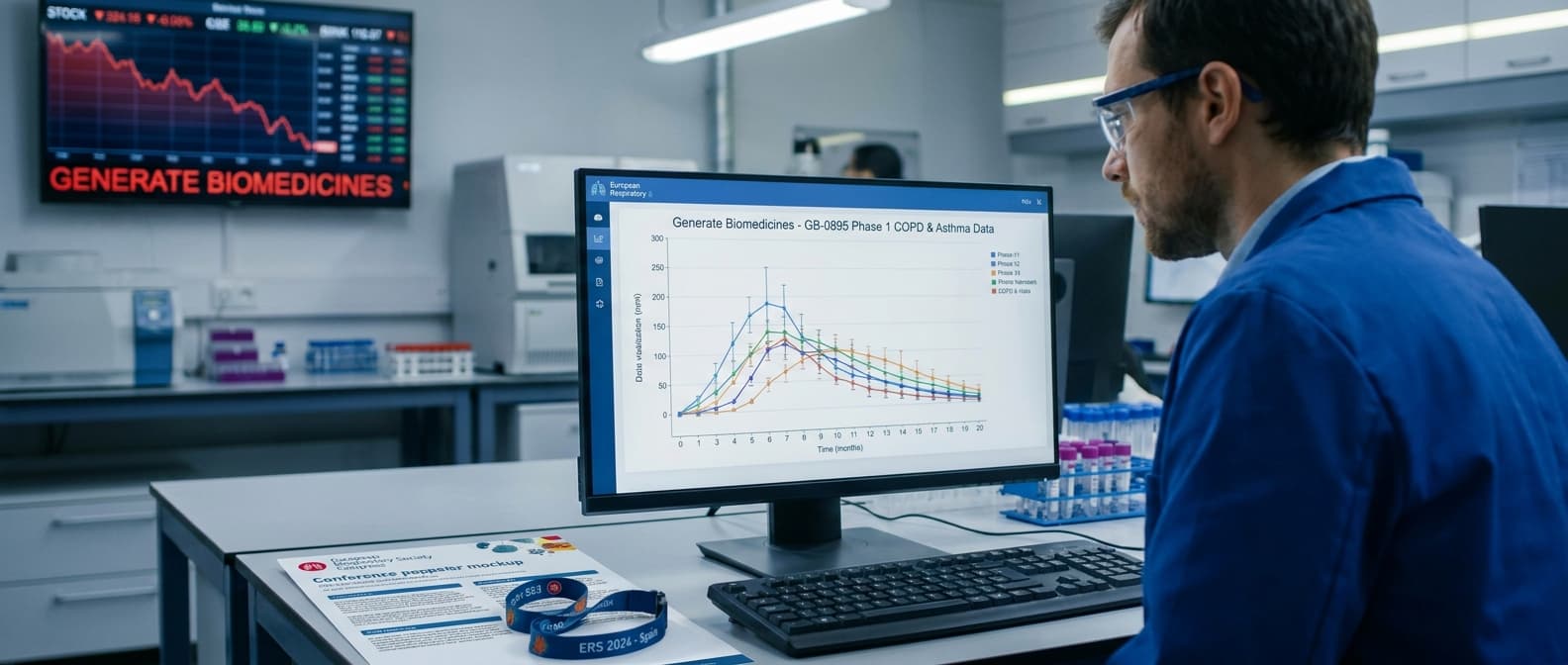
Generate Biomedicines Drops After GB-0895 Posters Leak Early, Exposing New Phase 1 COPD And Asthma Data

According to an SEC filing, draft copies of three posters were made publicly available via the ERS website on Aug. 25, nearly two weeks before the Sept. 7 embargo expired. The episode gave investors an early look at ongoing clinical data for golukibart, while also showing how disclosure mechanics can move sentiment even when the data release is accidental.
Generate Biomedicines said three draft conference posters on its AI-created inflammation asset GB-0895 were inadvertently made publicly available through the European Respiratory Society website on Aug. 25, nearly two weeks before the Sept. 7 embargo expired. The company disclosed the leak in an SEC filing after the materials, accepted for presentation at this year’s European Respiratory Society Congress in Spain, appeared online ahead of schedule.
The incident was followed by a decline in the biotech’s stock. Shares had reached an all-time high of $20.38 on Aug. 25 and later fell to $16.57 as of Thursday morning. BioSpace reported that the ERS had not responded about why the data were shared before the embargo lifted, and Generate Biomedicines had not responded to a request for comment.
The Data
GB-0895, also known as golukibart, is an anti-TSLP monoclonal antibody engineered using generative artificial intelligence. One of the leaked posters covered already-shared design details for a pair of late-stage asthma trials, but the other two included new clinical findings.
One poster described an ongoing Phase 1 study in chronic obstructive pulmonary disease involving 40 patients. Generate Biomedicines said a single dose led to rapid and sustained reductions across four COPD biomarkers. In patients with elevated blood eosinophil count, the company said one dose showed broad and durable anti-inflammatory activity lasting at least six months. The placebo-controlled, ascending-dose study also showed a half-life of nearly 100 days.
The company said GB-0895 was well tolerated, with most treatment-emergent adverse events mild or moderate. Across all groups, six serious TEAEs were recorded among five patients, and Generate Biomedicines said none were above Grade 3 severity or related to the investigational treatment.
Another poster provided follow-up data from a Phase 1 asthma trial. Those results indicated that a lower single 300-mg dose showed broad anti-inflammatory activity for at least six months, which BioSpace said could support the company’s twice-yearly dosing plan.
Why The Leak Matters
The scientific takeaway is that Generate Biomedicines is trying to pair AI-enabled antibody design with a dosing profile that could matter commercially in chronic respiratory disease. The immediate market reaction, however, shows that disclosure timing can shape the narrative as much as the data themselves, particularly for a newly public company. Generate Biomedicines raised $400 million at the end of February, and as of June 30 it had $457.4 million in cash that it expects to last into the first half of 2028.
Join the BioIntel newsletter
Get curated biotech intelligence across AI, industry, innovation, investment, medtech, and policy delivered to your inbox.