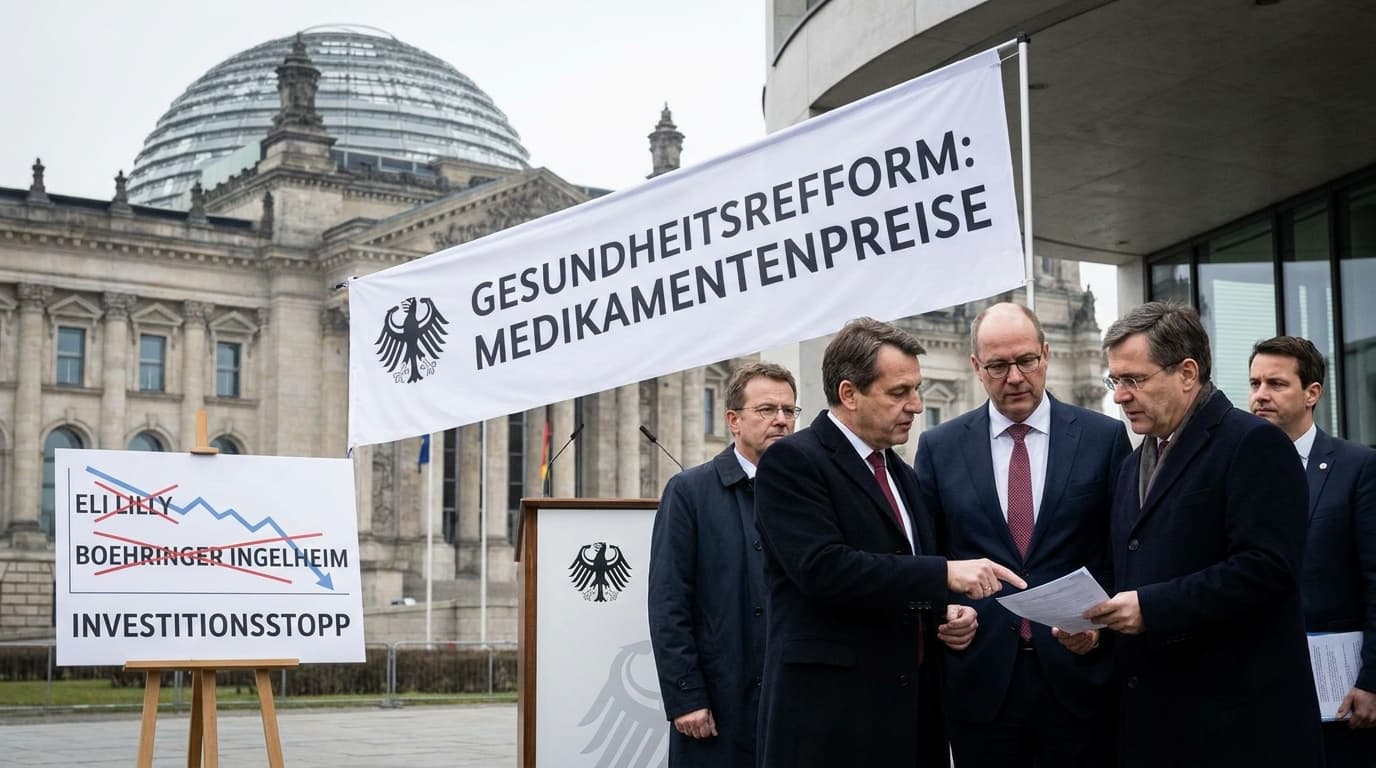
Germany Rethinks Drug Price Reforms After Loss of Pharma Investment

Just weeks after Eli Lilly and Boehringer Ingelheim retracted billions in planned German investments, the government is reportedly revisiting controversial changes in its drug pricing policy. The move reignites a debate over balancing affordability, access, and sustaining pharmaceutical innovation in a key European market.
Pharma Pullback Sparks Policy Re-evaluation
Germany, long a linchpin of the European pharmaceutical industry, is now seeking to reconcile public demand for affordable medicines with the demands of global drugmakers for investment-friendly policies. In recent weeks, the German government has reportedly begun reconsidering a contentious element of its planned healthcare reforms. This follows closely on the heels of announcements from pharmaceutical heavyweights Eli Lilly and Boehringer Ingelheim that they would retract billions of dollars in investment commitments originally earmarked for Germany.
Context: The Drug Pricing Debate in Germany
For years, Germany has served as a model of pharmaceutical innovation, strong intellectual property protections, and timely patient access to new medicines. Recently, however, proposed healthcare reforms aiming to rein in public spending and reduce drug costs have brought the country into conflict with the pharmaceutical industry.
Several aspects of Germany’s proposed reforms have caused concern among drug developers. Chief among these is what some companies see as aggressive price regulation, which could erode incentives to launch new drugs or maintain existing investments in manufacturing, research, and workforce development.
Investment Reversals: Lilly and Boehringer Step Back
The fallout began in earnest when Eli Lilly and Boehringer Ingelheim, keenly aware of the implications of reduced profitability in a regulated environment, withdrew major long-term investment commitments. While the financial specifics vary, reporting from industry sources and outlets such as Reuters suggest that the retractions amount to billions of dollars in capital spending no longer destined for German soil.
The companies’ decisions serve as a signal to other multinational pharma organizations—and to German policymakers—about the potential real-world consequences of aggressive cost containment. Investments that had been intended for next-generation manufacturing, R&D centers, or workforce expansion may now be redirected elsewhere, potentially to jurisdictions with more favorable pricing environments.
Policy Consequences: Rethinking the Reform
In recognition of these reversals and the criticism generated by the pharmaceutical lobby, the German government is said to be revisiting at least one of the most contentious pricing provisions in the reform package. While details remain to be finalized, early indications are that Berlin is seeking ways to preserve some of the reforms’ cost-control intent while mitigating the risk of losing its competitive edge as a pharma hub.
The Balancing Act: Affordability, Access, and Innovation
The German drug reform debate sits at a crossroads familiar to many advanced health systems worldwide—how to strike the right balance between affordable medicine for patients and the need to sustain a local high-value pharmaceutical industry. On one hand, stringent pricing can ensure broad access and limit taxpayer burden in a universal healthcare environment. On the other, excessive price controls may deter innovation and drive global companies to invest in markets deemed more lucrative or less restrictive.
Stakeholders—patient advocates, industry leaders, policymakers, and economists—have weighed in heavily, pointing to both the moral imperative to control costs and the strategic necessity of remaining an attractive destination for biopharmaceutical innovation.
Strategic Implications for European Healthcare
The German experience carries particular weight across Europe given the country’s size, influence, and reputation in drug policy. As a bellwether for the continent, Germany’s policy reversals and adaptations are closely watched by other nations considering their own reforms. There is widespread speculation about whether the government will succeed in forging a sustainable compromise, or whether the dustup ultimately marks a warning to policymakers elsewhere who might aspire to follow a similar path.
Unanswered Questions and Looking Ahead
Although Germany is in the process of revising its proposals, much remains uncertain. Among the key questions:
- How far will Berlin go in relaxing or modifying restrictive pricing proposals?
- What concessions or incentives will be offered to lure back, or retain, lost pharma investment?
- How will the broader European and global pharmaceutical industry interpret and respond to the signals emanating from Germany?
As German officials deliberate, both investors and global healthcare policymakers will be watching for next steps.
Conclusion: A Critical Juncture for German Pharma
The situation in Germany is a vivid reminder of the importance of achieving equilibrium between public policy objectives and the economic imperatives of high-value, innovation-driven sectors. The coming months may prove pivotal in clarifying not only the direction of German drug policy, but also the future strategies of multinational pharmaceutical companies evaluating where to place their bets—and their capital—amid tightening regulatory climates.
Join the BioIntel newsletter
Get curated biotech intelligence across AI, industry, innovation, investment, medtech, and policy delivered to your inbox.