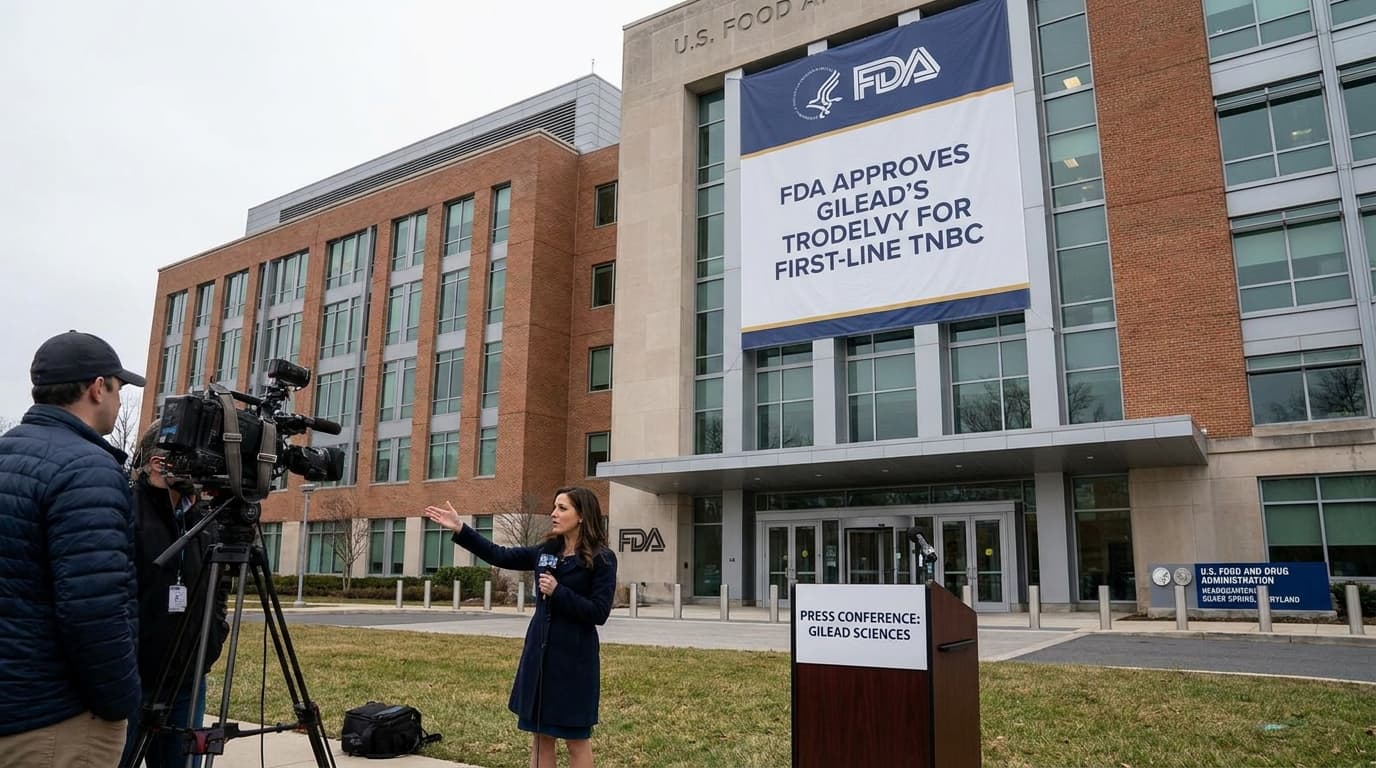
Gilead’s Trodelvy Gains FDA First-Line Approval in Triple-Negative Breast Cancer, Raising Stakes in Competitive Market

The FDA has granted Trodelvy, an antibody-drug conjugate from Gilead Sciences, a significant label expansion as a first-line therapy for triple-negative breast cancer (TNBC). This regulatory milestone puts Gilead on closer footing against competitors AstraZeneca and Daiichi Sankyo, intensifying the commercial and scientific race in the ADC space for breast cancer.
The U.S. Food and Drug Administration has granted a major regulatory win to Gilead Sciences by expanding indications for its antibody-drug conjugate (ADC), Trodelvy (sacituzumab govitecan), allowing its use as a first-line treatment for patients with triple-negative breast cancer (TNBC). This move positions Gilead advantageously in the high-stakes battle among oncology companies developing ADCs for breast cancer, especially with strong competition from AstraZeneca and Daiichi Sankyo’s Datroway.
The Regulatory Shift: Trodelvy’s Expanded Label
Gilead originally won approval for Trodelvy in the later lines of therapy for TNBC, but this new FDA nod broadens its applicability, cementing it as a front-line option. The complexities of winning a first-line label for any cancer indication are considerable, involving a demanding evidence threshold and potentially reshaping treatment algorithms across oncologist communities and treatment centers worldwide. With the update, Trodelvy can be prescribed to patients with metastatic TNBC at the start of their treatment journey, an area historically associated with limited therapeutic options and poor outcomes.
ADCs in Breast Cancer: Trodelvy’s Competitive Landscape
Antibody-drug conjugates (ADCs) represent a transformative technology in oncologic drug development, allowing for targeted delivery of cytotoxic agents to cancer cells while attempting to spare healthy tissue. Trodelvy’s main competitors in the TNBC ADC market are AstraZeneca and Daiichi Sankyo's Datroway, both of which have been actively engaged in developing next-generation ADCs for various oncology indications.
Gilead’s expanded indication comes with a “slightly broader label,” according to coverage, meaning oncologists may have greater flexibility in patient selection and sequencing of therapy. This regulatory edge could influence prescribing patterns and payer access as stakeholders evaluate efficacy, safety, and cost-effectiveness among options.
What This Approval Means for Patients
For those diagnosed with triple-negative breast cancer—which accounts for roughly 10-20% of breast cancers and historically represents one of the most aggressive and difficult-to-treat forms—the expansion of first-line therapies introduces hope for better clinical outcomes. Until recently, chemotherapy remained the primary first-line standard, offering modest survival benefits and a challenging side-effect profile. The introduction of ADCs like Trodelvy may signal a paradigm shift in managing advanced disease, offering new modalities that specifically target tumor antigens.
While the expanded approval marks progress, patients and providers alike continue to weigh the relative benefits of available agents. Such innovations could also impact ongoing studies, real-world outcomes research, and the structure of clinical pathways adopted by major cancer centers.
Industry Impact: Competitive Dynamics and Future Prospects
The race to capture share in the ADC breast cancer market is heating up. Gilead’s regulatory milestone now forces competitors to react—potentially driving further investment in advanced molecular targeting, biomarker-driven studies, and combination regimens. Market analysts anticipate that the inclusion of Trodelvy as a primary treatment option will impact pharmaceutical contracting, health technology assessment decisions, and managed care negotiations over the coming months.
As with any competitive market in oncology, both payers and providers will scrutinize comparative efficacy, safety, dosing convenience, tolerability, and value-based outcomes. The evolution of TNBC treatment may set precedents for future approvals across other tumor types for which ADCs are in development.
Conclusion: Where Does the Field Go from Here?
As Gilead’s Trodelvy carves out new ground with its expanded FDA first-line approval, the oncology field is poised for further change. The broadening treatment landscape places new tools in the hands of oncologists and redefines standards for a patient population in urgent need of therapeutic innovation. Competitive pressure will likely translate into more rapid drug development, novel clinical trial designs, and an accelerated pace of regulatory and policy decisions in a space where unmet needs remain high.
Source: MedCity News
Join the BioIntel newsletter
Get curated biotech intelligence across AI, industry, innovation, investment, medtech, and policy delivered to your inbox.