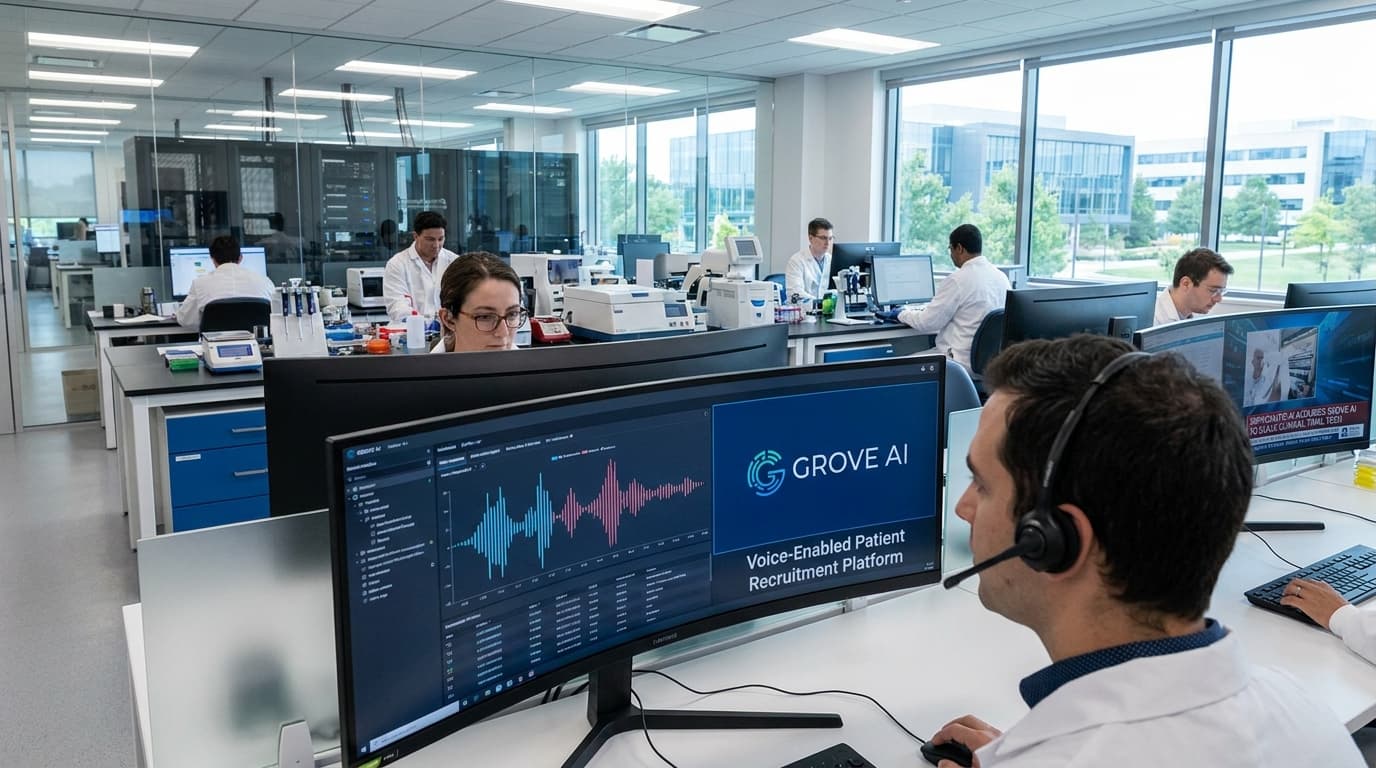
Grove AI’s Rapid Rise: From Startup to Acquisition, Transforming Clinical Trials with Voice Technology

The healthcare industry witnessed one of its fastest success stories as Grove AI, a startup focused on AI-powered voice agents for clinical trial recruitment, was acquired by Hippocratic AI just two years after its founding. This deep dive profiles the technology, strategy, and market forces that shaped Grove AI’s journey and examines the broader implications for digital health innovation.
Introduction
The digital transformation of clinical trials has accelerated dramatically in recent years, driven by a convergence of market need, technology innovation, and operational imperatives to improve patient recruitment and trial efficiency. Among the standout stories in 2026 is Grove AI—a young startup that, within only two years, developed a highly impactful voice agent solution and attracted the attention of industry leader Hippocratic AI, culminating in a swift acquisition. This analysis provides a comprehensive look at Grove AI’s trajectory, technology, and the broader context of AI in clinical research, revealing why this story represents not just a company milestone, but a significant indicator of evolving best practices and competitive pressures shaping the biopharmaceutical research landscape.
The Challenge: Clinical Trial Recruitment Bottlenecks
Recruitment remains one of the most persistent and costly challenges in clinical research. Traditional approaches rely on manual outreach, paper-based records, and limited registries, contributing to prolonged timelines, ballooning site costs, and difficulties in diversifying patient pools. For sponsors, contract research organizations, and healthcare providers, delays in subject recruitment can undermine a study’s statistical power, lead to protocol amendments, and ultimately increase the risk of costly trial failure.
Over the last decade, these structural inefficiencies have become acute as the complexity of trial design grows, competition for participants intensifies, and patient-centric models evolve. Technology interventions, from basic e-consent platforms to advanced digital engagement tools, have proliferated—but few have targeted the intersection of natural language processing and automated patient outreach at scale.
Grove AI’s Solution: Voice Agents Meet Clinical Trials
Formed in 2024, Grove AI set out to address these pain points using cutting-edge voice technology. The company developed AI-powered agents capable of identifying, engaging, and qualifying eligible patients for participation in trials. By automating the initial steps of the recruitment funnel, Grove AI’s solution offered the potential to dramatically increase efficiency, reduce errors, and deliver a more personalized, conversational approach to patient communication.
Key Pillars of Grove AI’s Approach:
- Conversational AI: Designed to hold complex, natural conversations with patients, using tailored scripts and real-time responses to assess eligibility and address common queries.
- Integration with EHR and Registries: The system could connect to clinical databases and registries to cross-reference patient information while supporting HIPAA-compliant workflows.
- Multilingual and Accessibility Features: Enhancing patient inclusivity and broadening reach by offering multilingual support and dynamic adjustments for hearing or speech capabilities.
- Analytics and Process Optimization: Providing sponsors with live insights into where patients drop off in the recruitment process, enabling rapid adjustments.
Growth Factors: Why Grove AI Succeeded
The startup’s rapid ascent can be attributed to several converging dynamics:
- Market Timing: Against the post-pandemic backdrop, sponsors and CROs are under intense pressure to improve trial diversity and reduce site burden, making digital recruitment solutions especially attractive.
- Technological Sophistication: Grove AI’s voice agent differentiated itself from basic chatbot tools by offering nuanced, dynamic engagement and robust eligibility checks.
- Regulatory Alignment: U.S. and international agencies have issued increasingly supportive guidance for digital health tools in research, giving Grove AI a regulatory tailwind.
- Strategic Partnerships: Early collaborations with clinical trial networks and patient advocacy groups helped demonstrate real-world impact and build credibility.
The Hippocratic AI Acquisition: Implications for the Industry
In early 2026, Grove AI’s momentum attracted the acquisitive interest of Hippocratic AI, a larger digital health company known for its suite of advanced clinical decision support and patient engagement solutions. The acquisition brought together Grove AI’s conversational recruitment platform with Hippocratic’s broader technology stack, potentially accelerating advances in:
- Seamless patient onboarding and matching
- Automated follow-ups and retention
- Cross-study, data-driven optimization of recruitment pipelines
- Enhancements for regulatory compliance tracking
Industry Context: The Race to Digitize Trials
Grove AI’s journey is emblematic of a wider industry shift, as sponsors race to digitize each segment of the clinical trial process—from site selection to remote patient monitoring. The rise of AI-powered voice agents specifically points to the importance of:
- Addressing patient mistrust and information gaps through conversational education
- Scaling outreach without overwhelming site staff
- Improving patient diversity and equitable access
- Meeting growing regulatory and sponsor expectations for transparency
Critical Outlook: Risks, Limitations, and Future Directions
While Grove AI’s technology has seen rapid adoption, several critical questions remain for the broader field:
- Patient Privacy and Data Security: As voice agents handle sensitive personal health information, robust privacy protections and transparent workflows are essential.
- Bias and Accessibility: Maintaining nuanced, culturally competent communications is vital for equitable recruitment.
- Integration Complexity: EHR interoperability, user acceptance by study sites, and sponsor workflow alignment require ongoing investment and agile development.
- Long-Term Efficacy: Ongoing studies will be needed to measure not just initial recruitment rate improvements, but also the quality and retention of enrolled participant cohorts.
Conclusion
Grove AI’s story—a rapid liftoff from formation in 2024 to industry acquisition in 2026—serves as a case study for how AI and digital health startups can meaningfully move the needle in clinical trials. It demonstrates the power of focusing on acute operational bottlenecks, leveraging technology for human-centric engagement, and aligning with strategic partners. As digital-first tools continue to redefine clinical operations, stakeholders will watch closely for how this and similar platforms perform at scale, shape regulatory dialogue, and ultimately impact patient outcomes in research.
See the original report for more on this story at MedCity News.
Join the BioIntel newsletter
Get curated biotech intelligence across AI, industry, innovation, investment, medtech, and policy delivered to your inbox.