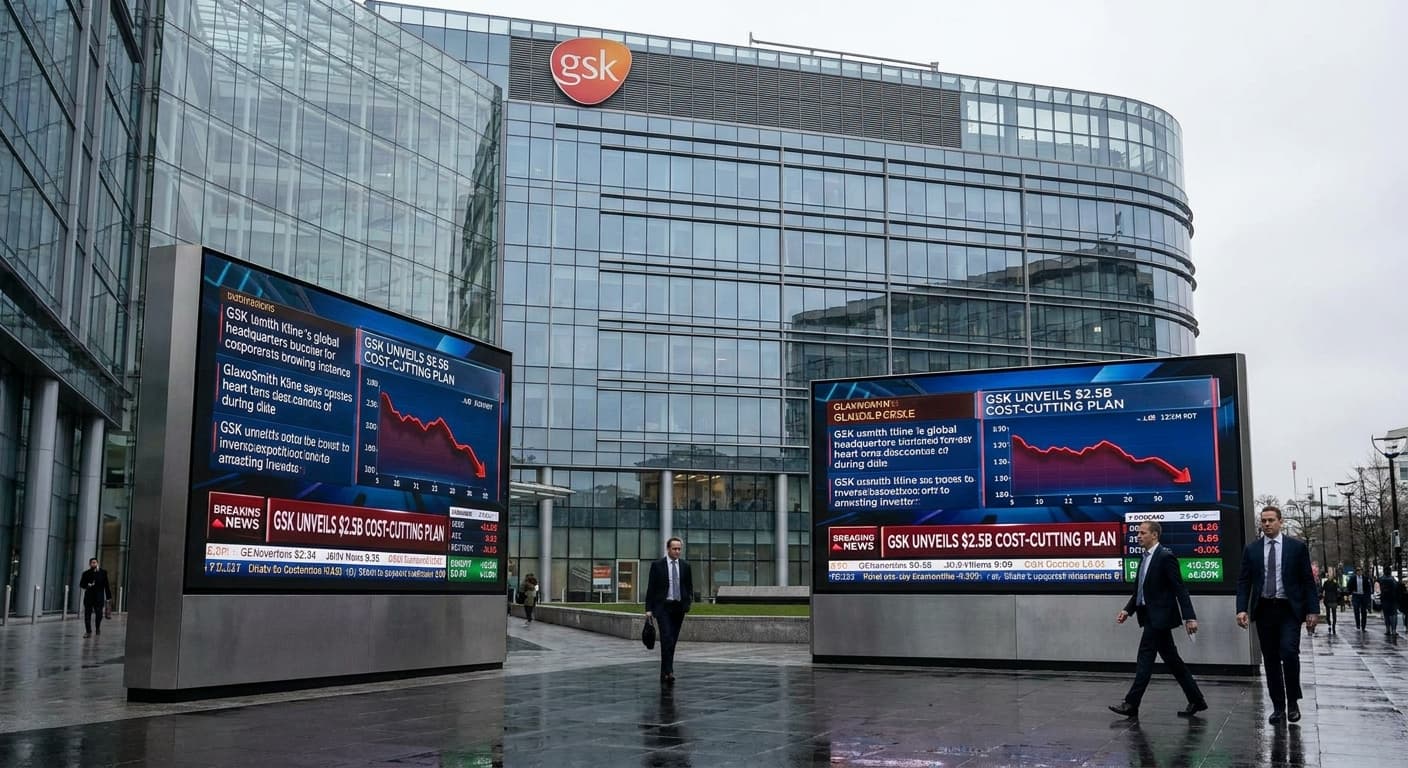
GSK’s $2.5 Billion Cost-Cutting Initiative: Strategic Restructuring Amid Second Quarter Impairment

As GSK reports substantial impairment charges for the second quarter, the UK-based pharma giant launches a sweeping cost-savings initiative designed to offset losses and safeguard future profitability. The company's new CEO seeks to balance cost reductions with investments in drugs approaching late-stage trials.
Introduction
The biopharmaceutical industry remains a space of high velocity, defined by constant change, bold investments, and periodic recalibration when market realities shift. GlaxoSmithKline (GSK), one of the most prominent multinational pharmaceutical companies, is no stranger to this environment. The company’s most recent move—a comprehensive $2.5 billion cost-cutting plan—comes in the wake of significant financial reporting for the second quarter, including $2.4 billion in impairment charges. This blog provides a deep analytical look at the drivers behind GSK's restructuring, the strategy’s implications for the company and the industry, and how the initiative positions GSK against broader economic and competitive headwinds.
GSK’s Second Quarter Financials: The Impetus for Change
GSK’s recent announcement follows the disclosure of $2.4 billion in impairment charges for Q2. Impairment charges, for context, represent write-downs of asset values on a company’s balance sheet, often reflecting revised forecasts for a product’s commercial potential or shifts in market strategy. Such a substantial one-time adjustment often signals a realignment of business expectations and can trigger either investor concern or approval, depending on the company’s strategic response.
In GSK’s case, the impairment comes at a time when the pharmaceutical industry at large must grapple with upcoming patent expirations—known as the 'patent cliff'—that threaten the revenue streams of many top-selling blockbuster drugs. For GSK, the $2.5 billion cost-savings initiative is a direct response to these financial and competitive pressures.
The Details of GSK’s Cost-Cutting Plan
Though the company has not disclosed every tactical maneuver, GSK’s cost-cutting plan will span multiple operational domains. Such plans traditionally include reductions in workforce, optimization of supply chain logistics, consolidation of manufacturing, strategic portfolio reviews, and recalibrated spending on R&D or commercial support.
Additionally, the plan aims to deliver these savings over a multiyear horizon, suggesting that GSK will seek both immediate and long-tail efficiencies. Industry analysts note that balancing short-term savings with ongoing investment in innovation is often the toughest hurdle for large-cap pharmaceutical firms in a similar position.
Leadership Strategy and Competitive Position
The announcement comes under the leadership of GSK’s new CEO, a crucial detail given the regular impact of leadership changes on organizational direction. New CEOs are often brought in to manage transition periods, oversee portfolio pivots, or lead major organizational transformations. In this instance, GSK’s leadership is threading a careful needle: reassuring investors that it is serious about fiscal restraint while simultaneously maintaining R&D firepower required for long-term growth.
The pressure to cut costs—and do so in a way that doesn’t imperil future earnings—is often acute in the pharmaceutical industry, given the long development timeline for new therapies and the relatively short window of commercial exclusivity following regulatory approval.
Navigating the Patent Cliff: Strategic Implications
The term “patent cliff” refers to the anticipated revenue drop that occurs when a trademark drug’s patent protection expires, opening the market to generic or biosimilar competition. For GSK, as for its peers, navigating this landscape means focusing resources on the next tranche of late-stage drugs and bringing innovative therapies to market as quickly and efficiently as possible.
For investors, the $2.5 billion in targeted savings should offset some of the downward pressure from patent expirations. But, as cost-cutting alone cannot secure future competitiveness, GSK’s plans necessarily go beyond financial engineering. The company has signaled its intent to continue pursuing more late-stage drug trials—a move critical to bolstering the pipeline and replacing lost revenue as older drugs exit exclusivity.
Impact on R&D and Organizational Structure
One of the central questions raised by large cost-reduction plans is their effect on research and development—a significant area of concern for the biopharma industry. R&D spending drives future product launches and underpins the industry's value proposition to patients and shareholders alike. While companies may look for operational inefficiencies, most will strive to maintain—or even increase—investment in key research programs, particularly those with high probability of technical and commercial success.
This balancing act often results in reprioritization: doubling down on high-potential assets while scaling back or divesting in less promising programs. Such strategic focus can foster both financial discipline and R&D productivity, though not without the risk of missing out on next-generation therapies should market assumptions prove incorrect.
Restructuring in a Global Context
GSK’s situation is emblematic of a broader pattern across the pharmaceutical industry. As regulatory environments, healthcare payers, and global market conditions shift, companies are increasingly called to adapt. Global pharma leaders have launched cost-containment or reorganization measures in recent years to manage volatility, maximize pipeline value, and maintain global competitiveness.
For GSK, the restructuring also provides a platform to rethink geographic footprint, optimize supply chains in light of geopolitical risks, and strengthen core competencies. Such reorganization may, over time, yield smoother product launches, more efficient commercial execution, and greater resilience against shocks like inflationary spikes or supply chain disruptions experienced worldwide since 2020.
Investor and Industry Reactions
In the immediate aftermath of the announcement, GSK shares rose, suggesting that investors viewed the company’s willingness to undertake significant structural change as a positive. Financial markets often reward decisive action, especially in sectors characterized by high capital intensity and prolonged R&D cycles.
For industry peers, GSK’s move may set a precedent or at least provide a roadmap for similar initiatives, particularly as the whole industry grapples with cost pressures and the need for innovation. By tying cost reductions to ongoing R&D investment, GSK signals to the market that strategic belt-tightening need not come at the expense of future growth.
Long-term Vision and Late-Stage Drug Development
A central pillar of the company’s message is its intent to pursue more late-stage drug trials. This reflects an understanding that new product approvals are the single most significant determinant of a pharmaceutical firm's long-term value. Late-stage drugs—those in Phase 3 or close to regulatory submission—present the highest leverage for near-term growth but also require significant investment.
GSK’s ability to fund and execute well-designed clinical trials during a period of cost control will be a key test of its management team’s approach. Success in this area would enable the company to replace revenues lost to expiring patents more seamlessly, thus offering the kind of revenue durability that both investors and patients alike seek from industry leaders.
Broader Industry Implications
The GSK case is illustrative for the whole biopharmaceutical sector. With cost pressures mounting, strict regulatory environments, and rapidly evolving technology opportunities, large-cap firms must continually revisit operational strategy. Mergers, acquisitions, licensing deals, and internal cost optimization all play important roles in defining competitive trajectories.
Furthermore, GSK’s focus on late-stage clinical trials communicates a broader trend in pharma: relying less on incremental (me-too) products and more on transformational new medicines that can secure regulatory and commercial success even in crowded therapy areas. Companies best able to maintain innovation investment while managing cost structures are likely to be industry survivors and leaders in the years ahead.
Conclusion
GSK’s $2.5 billion cost-cutting initiative, announced as the company reported second quarter impairment charges, captures the tension at the heart of modern biopharma. Companies must preserve financial health and investor confidence, even as they lay costly groundwork for future discoveries that could define the next decade of growth. GSK’s strategy—paring back operational costs while signaling robust late-stage trial activity—will be closely scrutinized by rivals, partners, and investors in a period where every advantage matters.
Whether GSK’s blueprint proves successful will depend on execution: not only can the company reduce spending, but can it ensure ongoing research productivity, pipeline vitality, and global strategic focus? In the high-stakes world of pharmaceutical innovation, the answers will reverberate well beyond GSK’s own fortunes.
Source: BioSpace
Join the BioIntel newsletter
Get curated biotech intelligence across AI, industry, innovation, investment, medtech, and policy delivered to your inbox.