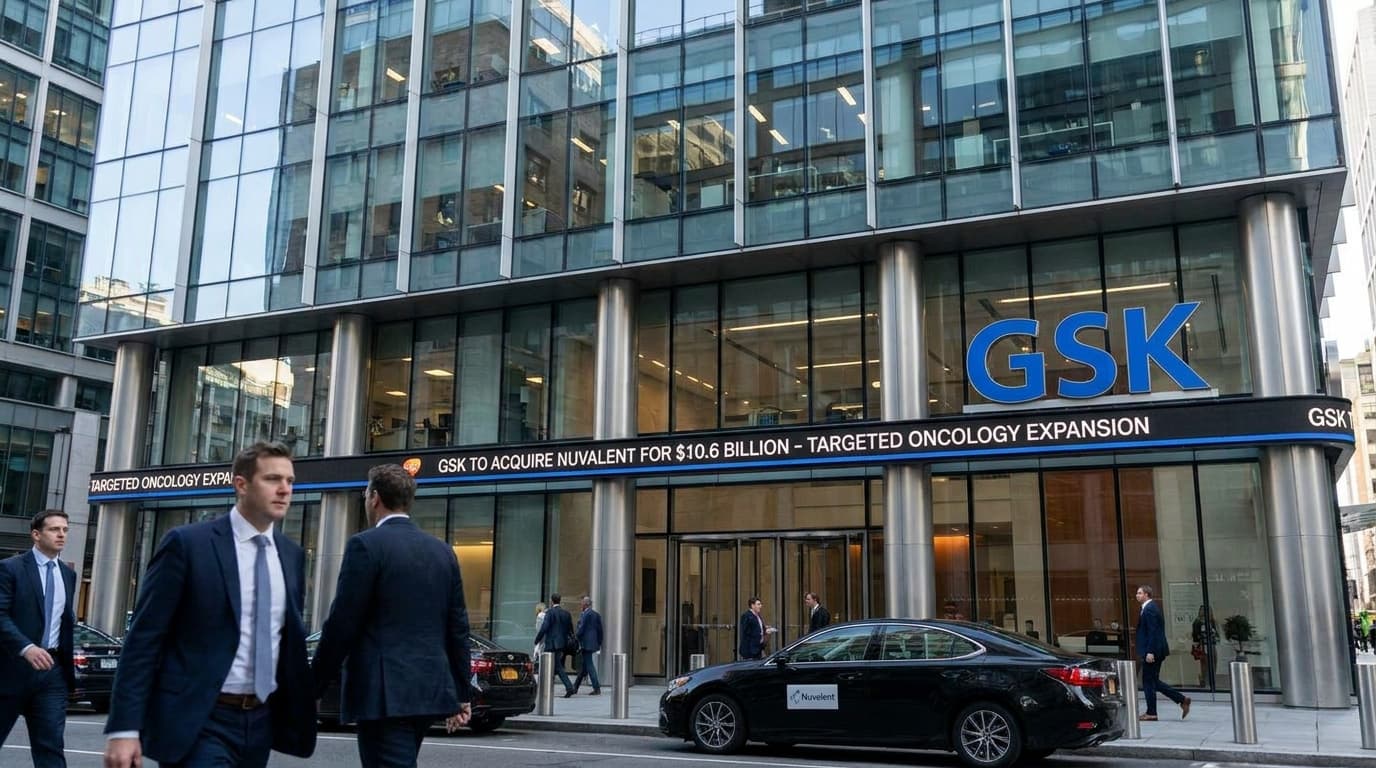
GSK to Acquire Nuvalent for $10.6 Billion: A Strategic Move in Targeted Oncology

GlaxoSmithKline (GSK) has announced a definitive agreement to acquire Nuvalent, a company specializing in targeted cancer drugs. Valued at $10.6 billion, the deal not only reinforces GSK’s strategy to expand its oncology offerings but also highlights ongoing merger and acquisition activity in the sector, as companies race to secure innovative assets with blockbuster potential.
Overview
The global pharmaceutical landscape is once again witnessing a high-profile transaction as GSK (GlaxoSmithKline) announces its intent to acquire Nuvalent for $10.6 billion. Nuvalent is known for its work in targeted therapies for cancer, focusing particularly on innovative solutions for lung cancer. This move places GSK among a select cohort of major pharmaceutical companies doubling down on the promise of precision medicine and reinforces a broader trend of consolidation within the biopharmaceutical industry.
The Companies Involved: GSK and Nuvalent
GSK, a longstanding giant in the global pharmaceutical space, has steadily advanced its oncology division over recent years, consistently seeking to enrich its portfolio with best-in-class therapies. This drive is rooted in a recognition that future success in oncology—and by extension, the wider biopharma sector—will hinge on differentiated assets that provide real clinical impact.
Nuvalent, a company that has rapidly garnered interest within both investment and scientific circles, has stood out as a developer of targeted therapies for genetically-defined cancers. Its pipeline features precision medicines designed to overcome resistance mechanisms and address unmet clinical needs, especially in the area of lung cancer. This acquisition is poised to bring Nuvalent’s assets and expertise under GSK’s global umbrella, potentially accelerating late-stage development pathways and commercial scale-up.
The Acquisition: What Does It Mean for the Industry?
The $10.6 billion price tag attached to Nuvalent underscores the high stakes—and high hopes—attached to targeted cancer therapies. Such acquisitions are rarely just about adding new drugs; they are about bulking up core scientific competencies, gaining early access to promising assets, and establishing leadership in emerging areas of medical need.
In recent years, major pharmaceutical players have increasingly turned to mergers and acquisitions as a means to diversify portfolios, mitigate pipeline risk, and speed up the journey from lab bench to bedside. The Nuvalent deal notably exemplifies this trend, situating GSK as an even more formidable player in precision oncology.
Strategic Rationale
For GSK, the acquisition offers:
- Access to Nuvalent’s late-stage clinical candidates: Drugs targeting specific pathways involved in lung cancer progression and resistance.
- Expertise in targeted therapies: Both from an R&D and commercialization perspective, especially as personalized medicine becomes increasingly central to cancer treatment paradigms.
- Potential to address significant unmet needs: Particularly for patients with refractory or resistant forms of lung cancer, where first- and second-line therapies have limited effectiveness.
Precision Oncology: A Driving Force in Deal-Making
The field of precision oncology has been one of the most dynamic segments of biopharma over the past decade. By tailoring treatments to the molecular and genetic characteristics of an individual’s cancer, companies can offer more effective and, often, less toxic therapies. The Nuvalent pipeline aligns closely with this movement, focusing on mutations and resistance mechanisms that have long challenged clinicians and drug developers alike.
Acquiring Nuvalent gives GSK both a near-term boost—with late-stage assets capable of generating revenues in the coming years—and a longer-term edge, as oncology undergoes further stratification by molecular markers and novel combinations.
Industry Context: The Ongoing M&A Wave
The GSK-Nuvalent deal continues a broader industry trend of M&A-driven strategic positioning. Large pharmaceutical companies face the perennial threat of looming patent expirations, demanding innovation, and reimbursement pressures. Acquisitions provide an opportunity to leapfrog early-stage R&D hurdles and secure access to assets that could drive growth.
Other notable themes in recent M&A activity include:
- Focus on rare diseases and oncology: As scientific advances have clarified the biology of cancers and orphan diseases, new drugs in these areas command premium valuations.
- Diversification across therapeutic modalities: Companies are not just looking for traditional small molecules, but also biologics, cell therapies, and gene-editing assets.
- Global competition for innovation: The race is global, with Asian, European, and North American companies all competing for the most promising science.
Implications for Stakeholders
For Patients
- Over the long term, this acquisition could mean faster access to breakthrough therapies, especially for those facing cancers resistant to current standards of care.
- As larger companies like GSK take experimental compounds through late-stage trials and regulatory review, commercial launch potential increases.
For Investors
- The high valuation attached to Nuvalent will attract scrutiny, particularly regarding GSK’s ability to translate scientific promise into blockbuster sales.
- Investor interest in next-generation oncology assets remains strong, with further consolidation likely.
For the Industry
- This acquisition is likely to drive further competitive activity, pushing other pharmaceutical firms to identify gaps in their pipelines and pursue similar deals.
- Early-stage oncology innovators may see heightened interest and bullish funding rounds as buyers compete to secure the most attractive platforms.
Looking Ahead
With regulatory approval of the acquisition expected, the integration process will be closely watched. Questions linger about how GSK will manage the transition, retain Nuvalent’s leadership and scientific talent, and blend new pipelines with existing global operations.
Moreover, this deal raises broader questions for the industry:
- Will major players continue to focus acquisitions on oncology, or shift to emerging health threats?
- As competition intensifies, how will companies differentiate themselves not just by pipeline breadth, but by clinical outcomes and patient experience?
Conclusion
GSK’s planned $10.6 billion acquisition of Nuvalent is emblematic of the shifting priorities and relentless pursuit of innovation in the biopharmaceutical industry. As targeted cancer therapies gain ground, the ability to identify, acquire, and scale next-generation assets will define industry leaders for years to come. All eyes will be on GSK and Nuvalent as they navigate this transition—and as patients, investors, and peers anticipate what comes next.
Join the BioIntel newsletter
Get curated biotech intelligence across AI, industry, innovation, investment, medtech, and policy delivered to your inbox.