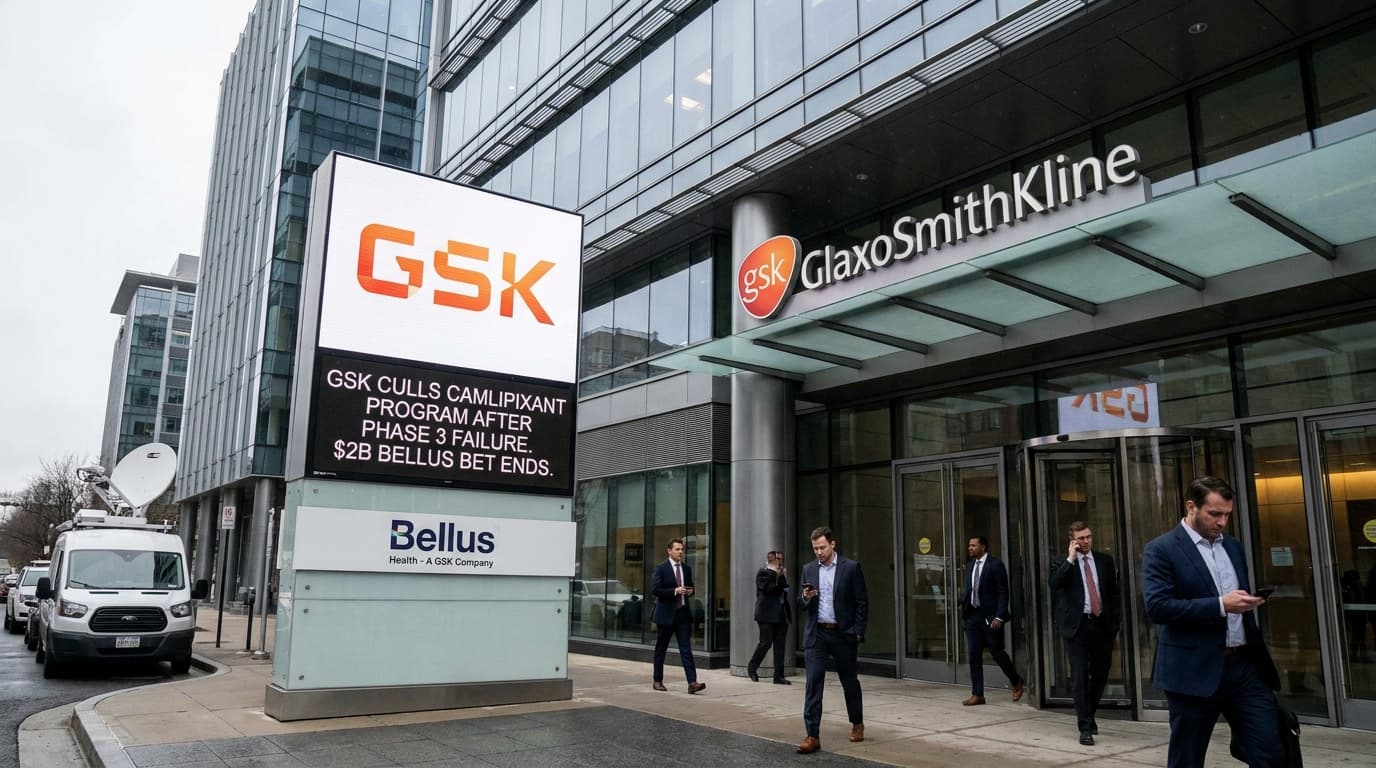
GSK Culls Cough Program Following Phase 3 Failure: The End of a $2B Bellus Bet

GSK’s discontinuation of its cough program centered on Camlipixant signifies a cautionary tale about the risks and uncertainties facing large-cap pharmaceutical acquisitions. The outcome provides insight into how strategic bets in biopharma can shift course dramatically in the face of late-stage clinical trial setbacks.
Introduction
In a recent and significant strategic development, GlaxoSmithKline (GSK) has opted to discontinue its program developing Camlipixant—a drug targeting chronic cough—after the asset failed to deliver promising results in Phase 3 clinical trials. This marks a dramatic endpoint to a journey that started with high ambitions and a monumental $2 billion acquisition of Bellus Health in April 2023, a deal founded primarily on the potential of this single asset. As one of the more closely watched late-stage respiratory programs in recent memory, Camlipixant's collapse provides important cautionary lessons about risk, forecasting, and the realities of drug development in the contemporary biopharmaceutical sector. In this comprehensive analysis, we'll examine the context behind the acquisition, the implications of the Phase 3 failure, what comes next for GSK, and how the move reflects broader industry patterns around late-stage development and acquisition-driven growth.
Context: GSK's $2 Billion Gamble on Camlipixant
The biopharmaceutical sector is no stranger to bold bets, and GSK's $2 billion buyout of Bellus Health was precisely such a wager. The acquisition, announced in April 2023, was largely predicated on the promise of Camlipixant, at the time viewed as a potential first-in-class or best-in-class molecule addressing the substantial unmet need among patients suffering from refractory chronic cough. Chronic cough, especially in its refractory and unexplained forms, affects a significant proportion of adults globally and presents a major health burden, yet the options for patients remain very limited.
GSK was hardly alone in eyeing this space. Other major players—including Merck and Shionogi—have moved into the chronic cough drug race, betting that a targeted therapy could unlock significant sales. For GSK, acquiring Camlipixant represented a clear bid to shore up its specialty respiratory portfolio and create long-term revenue growth, all while betting on a potentially transformative and under-addressed indication.
The Phase 3 Failure: What Went Wrong?
The drug development journey from promising preclinical data to clinical and then regulatory triumph is notoriously fraught with risk. GSK's recent Phase 3 announcement stating that "Camlipixant...is unlikely to transform patient care" reflects not only the failure of the study to meet its primary endpoints, but a larger recognition that the results did not warrant further commercial or clinical development.
While specific details about the study outcomes are still coming to light, the phraseology suggests that efficacy was not meaningfully different from placebo or did not meet a clinically meaningful threshold for changing the standard of care. Efficacy and safety are two pillars of clinic value; if a drug cannot sufficiently move the needle on persistent cough or introduces safety concerns, it cannot and should not reach the market.
For GSK executives and analysts alike, this marks an abrupt and disappointing end to a multi-year investment, one in which preclinical promise and early signals may have led to disproportionate optimism. It also highlights the perennial volatility of clinical development, where even well-understood pathways can result in clinical dead ends.
Financial, Strategic, and Portfolio Impacts for GSK
Culling the Camlipixant program has immediate and far-reaching implications for GSK. Most obviously, there is the matter of capital allocation: $2 billion in acquisition outlay, substantial Phase 3 trial costs, and R&D resources now written down with little prospect of return.
But there are broader messaging and portfolio implications. Investors may question the diligence and rigor of GSK’s due diligence in the original Bellus deal, although acquisition failures are far from rare in the industry. Competitors—watching from the sidelines—may reassess their own investments in chronic cough, while potential partners and future acquisition targets may feel pressure to more rigorously justify value in the absence of conclusive Phase 3 data.
Within GSK, the move is likely to accelerate evaluations of existing pipeline programs, especially those reliant on novel mechanisms, where the risk/reward calculus is especially acute. The pressure will be on for remaining lead programs to demonstrate value, not only R&D progress but the ability to contribute to long-term growth trajectories.
The Broader Industry Picture: Lessons in Risk and Reality
GSK’s decision to jettison Camlipixant is hardly unique. Drug development—particularly in competitive or novel indication spaces—often ends in late-stage disappointment, whether due to underwhelming efficacy, safety concerns, or an inability to clear the ever-raising bar set by regulators and payers. What distinguishes this case is the scale of the investment and the degree to which GSK staked a strategic narrative on the asset’s anticipated success.
The episode reinforces several industry-wide themes:
-
The Limits of Clinical Forecasting: Even strong preclinical and early-phase clinical data do not guarantee Phase 3 success. There is often a gulf between mechanistic promise and real-world efficacy.
-
The Perils of ‘Platform’ or ‘Pipeline-in-a-product’ Acquisitions: Deals anchored to a single unproven asset (as opposed to a transformative platform or portfolio) carry vast binary risk. If the asset fails, the larger deal rationale collapses.
-
The Importance of Portfolio Diversification: For large-cap pharma, spreading risk across disease areas, mechanisms, and stages of development can mitigate the impact of any one failure.
-
Investor and Market Communication: How companies frame and explain clinical setbacks—whether they pre-emptively signal risk or appear caught off guard—can shape investor sentiment, future deal negotiations, and reputational standing for years.
-
Unmet Patient Needs Remain: The abrupt end of promising therapies reminds stakeholders, especially patient communities, that scientific progress is incremental and non-linear. The search for new and effective therapeutics must continue, guided by realistic expectations and scientific integrity.
What Comes Next for GSK?
GSK now faces the task of rebuilding investor confidence, reallocating resources to more promising candidates, and explaining the decision to cull the cough program as part of a broader narrative of strategic discipline. The company will need to reinforce its other lead programs in immunology, oncology, and infectious disease, all while convincing the market that its pipeline remains robust and innovative.
Pharma observers will also be watching closely to see how GSK approaches due diligence in future M&A or licensing activities. Will this experience foster greater caution around late-stage assets, or will the company continue to seek growth through bold—albeit risky—plays?
Conclusion: The End of the Bellus Chapter, but Not the End of Bold Bets
GSK’s withdrawal from Camlipixant is a high-profile example of the perennial risk inherent to the biopharmaceutical industry. While the collapse of a $2 billion bet is sobering, it is a reminder that scientific progress requires not only capital and courage but rigorous evaluation, adaptation, and—sometimes—retreat in the face of unambiguous data. For patients suffering from chronic cough, the path to transformative care remains open but uncertain. For GSK and its peers, the lessons of Camlipixant will shape future strategies, deal rationales, and the relentless pursuit of drugs that truly make a difference.
Source: BioSpace
Join the BioIntel newsletter
Get curated biotech intelligence across AI, industry, innovation, investment, medtech, and policy delivered to your inbox.