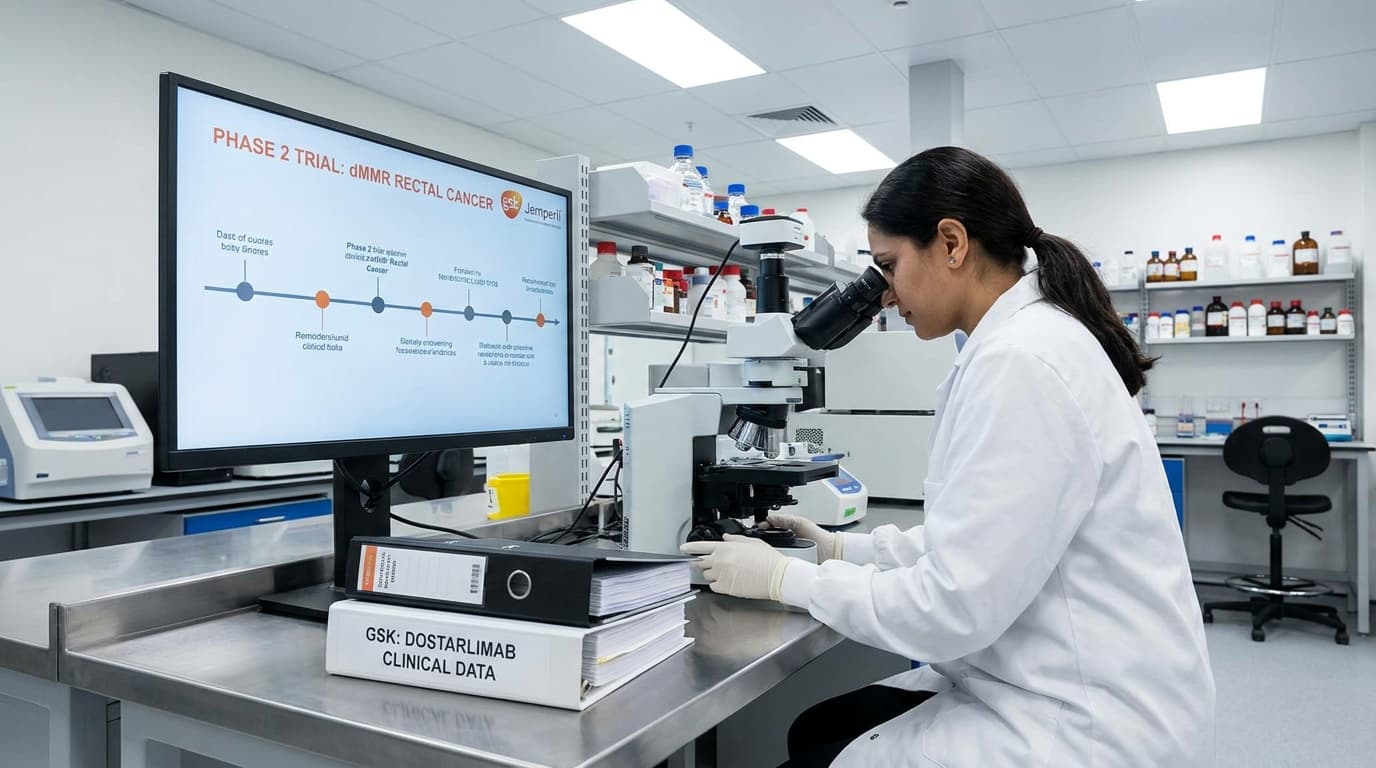
GSK’s Jemperli Achieves Success in Rare Rectal Cancer Study, Eyes FDA Filing

GSK’s antibody drug Jemperli showed success in a decisive Phase 2 study for patients with a rare rectal cancer subtype. This positive outcome paves the way for the company’s anticipated FDA submission and may influence future strategies for accelerated oncology drug review in the U.S.
Introduction
The landscape of cancer immunotherapy continues to evolve, with incremental gains driving transformative changes in both patient outcomes and regulatory dynamics. In one of the latest developments, pharmaceutical giant GSK’s antibody drug Jemperli (dostarlimab) has reached a significant milestone by meeting the main goal in a pivotal Phase 2 clinical study targeting a rare subtype of rectal cancer known for mismatch repair deficiency (dMMR). According to recent reports, this success not only bolsters hopes for patients facing challenging diagnoses but also signals new regulatory possibilities for the pharmaceutical sector as the company readies itself for a key FDA filing under a streamlined review program.
Breaking Down the Trial’s Success
The study at the center of this breakthrough focused on rectal cancers with dMMR, a genetic hallmark present in only a small fraction of total rectal cancer cases, but one of particular clinical importance. In the context of the trial, Jemperli, already known for its immune system-modulating properties, was assessed for its effectiveness in shrinking or eradicating tumors by harnessing the body’s immune response.
Clinical trials of this size and specificity are notable for several reasons. First, Phase 2 studies represent a crucial inflection point where drugs move from early safety and exploratory efficacy assessments to more definitive evidence-gathering that will determine their path to possible market authorization. Meeting the “primary endpoint” in such a pivotal study usually indicates that the drug accomplished statistically significant and clinically meaningful outcomes as prespecified in the trial’s design.
Secondly, the rarity of dMMR rectal cancer presents recruitment and analytic challenges, making success particularly significant. Results from such populations may often guide therapeutic strategies for other hard-to-treat cancer types as well, extending impact beyond the niche subgroup.
The Regulatory Fast Track: Priority Review Voucher
Central to this news is not just the empirical success of Jemperli, but its position at the vanguard of regulatory innovation. Notably, GSK received a special voucher for the Jemperli program to accelerate the FDA review process—a move that reflects growing emphasis on speeding up access to therapies for patients with few available options. This voucher is part of a new FDA pilot initiative aimed at testing rapid, yet thorough, review mechanisms for drugs targeting rare and life-threatening conditions.
The strategic deployment of such fast-track programs has received considerable attention in the pharmaceutical policy sphere. On one hand, it provides a pragmatic pathway to bring transformative drugs to the market more swiftly. On the other, it tightens the timeframe for clinical and regulatory due diligence, heightening the pressure on drugmakers to produce robust, unequivocal evidence of efficacy and safety. For GSK, the hope is that regulatory authorities will translate trial success into swift patient access, shaping future precedents for other sponsors.
Scientific Context: Immunotherapy and dMMR Cancers
Immunotherapy has become an established pillar of modern cancer treatment, particularly through the use of immune checkpoint inhibitors such as dostarlimab. The mechanism involves blocking proteins that prevent immune cells from recognizing and attacking cancer, thereby empowering the body’s natural defenses to identify and destroy malignant cells.
Mismatch repair deficiency, or dMMR, refers to faults in DNA-repair genes that render cancer cells more likely to develop mutations. Importantly, these mutations can create markers that make tumors more visible to a primed immune system, thus making immunotherapy especially potent for affected patients. Previous successes in dMMR endometrial cancer paved the way for expanded exploration in rectal and other cancers.
Clinical and Commercial Implications
For patients and clinicians, a new treatment avenue for dMMR rectal cancer could be game-changing. These cancers have historically shown limited responsiveness to traditional chemotherapy or radiation, making effective targeted immunotherapies extraordinarily valuable. Expanded indications for drugs like Jemperli would not only address unmet medical needs but might also usher in new standard-of-care protocols.
From a commercial standpoint, GSK’s move is closely watched by competitors and investors alike. Success in rare disease areas can create significant commercial opportunities for pharmaceutical companies, even with relatively small patient populations. This is partly due to regulatory incentives and reimbursement frameworks that recognize the value of innovation in areas of high unmet need. Additionally, high-profile success may trigger expanded research into related indications, opening new markets and research frontiers.
Navigating the Road to Approval
While the Phase 2 success is a major step forward, the path to FDA approval is rigorous and multi-layered. The FDA will scrutinize the data for both efficacy and safety, weighing the potential benefits against any observed risks or adverse events. Yet, having a priority review voucher in hand potentially trims months off standard review timelines—a vital difference when patients await new treatments.
The pending regulatory submission from GSK will be a test of both the development program’s quality and the FDA’s evolving review models. It will also serve as a bellwether for industry peers, who are closely monitoring how these new pilot initiatives might reshape drug development, approval timelines, and market competition in the coming years.
Future Outlook and Strategic Implications
The outcome of this story extends beyond GSK and Jemperli. For the broader biopharma and oncology community, the combination of targeted immunotherapy, precision genetic profiling (as with dMMR), and adaptive regulatory frameworks collectively signals a new chapter in cancer management. As next-generation sequencing and biomarker-driven approaches proliferate, sponsors with robust clinical and regulatory strategies may be best positioned to capture both clinical and market leadership.
Meanwhile, patient advocates and clinicians will be watching not only for FDA approval, but for reimbursement and access developments that determine how rapidly therapies transition from the clinic to real-world practice. Issues of affordability, education for oncologists, and integration with standard care pathways will likely define success as much as regulatory green lights.
Conclusion
GSK’s pivotal win with Jemperli in rare dMMR rectal cancer underscores the fast-shifting context of oncology research, regulation, and patient care. With regulatory submission in view and strong empirical results in hand, the industry’s attention now turns to the FDA’s next moves—a process that could set novel precedents for other companies and patient populations alike. The speed and thoroughness with which this and similar therapies reach market will have lasting impacts on the future of cancer innovation.
Join the BioIntel newsletter
Get curated biotech intelligence across AI, industry, innovation, investment, medtech, and policy delivered to your inbox.