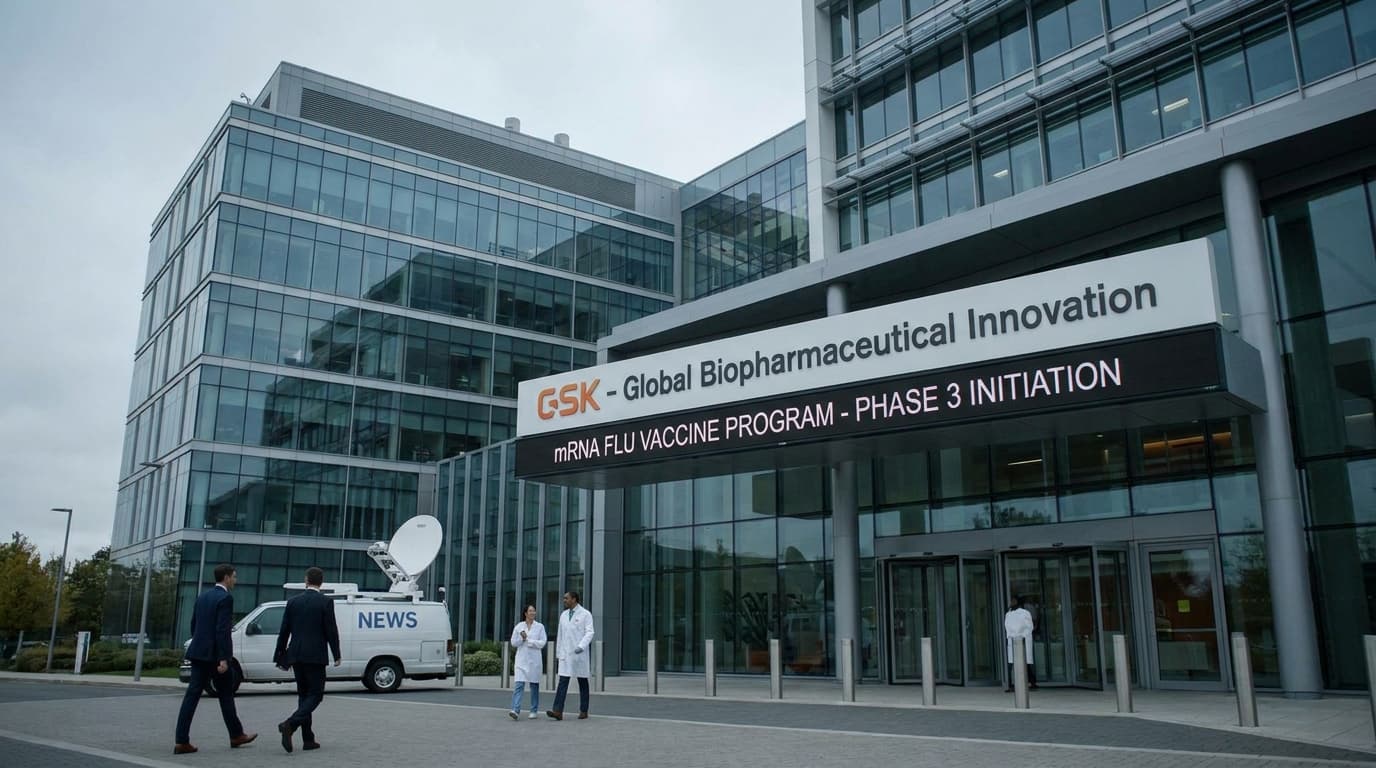
GSK Starts Phase 3 For FLUm3HA.b-3NA After Phase 2 Flu Immunogenicity Win, Seeking A Stronger mRNA Entry

The update gives GSK a new shot at rebuilding a flu vaccine business that shrank by about 25% last year amid competitive pressure in the U.S. It also sharpens the next competitive question in mRNA flu: whether adding neuraminidase to the antigen mix can improve on first-generation products that focus mainly on hemagglutinin.
GSK said its mRNA seasonal flu vaccine program cleared a key midstage hurdle, with phase 2 data showing higher immune responses than conventional flu shots and supporting a move into phase 3 this month. The candidate headed forward is FLUm3HA.b-3NA, which includes an optimized B-strain HA design.
The result matters because flu vaccine effectiveness has ranged from 20% to 60% over the past 15 years, leaving room for products that can raise protection in a multibillion-dollar market. For GSK, the program is also a chance to stabilize a flu franchise that the company said shrank by about 25% last year amid "competitive pressure" in the U.S.
The data
The phase 2 trial enrolled 971 adults and tested different dose levels of two mRNA vaccine candidates against licensed age-appropriate comparators. The two experimental vaccines differed in their optimization of B-strain HA.
GSK said the mRNA vaccines generated higher immune responses than standard and high-dose flu shots in younger and older adults, respectively, and that reactogenicity and safety were acceptable. The company did not provide the underlying numbers in its press release, though a researcher presented details of the study at the Options XIII Conference for the Control of Influenza on Monday.
The commercial picture
GSK’s approach targets both hemagglutinin and neuraminidase. Licensed flu shots primarily target HA, but GSK is betting that engaging NA can boost protection. That is the main differentiator in a field where the first mRNA flu approval has already been taken.
Last month, Moderna won FDA approval for mFlusiva, an mRNA-based flu vaccine that encodes for three HA proteins. Moderna had also tested HA-plus-NA candidates in humans, based on the view that the combination could broaden protection, but paused that work as part of its pipeline rethink.
That leaves GSK trying to enter later with a more differentiated antigen strategy rather than with first-mover timing. If phase 3 confirms the phase 2 immunogenicity signal, the company could have a clearer argument that mRNA in flu is not only a platform substitution but a route to a different product profile.
Join the BioIntel newsletter
Get curated biotech intelligence across AI, industry, innovation, investment, medtech, and policy delivered to your inbox.