Healthcare Workplace Violence Prevention: Why Risk Visibility Must Improve

Although healthcare organizations routinely collect data on potential risk indicators, the inability to connect disparate pieces of information often leads to missed warning signs and reactive, rather than proactive, prevention efforts. This extended analysis explores the systemic barriers and examines pathways toward more effective workplace violence prevention in healthcare—including the critical role of emerging data technologies.
Introduction
Healthcare workers face a uniquely high risk of violence on the job—a challenge that has persisted across decades and across every segment of the care continuum. From bustling emergency departments to community clinics and behavioral health sites, reports of violence against staff are both frequent and, disturbingly, sometimes normalized as part of the work. Despite extensive tracking requirements, committee reviews, and well-intentioned training programs, the healthcare sector continues to struggle with effective prevention.
A growing body of evidence suggests that the barrier to improvement is not a lack of data, but rather the inability to synthesize, analyze, and visualize early warning signs before incidents escalate. This long-form analysis delves into why risk signals so often go undetected in healthcare settings, reviews prevailing gaps in organizational processes and technologies, and explores how the sector can move from reactive to genuinely preventative models.
The Scope of the Problem
Healthcare is consistently ranked among the top industries for workplace violence. According to federal labor statistics and numerous healthcare quality organizations, violence—including verbal threats, intimidation, harassment, and physical assault—is both more prevalent and more severe in hospitals, nursing homes, outpatient clinics, and emergency departments than in most other fields. While root causes are multifactorial—ranging from patient acuity and staff shortages to systemic dysfunction—most stakeholders agree that the stakes are rising as patient complexity, volatility, and staffing challenges intensify.
Risk Signals: Abundant But Disconnected
Contrary to the assumption that incidents ‘come out of nowhere,’ most instances of workplace violence are preceded by recognizable risk indicators. These can include prior behavioral issues, family conflict, escalating clinical symptoms, past incident reports, environmental safety hazards, and even social media activity in more extreme cases. Healthcare organizations generally collect reams of such information: security logs, patient charts, human resources flags, incident databases, and care team notes—all containing pieces of a broader risk puzzle.
Yet, despite all the available data, these signals are rarely woven together into a complete and actionable risk picture until after violence has occurred. In the wake of an incident, retrospective reviews often reveal a “missed signal” or a piece of critical information that went uncommunicated or unrecognized due to silos between departments, lack of real-time analytics, or outdated reporting infrastructure.
Why Don’t Organizations See the Full Picture?
Organizational Silos
Many healthcare enterprises operate in silos—clinicians, security, HR, compliance, and risk teams all working with their own data sets and tools. When communication is non-integrated and role-specific, important signals may not be escalated or contextualized at the enterprise level. For example, a note about a patient’s agitated behavior may not be flagged for security or inform daily staffing adjustments unless manual processes are in place.
Lack of Technological Integration
Healthcare IT systems have evolved rapidly, but integration has lagged when it comes to workplace violence prevention. Security systems, HR software, clinical EHRs, and incident reporting platforms often do not share data seamlessly. Without bidirectional interfaces and real-time analytics, actionable insights are trapped in their native systems.
Cultural Barriers and Reporting Fatigue
Cultural factors can also play a significant role. Staff may be hesitant to report early warning signs of escalating behavior due to fear of reprisal, disbelief that management will act, or simply a sense of futility in overburdened systems. Reporting fatigue—where staff become numb to the volume of minor flags or fail to prioritize ‘soft’ threats—can also undermine preventive efforts.
Post-Incident Focus
A significant majority of risk analysis and review efforts in healthcare is conducted post-incident. Root cause analyses, sentinel event reviews, and board-level investigations may surface key teaching points for the future, but without real-time, prospective risk synthesis, the cycle of missed intervention opportunities repeats itself.
Emerging Solutions: Shifting to Proactive Models
Forward-thinking organizations are now exploring ways to bridge the risk visibility gap. Among the most promising approaches are technological platforms and process redesigns that:
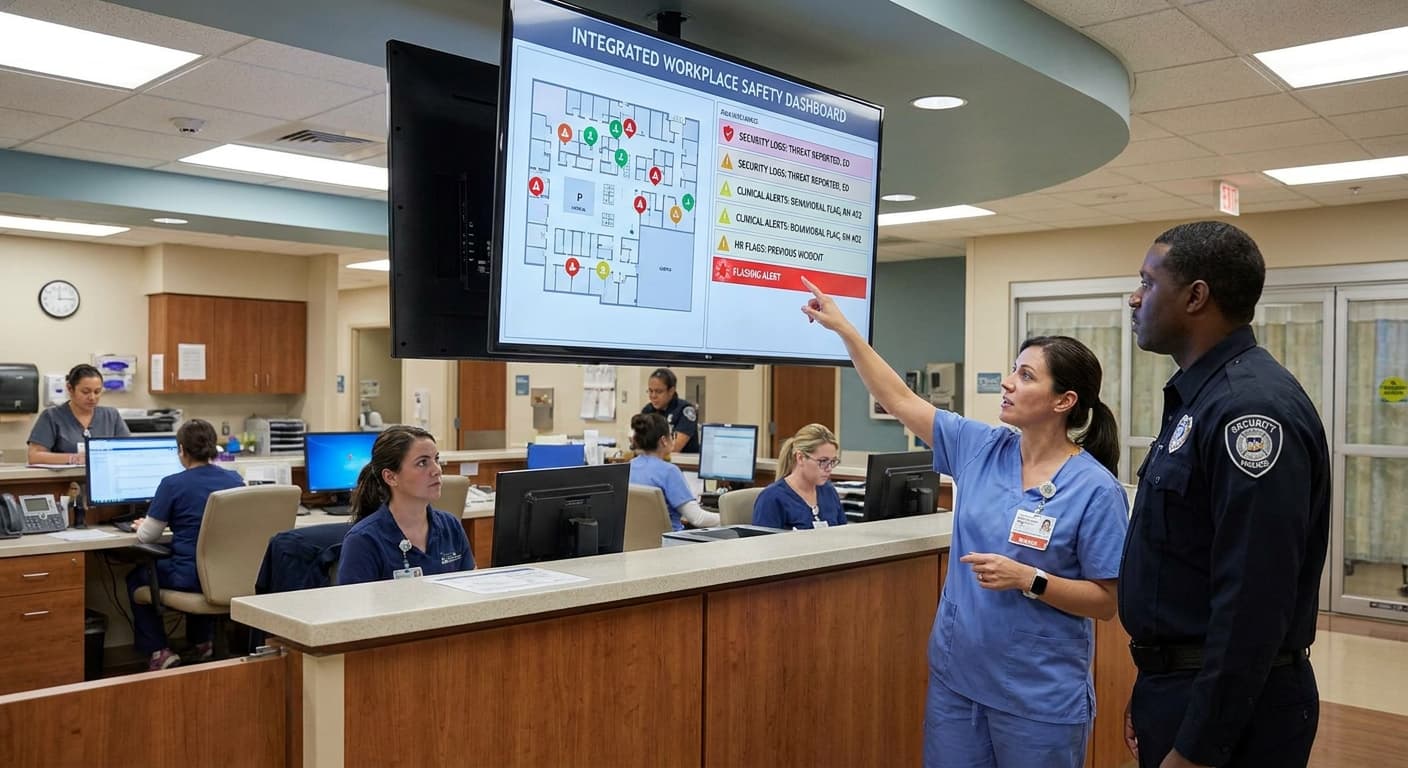
- Integrate security, clinical, and HR data sources onto a unified analytics dashboard
- Employ real-time risk scoring and alert systems driven by AI or advanced programming logic
- Facilitate cross-functional communication between frontline staff, security, and hospital leadership
- Prioritize debriefs and risk review in ‘near misses’ (not just adverse events)
- Map the physical environment with sensors or video analytics to predict and intervene in potentially violent situations
These solutions are being piloted across hospital and behavioral health settings, with early evidence suggesting that incident rates drop and escalation is prevented where comprehensive visibility is achieved.
Barriers to Adoption: Data Privacy, Staffing, and Cost
Despite technological progress, several obstacles remain. Integrating sensitive human resources and behavioral health data raises concerns about patient and employee privacy—issues governed by HIPAA, labor laws, and myriad state regulations. Implementation also requires buy-in across all levels of staff, investment in training, and a willingness to revisit traditional workflows. Finally, the cost of advanced analytics and hardware deployment can be prohibitive for safety-net or rural organizations already facing tight margins.
The Critical Role of Leadership
Meaningful change in violence prevention cannot be delivered exclusively by technology; healthcare executives and board leaders must champion a shift in culture. This means prioritizing violence prevention among enterprise risks, empowering cross-functional teams, and investing in organizational learning. Success stories from health systems that have driven down incident rates invariably point to high-level leadership alignment and a willingness to disrupt status quo assumptions about preventability.
Case Study: A Hospital’s Path to Risk Integration
Consider the hypothetical example of a regional medical center in the Midwest, which moved from a reactive to a proactive model by investing in:
- Centralized risk dashboards that aggregate security calls, incident reports, and EHR notes
- Regular, multidisciplinary safety huddles
- Real-time escalation protocols when a patient triggers multiple risk indicators
- Designating violence prevention champions within each clinical unit
Over time, near-miss identification improved, and both staff injuries and lost workdays decreased. Leadership credited the newfound integration of disparate risk data as the centerpiece of their cultural and operational transformation.
The Future: Predictive Analytics and Prevention by Design
As technology matures, the prospect for predictive modeling of workplace violence risk is expanding. Emerging platforms are experimenting with machine learning models that can flag at-risk encounters, suggest environmental adjustments, and even customize staff schedules or room assignments based on cumulative risk indices. Healthcare’s gradual acceptance of predictive analytics in clinical care is now likely to be mirrored in safety and employee wellness domains.
Importantly, prevention by design must extend beyond hospitals to encompass ambulatory networks, telehealth platforms, and community-based sites—which are not immune from the epidemic of healthcare workplace violence. Nationwide, a combination of public policy, regulatory standards (such as those emerging from OSHA), and health system accountability will continue to shape the landscape of prevention.
Conclusion
The challenge of healthcare workplace violence will not be solved by a single tool or intervention. Instead, progress depends on the recognition that organizations do not lack warning data; what is missing is the capacity to see and act on patterns before harm occurs. The future belongs to healthcare systems that invest in visibility—connecting dots between systems, silos, and dashboards—to keep staff and patients safe.
Policymakers, executives, clinicians, and vendors will all play a role as the field moves urgently toward proactive, integrated, and technology-enabled violence prevention.
Join the BioIntel newsletter
Get curated biotech intelligence across AI, industry, innovation, investment, medtech, and policy delivered to your inbox.