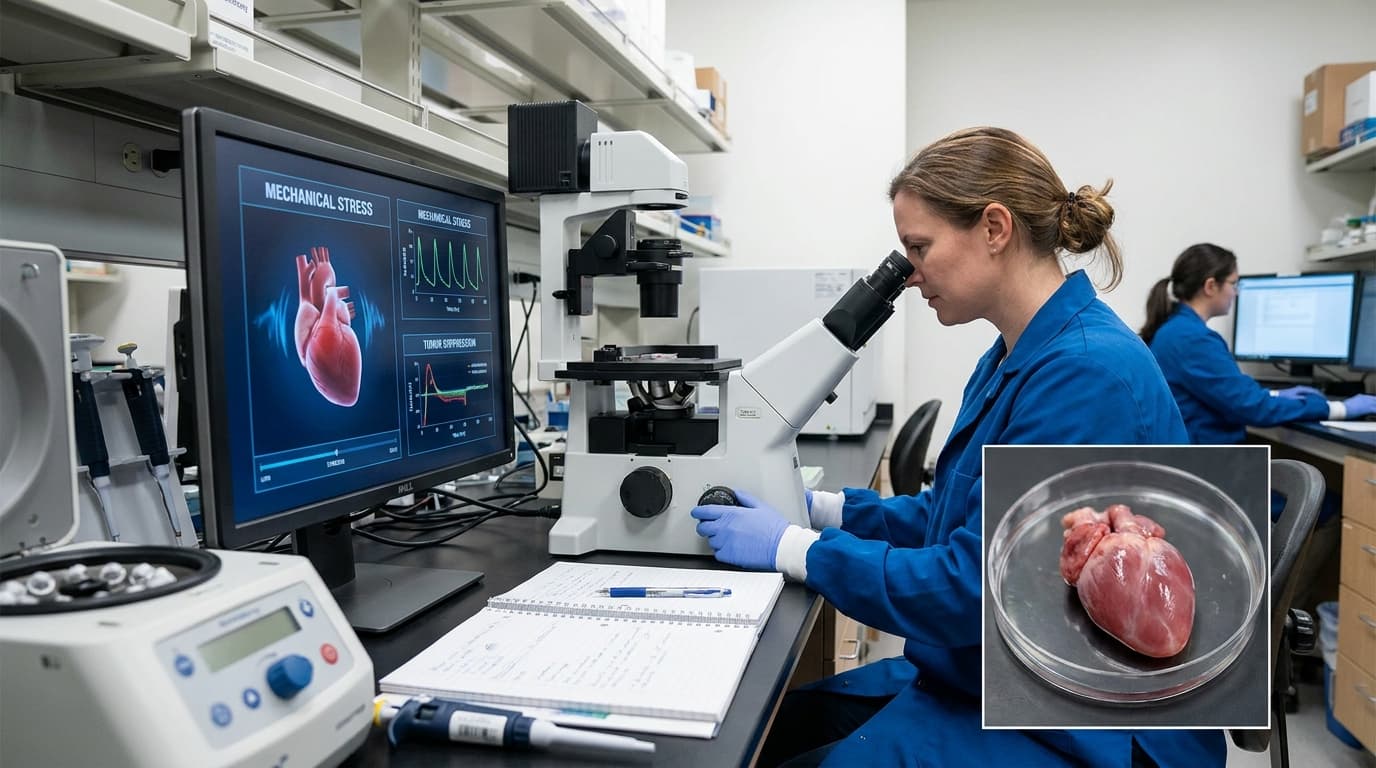
Heart’s Beat May Hold Key to Its Resistance Against Cancer, Mouse Study Reveals

The heart, by virtue of its relentless rhythm, could be naturally protected against cancer. This new theory stems from mouse model studies and opens innovative avenues for cancer prevention research. The findings invite further exploration into how mechanical forces influence cancer biology.
Cancer is a complex disease that can affect nearly any tissue in the body, yet intriguingly, primary tumors in the heart are extraordinarily rare. Recent research conducted on mouse models has proposed a novel theory to explain this rarity, suggesting that the constant mechanical activity of the heart — its continual beating — may play a protective role against the development of cancerous cells within this vital organ.
The heart beats thousands of times every day, generating continuous pressure and mechanical stress. This research posits that such relentless physical forces might create an environment that is inherently hostile to tumor cells attempting to establish and proliferate there. Unlike other tissues that are relatively static, the dynamics of cardiac tissue may disrupt the equilibrium necessary for cancer cells to thrive.
This theory represents a significant departure from traditional understandings of cancer development, which often focus on genetic mutations and biochemical factors. Instead, it highlights the potential influence of biomechanical aspects on oncogenesis.
Importantly, these findings stem from controlled studies in mice, providing a foundational model to further investigate the intersection of cardiology and oncology. The implications of this work extend beyond the basic science; understanding how heart mechanics suppress tumor growth could inform new therapeutic strategies across cancer types.
For example, researchers speculate whether artificially mimicking the mechanical environment of the heart in other tissues might suppress tumor progression. Furthermore, the work underscores the importance of the heart's unique microenvironment in protecting against malignancies.
This research also raises questions about cancers that do involve the heart, albeit rarely, such as secondary metastases or rare primary cardiac tumors. Investigating these anomalies might provide additional insights into how deviations from normal mechanical forces can influence cancer development.
In conclusion, the heart’s rhythmic beat may serve not just to pump blood but also as a natural defense against cancer. Ongoing studies are needed to explore this relationship and to translate these findings into clinical advances. Unraveling the heart's protective mechanisms could ultimately pave the way for novel interventions against cancer, marking a paradigm shift in oncology and cardiovascular research.
Source: STAT News
Join the BioIntel newsletter
Get curated biotech intelligence across AI, industry, innovation, investment, medtech, and policy delivered to your inbox.