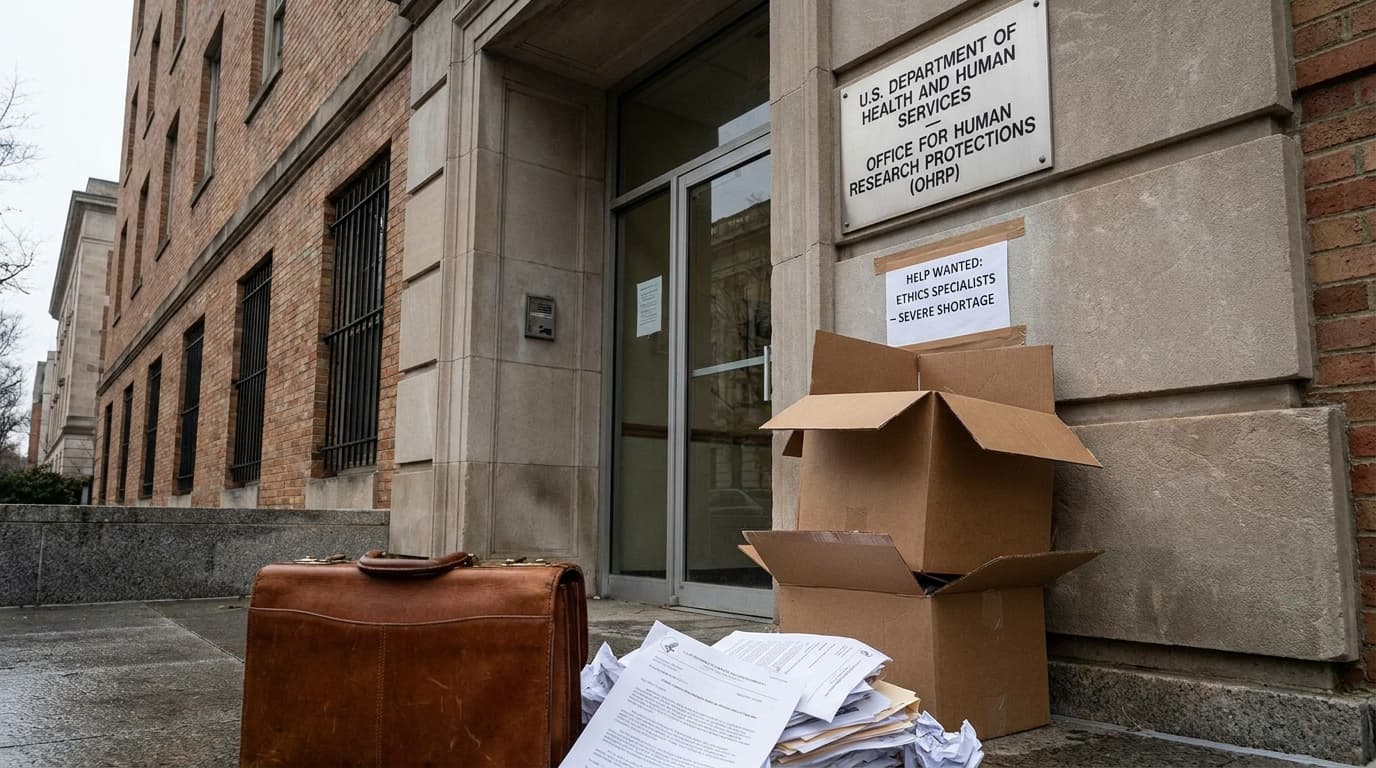
Tiny HHS Office Tasked With Research Participant Safety Faces Severe Resource Crunch

OHRP’s diminished capacity raises red flags about oversight in human subject research, as ethics professionals depart amid growing complexity in biomedical and social science studies. This situation could have profound implications for research integrity, participant safety, and public trust in federally supported investigations. Current discussions focus on the underlying causes, the significance of a robust ethics framework, and possible strategies to rebuild this vital office.
Introduction
The landscape of biomedical and social science research in the United States has evolved rapidly over the last decade. Innovations in genomics, precision medicine, digital monitoring, and complex social interventions have made research both more powerful and, arguably, more perilous. At the heart of safeguarding research volunteers lies the Office for Human Research Protections (OHRP), the federal body responsible for overseeing compliance with human subject protections across thousands of research institutions receiving federal funding. However, recent developments suggest that the OHRP is “running on fumes,” with its internal infrastructure crumbling due to an exodus of experienced ethics experts.
This in-depth analysis explores the foundational role of OHRP, the scale and impact of its current resource crisis, the cascading implications for research participants and the broader research environment, and the urgent questions facing policymakers, institutional review boards, and researchers.
The Mission and History of OHRP
The Office for Human Research Protections was established as part of the U.S. Department of Health and Human Services (HHS) to oversee and enforce the Common Rule—the foundational set of federal regulations that dictate how federally funded research institutions must protect human participants. Since its founding, OHRP has provided training, guidance, and case judgment for issues ranging from informed consent to risk minimization, serving as both a watchdog and a support system for the research community.
The office has played a pivotal role in investigating major ethical lapses—such as the infamous Tuskegee Syphilis Study and more recent controversies involving genomic data and digital privacy. Yet, as the research ecosystem has expanded, OHRP’s workload has increased in volume and complexity, while its resources have not kept pace.
The Current Crisis: Staff Departures and Institutional Drift
According to recent reports, OHRP is now facing an unprecedented wave of departures among its senior and mid-level staff, many of whom provide unique expertise in bioethics, law, and research compliance. Knowledge of regulations, precedent cases, and best practices is concentrated among these staffers; as they leave, institutional memory is lost, and continuity in guidance is jeopardized.
With “an unprecedented exodus of ethics expertise,” OHRP faces the challenge of maintaining rigorous audits, conducting investigations, and providing timely advisory opinions—all of which are central to its mandate. The shortage of experienced ethics staff means that review timelines could lengthen, guidance documents may become outdated, and nuanced institutional questions could be answered incorrectly or not at all.
The Expanding Universe of Research Risks
The timing of this resource crunch could not be worse. The research environment is marked by rapid advances in genetics, digital health, remote monitoring, and artificial intelligence. Federally supported research studies—whether on health interventions, public health issues, or behavioral science—now routinely involve data and biological specimens from tens of thousands of people.
Additionally, the diversity of institutions conducting human subjects research is growing, from major academic centers to small community hospitals and independent research firms. Each of these settings presents unique and often complex challenges in terms of consent, risk assessment, and data security. OHRP’s expertise and ability to offer bespoke guidance is therefore increasingly essential.
A shortfall in OHRP’s capacity places not only research participants at greater risk but also research institutions, who may inadvertently run afoul of federal rules, endangering their funding and reputation.
Compliance and Oversight: Why OHRP Expertise Matters
Compliance with the Common Rule, and with specialized guidance on everything from minors in research to the use of digital health tools, requires expert interpretation. This is particularly true in cases where new technology or rapid medical innovation creates precedents that traditional Institutional Review Boards (IRBs) are unprepared to adjudicate.
OHRP’s advisory capacity—to clarify, train, and mediate—has filled this gap for years. An understaffed OHRP means fewer site visits, reduced capacity for investigating complaints, longer delays in critical case reviews, and a less responsive system that could allow mistakes or neglect to go unnoticed.
Errors in this domain are not merely administrative; they can mean real harm to research volunteers, ranging from privacy breaches to exposure to unsafe interventions. The stakes for patients and volunteers are, in many cases, life-and-death.
Institutional Review Boards: The First Line, Not the Last
While IRBs at individual institutions are the primary interface for research oversight, their members often rely on OHRP for clarification of nuanced issues, especially when federal rules are ambiguous or when research is breaking new ethical ground. In the absence of robust federal backstopping, institutions may develop inconsistent policies, or, worse, err on the side of expediency over rigor.
This risk is especially acute in smaller or less-resourced organizations, whose IRB members may have less experience or face institutional pressures that prioritize research progress over participant protection.
The Role of Federal Support: Gaps in Funding and Political Support
Among the reasons cited for OHRP’s difficulties is chronic underfunding and a lack of political prioritization within HHS. As research budgets grow nationally, investments in oversight infrastructure have not kept pace. This mismatch has been accentuated by recent departures of key personnel, but the underlying fiscal neglect is longstanding.
There is also a challenge in recruiting and retaining senior ethics professionals, given both the specialized training required and competition from private sector and academic compliance roles. Without meaningful investments and prioritization, this brain drain is likely to accelerate.
Broader Implications: Public Trust and Research Integrity
Perhaps the greatest casualty in this crisis is public trust. Major news incidents—such as past abuses related to human experimentation, poor oversight of large-scale data transfers, or failure to communicate research risks—have lasting impact on the public’s willingness to participate in research. A robust OHRP is one of the government’s most important assets in rebuilding and sustaining public confidence.
Without clear, expert, and proactive federal oversight, even isolated failures can cascade into national controversies, lawsuits, or broad reluctance to enroll in clinical trials and health studies. For the research enterprise to thrive, participants must be able to trust that their rights and safety are protected above all.
What’s Next? Pathways to Renewal
The way forward is both urgent and complex. Some key elements under discussion include:
- Immediate resource allocation: Emergency funding or redirection of internal HHS resources could help OHRP recruit, retain, and train the talent needed now.
- Strategic review: A comprehensive audit of OHRP functions and staffing patterns to identify inefficiencies and opportunities for modernization.
- Cross-agency support: Enhanced collaboration with other oversight entities such as FDA, NIH, and CMS to share knowledge, personnel, and infrastructure.
- Stakeholder engagement: More transparent communication with researchers, bioethicists, patient groups, and the public as OHRP rebuilds capacity and incorporates new needs.
Conclusion
The crisis within the U.S. Office for Human Research Protections is emblematic of broader challenges facing regulatory and oversight bodies as biomedical and behavioral research become ever more complex. While a small office geographically and administratively, OHRP’s function is of outsized importance both for individual research participants and for the national innovation enterprise.
In an era of rapid technological and scientific advancement, robust ethical oversight, rooted in expert knowledge and supported by meaningful resources, is not a luxury—it is a necessity. The sustainability of public trust, the safety of human research volunteers, and the scientific credibility of American research all hang in the balance.
For more details, visit the original report on STAT News.
Join the BioIntel newsletter
Get curated biotech intelligence across AI, industry, innovation, investment, medtech, and policy delivered to your inbox.