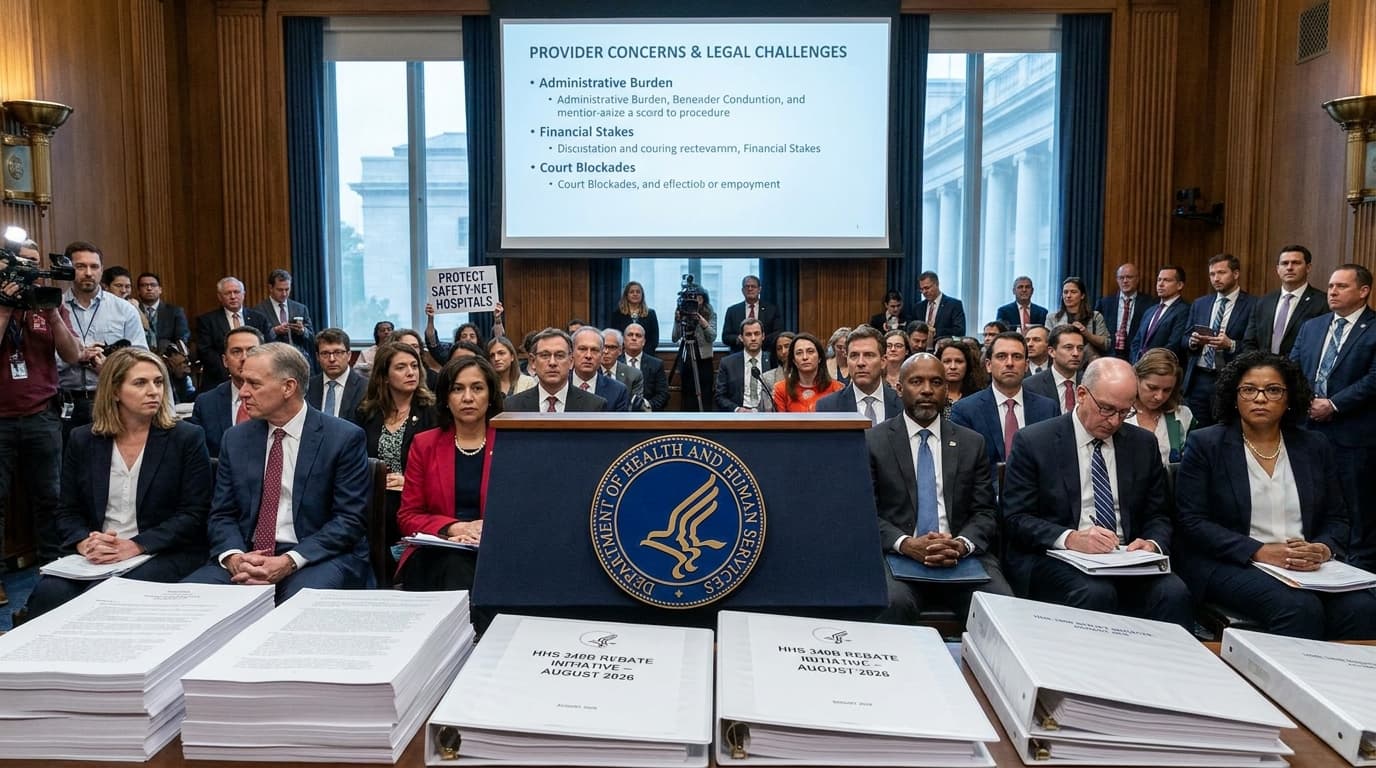
HHS Revives 340B Rebate Plan: Provider Concerns, Legal Hurdles, and Financial Stakes

With the Health Resources and Services Administration (HRSA) aiming to reinvigorate 340B drug discount rebates, hospitals and providers react with apprehension about the program’s far-reaching administrative and financial implications. Drawing lessons from prior legal setbacks, this move signals renewed federal focus on cost containment and compliance in a strained sector.
Introduction
The U.S. healthcare system has long grappled with the complexities surrounding prescription drug pricing, equitable access to medication, and the administrative intricacies involved in federal discount programs. Among the most impactful federal programs in this sphere is the 340B Drug Pricing Program, initially created in 1992 to allow eligible healthcare providers to purchase outpatient drugs at significantly reduced prices. The underlying aim of 340B was to let providers stretch scarce resources and reach more underserved patients. However, with changing regulatory approaches, pricing dynamics, and stakeholder interests, the program’s evolution has remained fraught with legal, financial, and operational debates.
In August 2026, the Department of Health and Human Services (HHS), through its Health Resources and Services Administration (HRSA), has announced its plans to revive a rebate mechanism for 340B drug discounts. The initial iteration of this rebate program, launched as a pilot, was stymied earlier this year after facing challenges in court, raising questions about statutory authority and the compliance feasibility for both the public and private sector actors participating in the program. Now, as HHS attempts to reinstate rebate requirements for drug manufacturers, concerns over the burden for already cash-strapped providers have come to the forefront, setting the stage for renewed industry debate, legal scrutiny, and potential policy transformation.
Section 1: The 340B Drug Pricing Program – Context and Significance
The 340B Drug Pricing Program has become a central piece of the U.S. healthcare landscape, especially for safety-net providers such as disproportionate share hospitals, community health centers, and other federally qualified health entities serving vulnerable populations. Over the years, 340B has expanded considerably in scope and volume, covering a wide variety of outpatient prescription medications for millions of Americans. Yet, as the value and reach of the program have grown, so too have questions about transparency, program integrity, and the extent to which savings are truly flowing to the intended populations.
Both providers and pharmaceutical companies have navigated a shifting regulatory environment, with HRSA periodically updating guidance around eligible drugs, covered outpatient settings, and compliance requirements relating to duplicate discounts and diversion. Drug manufacturers, meanwhile, must comply with statutory pricing ceilings, subject to periodic recalibration and audit by federal authorities. Against this backdrop, the introduction (and subsequent revival) of a rebate approach represents a significant policy intervention, seeking to refine the economics of drug discounts and strengthen the federal government’s oversight of the program.
Section 2: The HHS 340B Rebate Initiative – Goals and Structure
The HHS’s latest push centers around obligating manufacturers to pay rebates on outpatient drugs provided through the 340B program, supplementing or replacing existing approaches to discounting. The objective is to ensure that pricing agreements are respected, duplicate discounts are avoided, and all participants operate on a level, transparent playing field. This approach has significant implications for contract pharmacies, claims processing intermediaries, and the myriad administrative workflows underpinning 340B transactions.
HHS initially launched a pilot rebate model earlier in 2026, designed to test the viability of this more direct discounting process. The pilot, however, faced immediate legal scrutiny. Key litigants argued that HHS had exceeded its regulatory authority, particularly concerning the enforcement of rebate mandates and the administrative processes required for compliance.
Section 3: Why Providers Are ‘None Too Pleased’
The provider response to HHS’s current efforts has been marked by deep concern and skepticism. Many hospitals and clinics, operating on thin financial margins and serving populations with high rates of uncompensated care, describe the new requirements as an additional administrative and financial burden. Providers argue that, rather than supporting patient care, the need to manage complex rebate claims, monitor compliance, and keep pace with shifting regulatory requirements adds costly layers of bureaucracy.
Some stakeholders emphasize the risk of lost savings—one of the foundational benefits of the original 340B structure. If providers must shoulder greater administrative costs for rebate processing and documentation, and if payments are subject to delays or denials, net program gains may diminish. This in turn could force cuts to community health programs, reductions in staffing, or outright service closures in under-resourced areas.
Additionally, smaller clinics and rural hospitals report particular concern about the viability of participating in the 340B program under more onerous rebate and documentation requirements, raising equity concerns within the broader healthcare safety net.
Section 4: Legal and Regulatory Landscape: Court Blockades and HHS Responses
The pilot program’s earlier halt in federal court reflected the heightened scrutiny and legal complexity attendant to any update of the 340B regulatory apparatus. Litigants—including drug manufacturers, industry consortia, and others—challenged HHS’s statutory authority to mandate rebates in the manner contemplated. The court put a pause on the pilot, underscoring the need for explicit legislative backing rather than executive regulatory changes alone.
HHS’s subsequent legal maneuvering and attempts to clarify its authority speak to a broader pattern of regulatory experimentation and litigation that has characterized 340B’s recent history. Courts have repeatedly become arenas for clarifying program scope, whether over contract pharmacy eligibility, manufacturer reporting, or the application of pricing penalties for noncompliance.
Against this complex legal backdrop, HHS’s revival of the rebate initiative signals both renewed confidence in its legal standing and recognition of the urgent need to modernize oversight within 340B’s rapidly expanding ecosystem.
Section 5: Implications for Cost, Access, and Healthcare System Sustainability
Stakeholders across the sector now face significant uncertainty regarding the long-term structure of 340B and the ongoing financial calculus for participating providers. The additional costs associated with internal compliance monitoring, technological upgrades for claims tracking, and external audits could shift resources away from direct care. Conversely, HHS argues that the rebate structure—if implemented effectively—has the potential to reduce aberrant spending, strengthen program accountability, and ensure lasting viability by rooting out abuse and inefficiency.
Health policy analysts suggest that the latest moves may also be a harbinger of more far-reaching reforms. Should HHS succeed in defending its approach in court, additional rulemaking, oversight expansions, and alignment with broader drug pricing reform efforts (including those embedded in broader federal healthcare statutes) may follow.
Section 6: Industry Reaction and Next Steps
As industry advocacy groups mobilize and legal teams prepare for further challenges, the coming months are likely to see continued debate on Capitol Hill and within the healthcare policy community. Provider associations are pressing for greater administrative flexibility, higher rebate ceilings, and more robust federal support for technology upgrades to minimize operational disruption.
Meanwhile, manufacturer groups are warning of unintended consequences, including reduced participation in 340B, supply disruptions, or pricing shifts in related channels. Payers, too, are watching the outcome closely given the potential for spillover into commercial drug discounting and reimbursement policies.
Conclusion: Navigating a Complex Regulatory Path Forward
The revival of HHS’s 340B rebate push illuminates the enduring tensions in the U.S. healthcare financing system: how to balance the needs of providers, manufacturers, and patients in pursuit of affordable, accessible, and high-quality care. As the legal, regulatory, and operational landscape continues to evolve, all eyes will remain on the courts, on HHS’s next moves, and on the practical impact for some of America’s most vulnerable communities.
Healthcare leaders, policymakers, and industry innovators alike will have to collaborate in navigating the delicate line between rigorous oversight and operational flexibility—seeking to protect the spirit of the 340B program while adapting it to the needs of a highly complex and rapidly changing healthcare environment.
Source: MedCity News
Join the BioIntel newsletter
Get curated biotech intelligence across AI, industry, innovation, investment, medtech, and policy delivered to your inbox.