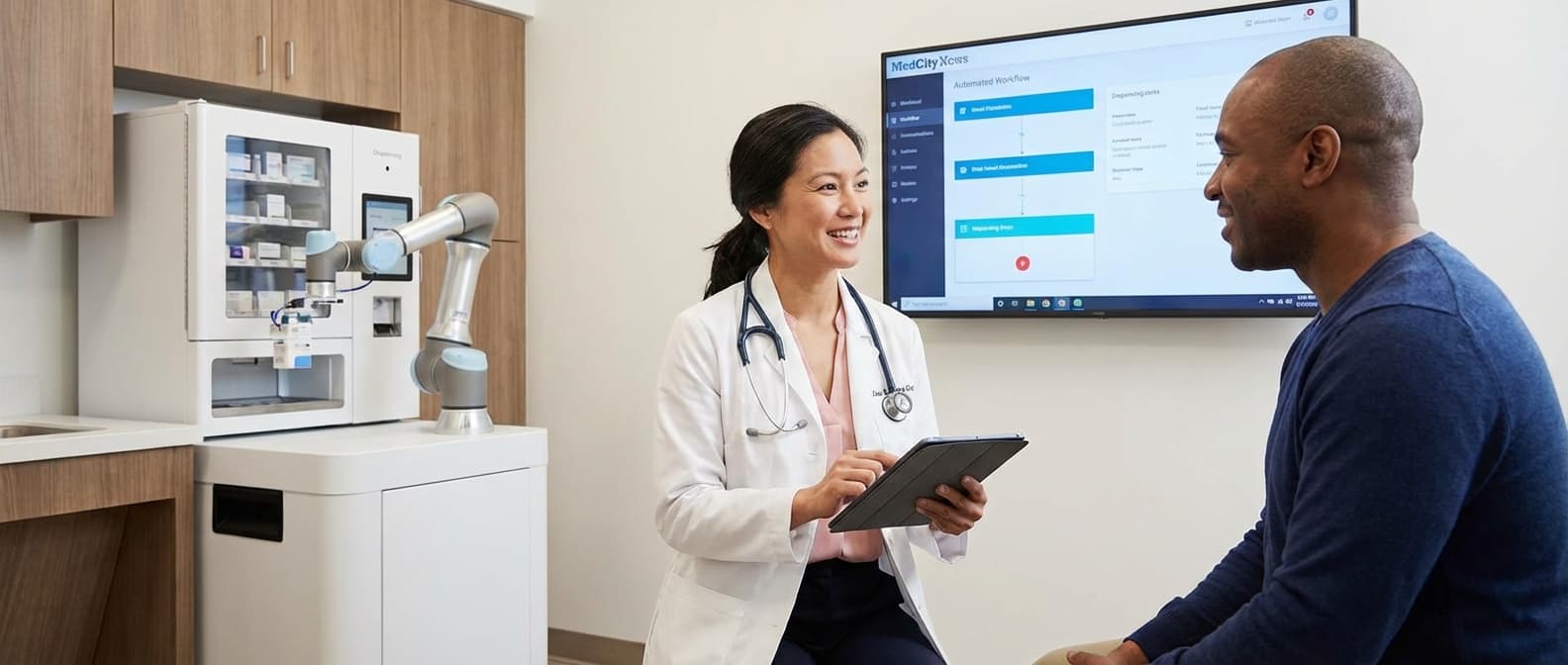
Inside an Automated Healthcare Practice: Redesigning Care Around People, Not Paperwork

Healthcare systems continue to evolve with automation technologies designed to reduce the administrative burden on clinicians. This transformation is fostering environments where patient care is prioritized over paperwork, optimizing workflow around human needs rather than bureaucratic processes.
Healthcare practices worldwide are recognizing the urgent need to redesign workflows to focus more on the human aspects of care rather than excessive paperwork and administrative burdens. This shift is largely driven by automation technologies that aim to streamline processes and create space for clinicians to engage more meaningfully with their patients.
A recent case study of an automated healthcare practice highlights the impact of redesigning care environments to prioritize people. By leveraging advanced automated systems, routine administrative tasks such as data entry, scheduling, and billing are handled more efficiently, thereby freeing up clinicians' time and mental capacity. This evolution allows care teams to redirect their focus toward patient interactions, diagnostics, and personalized treatment planning.
Patients stand to benefit significantly from such a transformation. When clinicians are relieved from overbearing paperwork, they have increased capacity to listen attentively, explore patient symptoms thoroughly, and engage in shared decision-making. This ultimately improves patient satisfaction and outcomes by fostering stronger therapeutic relationships.
Moreover, healthcare staff report improvements in workplace morale and job satisfaction when not overwhelmed by administrative duties. Designing care around human needs aligns with the growing appreciation for clinician well-being, which is ultimately linked to higher quality care delivery.
However, the journey toward fully automated practices involves careful considerations. Integrating technology must be done thoughtfully to avoid replacing human elements with impersonal systems. Effective training, workflow redesign, and ongoing evaluation are critical to ensuring that automation complements rather than complicates clinical care.
Overall, redesigning healthcare practices with automation strategically focused on reducing administrative tasks presents a promising path forward. It enables an environment where the heart of healthcare—connection and care between clinicians and patients—can thrive amidst the demands of modern medicine.
Source: MedCity News.
Join the BioIntel newsletter
Get curated biotech intelligence across AI, industry, innovation, investment, medtech, and policy delivered to your inbox.